


Decoding the Current Luxury Landscape in Tampa
The high-end real estate sector in Tampa has matured into a sophisticated market demanding careful analysis and decisive action. Buyers are no longer simply competing for inventory; they are strategically acquiring properties that offer long-term stability and architectural significance. Currently, the active inventory of premium homes sits at roughly 120 properties, creating an environment where well-positioned assets command attention quickly. The median list price holds firm at $2.5 million, while the average listing stretches toward $3.3 million, driven by the inclusion of expansive waterfront estates and significant custom builds.

This pricing dynamic requires buyers to look beyond surface-level aesthetics and meticulously evaluate the underlying value of the land, structural integrity, and neighborhood trajectory. Rather than reacting to listing alerts, successful acquisitions stem from a deep understanding of micro-markets within the region. Properties in established corridors often carry a heritage premium, while newer developments require rigorous scrutiny regarding construction quality and infrastructure resilience. Market participants must constantly weigh the cost of immediate occupancy against the potential upside of extensive renovations in prime, land-constrained areas.
Recent data indicates that the highest echelons of the market are setting new benchmarks. According to the Tampa Bay Times, the region continues to see record-breaking sales volume at the top tier, underscoring the enduring appeal of the area for high-net-worth individuals. The Wall Street Journal further highlights this ceiling expansion, noting estates pushing far beyond historical pricing norms. Buyers entering this landscape must calibrate their expectations, recognizing that premium properties are often priced to reflect both current utility and absolute future scarcity.
The Waterfront Valuation Premium
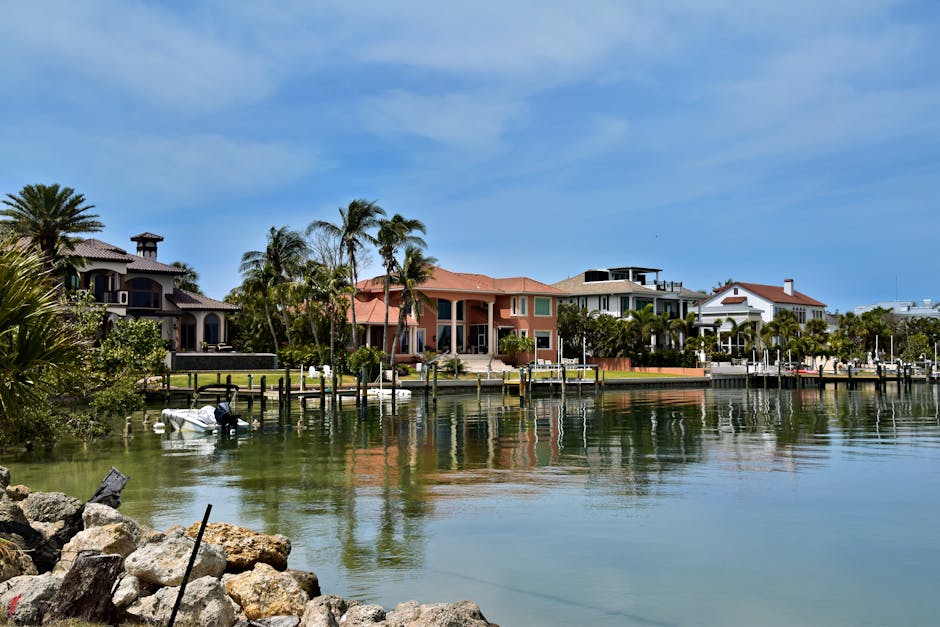
Waterfront property in Tampa is a distinct asset class, governed by its own set of valuation metrics and environmental considerations. Neighborhoods such as Davis Islands, Culbreath Isles, and Beach Park offer varying degrees of open bay access, canal frontage, and elevation profiles. The distinction between a property with direct, deep-water access to Tampa Bay and one situated on a constrained, heavily silted canal significantly impacts both the initial acquisition cost and the long-term holding value. Properties facing open water inherently carry the highest valuations due to unobstructed views and immediate bay access, but they also bear the brunt of coastal weather patterns.
When evaluating coastal or bayfront estates, the physical structure is often secondary to the lot’s characteristics. Seawall integrity, dock dimensions, and navigable water depth are primary drivers of worth. A structurally sound seawall represents a substantial capital investment and mitigates significant future liability. Furthermore, buyers must assess the property’s elevation relative to flood zones, as this dictates insurance requirements and structural modification limits under current municipal codes. The National Law Review notes that waterfront properties remain the primary driver of the region’s premium real estate expansion, necessitating stringent due diligence from prospective owners.
The premium paid for these locations is justified by the limited supply of coastline and the high barrier to entry. However, calculating the true cost of ownership requires factoring in continuous marine maintenance. Buyers should engage specialized marine contractors during the inspection phase to verify the condition of underwater pilings, boat lifts, and retaining walls, ensuring that the waterfront amenity does not become an unforeseen financial burden over the lifecycle of the investment.
Strategic Evaluation of High-End Listings
Approaching a $2.5 million or $3 million listing demands a methodical framework for evaluation. The initial visual appeal of a property must immediately give way to a rigorous analysis of its systems, materials, and spatial flow. In submarkets like South Tampa or Hyde Park, older homes may boast historical charm but often require substantial modernization of electrical, plumbing, and HVAC infrastructure. Conversely, new constructions demand verification of builder reputation, warranty terms, and the quality of foundational elements, especially when dealing with rapidly developed parcels.
Space utilization and privacy are critical metrics that dictate a property’s true functionality. A luxury estate should offer intelligent segregation between entertaining spaces, private quarters, and service areas. The orientation of the home on the lot affects natural light, energy efficiency, and line-of-sight privacy from neighboring parcels. Buyers should critically assess whether the floor plan supports their specific operational needs, from remote work capabilities and specialized home offices to discreet staffing accommodations and multi-generational living configurations.
Market context also plays a crucial role in evaluation and negotiation. A property listed at $2.9 million, such as those occasionally seen along thoroughfares like the Florida Avenue or MLK Boulevard corridors, must be weighed carefully against comparable sales, neighborhood density, and future municipal zoning regulations. Understanding the distinction between an aspirational asking price and grounded, data-backed market value is where experienced advisory becomes essential. This localized expertise ensures capital is deployed effectively rather than inadvertently absorbed by an inflated list price or overlooked structural deficiencies.
Critical Verification Steps for Premium Acquisitions
Executing a successful transaction in the high-end tier involves layers of technical and administrative verification. The standard inspection period is merely the baseline; premium acquisitions require a bespoke due diligence strategy tailored to the specific attributes of the property. Failing to conduct specialized assessments can lead to complex remediation projects post-closing.
We recommend a structured approach to verification, isolating each major component of the estate for independent professional review. This goes beyond the general home inspector and engages domain experts who can provide definitive assessments of complex systems.
- Structural and Geotechnical Integrity: Verify foundation stability, particularly for older estates or properties near the water, utilizing engineering assessments to rule out soil subsidence or structural fatigue.
- Marine Infrastructure Assessment: For waterfront properties, mandate a specialized inspection of seawalls, dock pilings, submerged lands leases, and boat lift mechanisms.
- Advanced Systems Audits: Require independent evaluation of integrated smart home systems, whole-house generators, commercial-grade HVAC networks, and complex pool filtration systems.
- Permitting and Title Scrutiny: Exhaustively review municipal records to confirm all structural additions, dock extensions, and major renovations were properly permitted and closed.
- Insurance and Flood Zoning: Obtain firm insurance quotes and elevation certificates during the diligence period to accurately forecast carrying costs and verify flood zone designations.
Navigating Low-Inventory Environments
The current snapshot of roughly 120 active luxury listings across the region creates a highly competitive environment for exceptional properties. In sought-after enclaves like Parkland Estates, Sunset Park, or Palma Ceia, inventory remains remarkably tight, and properties that meet a high standard of finish are absorbed swiftly by waiting buyers. This scarcity requires prospective owners to maintain operational readiness, with proof of funds or sophisticated financing architecture fully established long before identifying a target property.
Operating effectively in a low-inventory market often means evaluating off-market opportunities or properties requiring strategic renovation. A turnkey estate naturally commands the highest premium, but buyers with the vision and capital to execute selective updates can often secure better foundational assets in superior locations. This approach requires immediate access to reliable architectural and construction partners who can accurately forecast the timeline and cost of necessary modifications before the acquisition is finalized, mitigating the risk of unforeseen budget expansions.
Patience is a strategic asset in this climate. Rather than compromising on fundamental requirements or location, buyers should establish strict acquisition criteria and wait for the appropriate asset to surface. This disciplined approach prevents capital from being tied up in a secondary choice when a primary target eventually enters the market. Aligning with an advisor who possesses deep, entrenched local networks can often provide early visibility into properties before they are broadly syndicated, offering a crucial head start in a competitive landscape.
Integrating Lifestyle and Property Value
The inherent value of a Tampa estate is inextricably linked to the lifestyle it facilitates. Beyond the property lines, the accessibility of cultural, recreational, and logistical amenities dictates long-term satisfaction and asset appreciation. Proximity to Tampa International Airport, major medical facilities, and premier educational institutions remains a non-negotiable requirement for many affluent buyers moving into the region from out of state.
The region’s robust calendar of events and cultural institutions adds a layer of depth to the resident experience. Access to venues like the Straz Center, high-end dining in the Water Street district, and various waterfront festivals enhances the appeal of central and South Tampa locations. As noted by FOX 13 Tampa Bay, the city’s continuous investment in downtown family events and cultural programming solidifies its reputation as a dynamic environment suitable for long-term residency.
Environmental factors also play a defining role. With typical spring conditions offering stable, warm weather—often maintaining temperatures in the upper 80s—the architecture of Tampa homes heavily emphasizes indoor-outdoor integration. Properties that seamlessly connect interior living spaces with covered lanais, outdoor kitchens, and resort-style pools command significant attention. Evaluating how a home handles the intense summer sun and seasonal rainfall through strategic shading and superior drainage is just as critical as assessing its interior finishes.
Securing Your Position in the Tampa Market
Acquiring premium real estate in Tampa requires a synthesis of market intelligence, technical evaluation, and decisive action. The landscape is complex, with varying property types, distinct neighborhood characteristics, and rigorous environmental considerations. Success depends on moving beyond passive observation and engaging in a structured, analytical approach to property selection and transaction execution.
Our role is to provide the critical oversight and objective analysis necessary to navigate this market confidently. We strip away the noise of aggressive marketing to focus on the fundamental value, structural integrity, and strategic positioning of each asset. Whether evaluating a sprawling waterfront compound or an architecturally significant estate in a historic district, thorough preparation and expert guidance are your strongest advantages.
To begin aligning your acquisition strategy with the current market realities, we invite you to review the active inventory and analyze the latest high-end opportunities. Explore our curated luxury listings to understand the caliber of properties available. When you are ready to initiate a targeted search or discuss a specific asset, contact our advisory team to establish your criteria and commence a disciplined acquisition process.
Your next move in Tampa luxury
Get current inventory, pricing guidance, and private-tour support from our brokerage team.
Source highlights
- Tampa’s Price Record Is $22.5 Million. This Huge Estate Is Asking $115 Million. – WSJ
- Tampa Bay’s most expensive luxury home sales of 2025 – Tampa Bay Times
- Tampa Bay luxury market grows stronger despite national declines – The Business Journals
- Why Tampa remains an early-stage luxury condo market – Tampa Bay Business & Wealth
- Tampa Bay’s Waterfront Emerges as a Primary Luxury Real Estate Market – The National Law Review
- Florida Trend Real Estate – Florida Trend
- Tampa weekend events: Concerts, festivals and downtown family fun — What to know before you go – FOX 13 Tampa Bay
- From Blues to BBQ: Tampa’s can’t-miss events this weekend – WMNF 88.5 FM



