



The Evolution of Tampa’s Price Ceiling
The Tampa luxury market has entered a phase of significant structural maturation. While the region was once characterized by a relatively low entry point for premium waterfront property, recent activity has recalibrated expectations for both buyers and sellers. We are seeing a divergence between standard luxury listings and ultra-high-net-worth estates that challenge previous regional records. The current landscape is defined by a median list price of approximately $2,300,000, yet the upper echelon of the market is pushing into territory previously reserved for South Florida or international hubs.
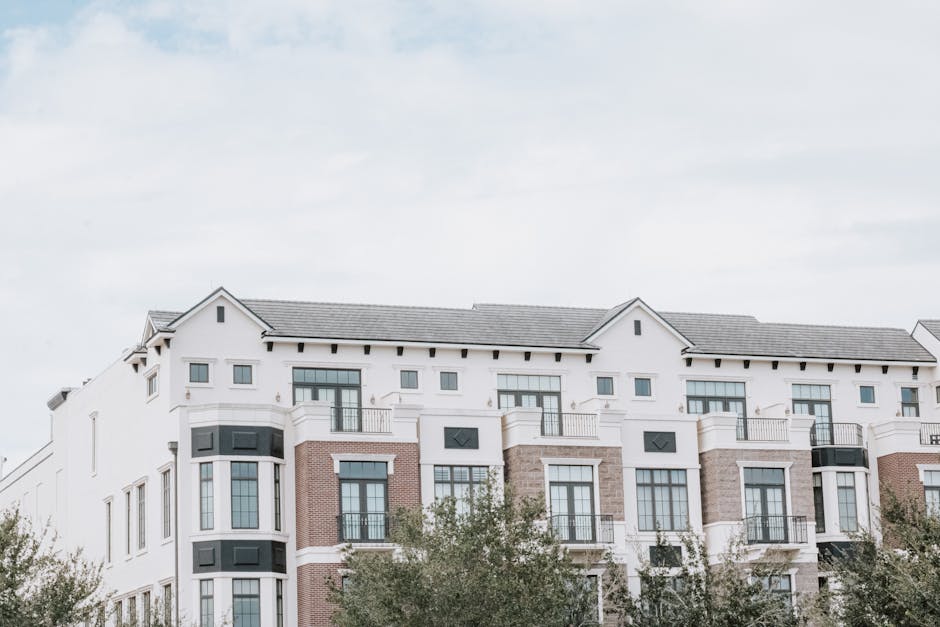
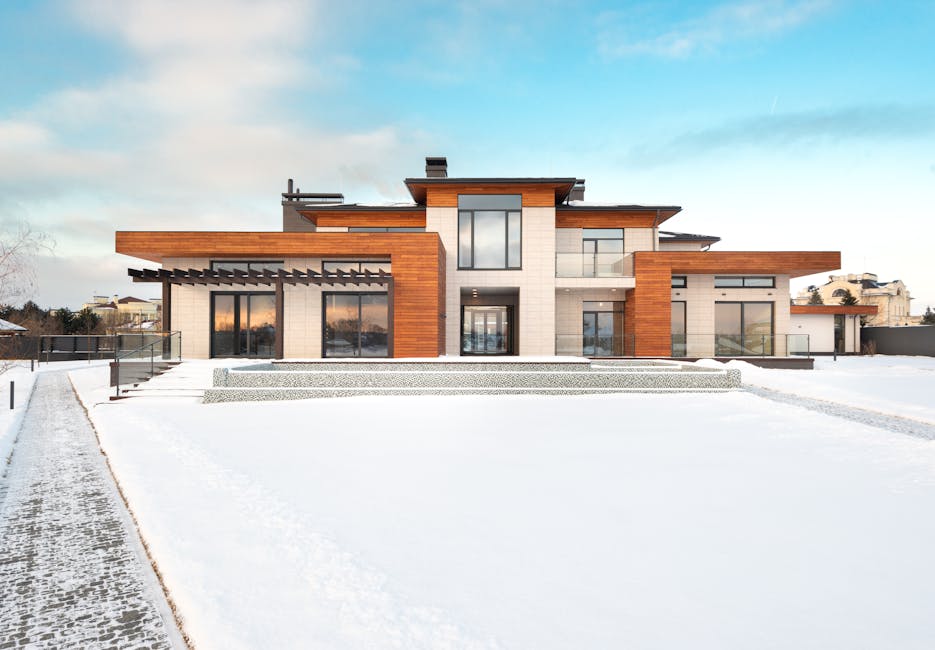
A primary indicator of this shift is the emergence of trophy properties that command nine-figure valuations. According to reports from the Wall Street Journal, Tampa’s price record of $22.5 million is being tested by estates asking upwards of $115 million. This vertical expansion of the market suggests a growing confidence among global investors in the long-term viability of Tampa Bay as a primary residence destination for high-capacity individuals. This is not merely a localized surge; it is a fundamental re-rating of the region’s land value and infrastructure.
For the sophisticated buyer, these figures represent more than just headlines; they signal a shift in how comparable sales must be analyzed. When a new ceiling is established, it often creates a vacuum that pulls the value of mid-tier luxury properties upward, provided they meet specific criteria regarding location and build quality. Current data shows roughly 120 active luxury listings, a volume that provides buyers with more leverage than seen in the previous two years, allowing for a more calculated approach to site selection and negotiation.
Waterfront Logistics: Davis Islands to Culbreath Isles
Location remains the ultimate arbiter of value in Tampa, but the nuances between neighborhoods have become more pronounced. Davis Islands continues to serve as the benchmark for luxury waterfront living, favored for its proximity to downtown and its private aviation facilities. However, the movement of inventory here requires a discerning eye. Buyers are increasingly prioritizing newer construction that adheres to modern flood mitigation standards, often choosing to scrape older structures on prime lots rather than attempting complex renovations. The demand for deep-water docks and unobstructed bay access remains the primary driver of the highest-priced transactions.
Contrasting this is the appeal of Hyde Park and Bayshore Boulevard, where the value proposition is rooted in historic permanence and walkability. Here, the market is less about acreage and more about architectural integrity and proximity to the urban core. The buyer behavior in these corridors has shifted toward “lock-and-leave” convenience without sacrificing the privacy of a single-family residence. We are observing that properties along the Bayshore corridor are maintaining their premiums even as inventory increases elsewhere, largely due to the limited supply of frontage along the world’s longest continuous sidewalk.
Further west, neighborhoods like Culbreath Isles and Beach Park offer a different utility, providing larger lot sizes and a more secluded residential feel while maintaining efficient access to the Westshore business district and Tampa International Airport. For executives who require frequent travel, these pockets represent a strategic balance of luxury and logistics. The analytical buyer should compare the price-per-square-foot of these inland-facing luxury enclaves against the waterfront premiums of Davis Islands to determine where the most resilient equity resides in the current cycle.
St. Petersburg’s Regional Synergy and Executive Migration
The Tampa luxury market cannot be viewed in isolation from the rapid ascent of St. Petersburg. A growing number of corporate executives and business founders are choosing the Pinellas side of the bay, citing a distinct cultural atmosphere and a condensed, high-end urban core. As noted by The Business Journals, this trend is driven by a desire for a specific type of professional environment that blends high-level commerce with a more relaxed, coastal lifestyle. This regional synergy has created a “dual-core” luxury market that benefits both sides of the bridge.
This migration is not just about personal preference; it has tangible impacts on property values. As more high-income earners relocate to the area, the demand for high-end services, private schools, and luxury retail follows, further insulating real estate values from broader economic volatility. The cross-pollination of talent and capital between Tampa and St. Pete is a structural tailwind that distinguishes the Tampa Bay area from other Florida markets. Buyers should consider how regional infrastructure projects and corporate relocations will influence the desirability of specific sub-markets over the next five to ten years.
The integration of the two cities is also reflected in the hospitality and social sectors. Major events and regional investments are increasingly designed to serve the entire bay area, rather than a single municipality. For the luxury homeowner, this means that an investment in one city is bolstered by the growth of its neighbor. Analyzing the most expensive sales of 2025 reveals a balanced distribution of high-value transactions across the region, confirming that the entire bay area is now viewed as a unified destination for premium capital.
Due Diligence Checklist for High-Value Acquisitions
In a market with 120 active luxury listings and an average list price exceeding $3.1 million, the margin for error in due diligence is slim. Buyers must look beyond the aesthetic finishes and analyze the technical fundamentals of the asset. The following checklist serves as a baseline for evaluating high-value Tampa properties in the current environment:
- Verification of sea wall integrity and elevation certificates for waterfront parcels.
- Analysis of recent comparable sales within a six-month window to ensure valuation accuracy.
- Assessment of insurance mitigation credits and current premium projections for the specific zone.
- Review of architectural review board (ARB) or HOA constraints on future modifications or renovations.
- Evaluation of the property’s historical performance during extreme weather events and documented mitigation efforts.
- Scrutiny of the builder’s reputation and the warranties remaining on newer construction.
Each of these points represents a potential pivot in negotiation. For instance, a property that has already undergone significant weather hardening and carries transferable insurance policies can be more valuable than a similarly priced home that requires these updates. In a high-inventory market, the buyer has the luxury of time to insist on these verifications. It is essential to partner with an advisor who understands the technical aspects of Florida construction as much as the market data.
The Maturation of the Tampa Condo Sector
While single-family homes dominate the headlines, the luxury condominium sector in Tampa is undergoing its own transformation. Traditionally, Tampa was seen as a secondary market for high-rise living compared to Miami or Naples. However, a new wave of vertical luxury is changing that perception. As discussed in Tampa Bay Business & Wealth, the region is still in the early stages of its luxury condo evolution, presenting a unique window for investors and residents who prefer urban density.
New developments are no longer just providing views; they are offering comprehensive service ecosystems, including private concierge teams, health and wellness centers, and curated social spaces. This shift is attracting a demographic that previously would have only considered a single-family estate. The appeal lies in the reduction of maintenance responsibilities and the security of a managed environment. For the buyer, comparing a high-rise unit on Water Street or Bayshore against a traditional home in Hyde Park requires a careful analysis of lifestyle utility versus long-term land appreciation.
The pricing for these units is increasingly competitive with high-end detached homes, reflecting the value placed on the amenities and the “ready-to-use” nature of the properties. As the inventory of these units grows, the market will become more segmented based on the quality of management and the exclusivity of the resident base. Sophisticated buyers are focusing on developments with low unit counts and high staff-to-resident ratios to ensure the privacy and service levels they expect at this price point.
Market Movement and Tax Implications for 2026
The broader economic context of Florida remains a significant tailwind for the Tampa market. Record listings are being met with continued demand from individuals relocating from higher-tax jurisdictions. A report by MSN highlights how tax shifts and favorable business environments continue to drive luxury real estate surges across the state. In Tampa, this is manifesting as a steady influx of capital that is less sensitive to interest rate fluctuations than the broader residential market.
However, the 2026 market requires a more nuanced strategy than the rapid-growth years of the early 2020s. We are seeing a more deliberate pace of acquisition. Buyers are taking longer to close, conducting more thorough inspections, and showing a willingness to walk away from properties that do not meet every criterion. This stabilization is healthy for the long-term integrity of the market, as it prevents the formation of speculative bubbles and ensures that valuations are supported by actual utility and demand.
Prospective owners should also stay informed about local developments and seasonal trends. For instance, knowing the schedule of major regional events, such as those covered by Tampa Bay Date Night Guide, can provide insight into the vibrancy and cultural infrastructure of specific neighborhoods. A community that supports high-level events and robust local programming tends to maintain higher desirability and property value retention over time.
Strategic Timing in the Current Inventory Cycle
With 120 active luxury listings and an average list price of over $3.1 million, the current market offers a rare combination of selection and stability. For the first time in several years, buyers have the ability to compare multiple high-caliber properties simultaneously within a single neighborhood. This inventory depth allows for more aggressive negotiation on terms, even if the headline price remains firm. Strategic buyers are focusing on properties that have been on the market for 60 to 90 days, where sellers may be more motivated to finalize a transaction before the next seasonal cycle.
Whether you are evaluating a $2.2 million residence on Florida Avenue or a $2.9 million commercial-scale opportunity on MLK Boulevard, the key is to prioritize assets with clear utility and defensible valuations. The Tampa market is no longer a monolith; it is a collection of hyper-local micro-markets, each with its own trajectory. Navigating this complexity requires a partnership with a senior advisor who can provide neighborhood-level implications and practical takeaways rather than generic market reports.
The path to a successful acquisition in 2026 involves a data-backed approach and a commitment to rigorous verification. As the region continues to attract global attention and set new price records, the importance of strategic timing and local expertise cannot be overstated. We invite you to browse our current luxury listings to understand the depth of the current inventory and contact an advisor to discuss how we can assist you in navigating your next high-value acquisition in the Tampa Bay area.
Your next move in Tampa luxury
Get current inventory, pricing guidance, and private-tour support from our brokerage team.
Source highlights
- Florida luxury real estate surges amid record listings, tax shifts – MSN
- Tampa Bay’s most expensive luxury home sales of 2025 – Tampa Bay Times
- Tampa’s Price Record Is $22.5 Million. This Huge Estate Is Asking $115 Million. – WSJ
- Column: Why executives keep choosing St. Pete – The Business Journals
- Why Tampa remains an early-stage luxury condo market – Tampa Bay Business & Wealth
- Florida Trend Real Estate – Florida Trend
- 40+ Best Things to Do in Tampa Bay this Month: Events and MORE! – Tampa Bay Date Night Guide
- Tampa leaders, WWE star Titus O’Neil promote alternative event for young people amid 'teen takeover' trend – FOX 13 Tampa Bay
