


The Strategic Re-calibration of Tampa’s Luxury Sector
The Tampa luxury real estate landscape in mid-2026 is defined by a notable shift in leverage. After years of compressed inventory, the market is currently seeing a significant influx of high-end listings, providing a rare window for buyers to execute more deliberate, data-driven acquisitions. While the broader Florida market is experiencing various tax shifts and record-breaking listing volumes, the core of Tampa remains resilient due to its unique combination of corporate relocation and capital investment. This increase in supply is not a sign of waning demand, but rather a maturation of the market where sellers are finally meeting the sophisticated needs of an incoming executive class.
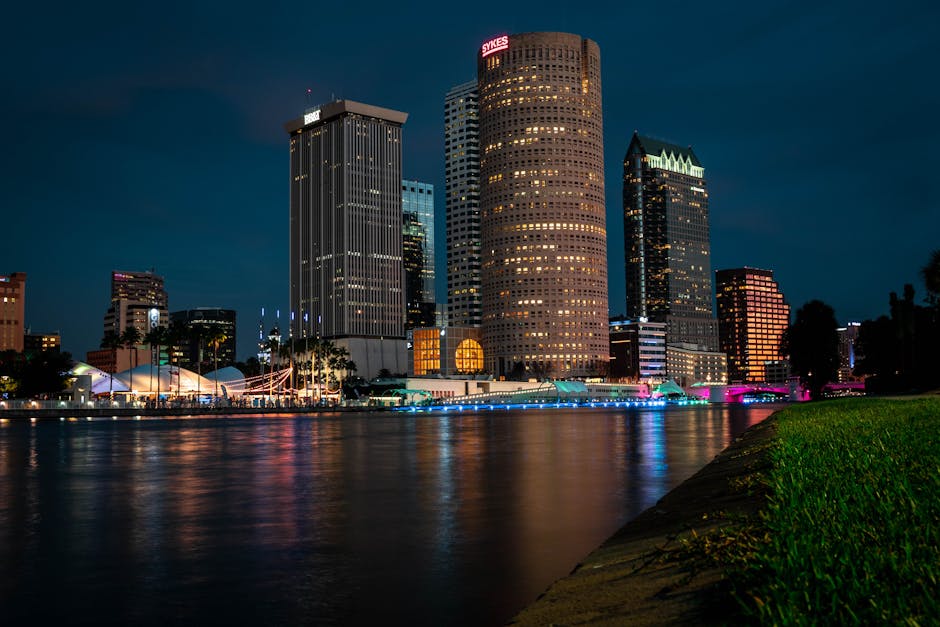
As reported by MSN news, the surge in Florida luxury listings is hitting record levels, and Tampa is no exception. For the private advisor, this environment requires a transition from ‘acquisition at any cost’ to ‘value optimization.’ Buyers are now scrutinizing floor plans, lot orientation, and construction quality with a level of rigor that was often skipped during the peak frenzy of previous years. We are seeing a median list price stabilizing around $2,300,000, yet the diversity of the inventory—ranging from historic renovations to ultra-modern waterfront estates—requires a nuanced approach to valuation.
Current inventory context reveals approximately 120 active luxury units in the immediate Tampa area, with an average list price exceeding $3.1 million. This concentration of wealth is visible in specific enclaves like South Tampa, where properties such as 6304 N Florida Avenue (listed at $2,200,000) demonstrate the appetite for modern residential assets in established corridors. Simultaneously, land acquisition for custom builds remains a high-priority strategy for those seeking to bypass existing inventory limitations, particularly in areas like North Grady Avenue where large-lot potential still exists.
Understanding these movements requires looking beyond the surface-level data. The sophisticated buyer is no longer just looking for a residence; they are looking for a structural hedge against inflation and a lifestyle alignment with the city’s rapidly expanding commercial core. This analytical brief provides the necessary framework to navigate this high-supply environment without compromising on long-term appreciation potential or architectural integrity.
Executive Mobility and the St. Pete Influence
The migration of high-level executives to the Tampa Bay region continues to be a primary driver of the luxury market’s stability. While Tampa remains the commercial hub, the neighboring St. Petersburg market has become an increasingly attractive option for those prioritizing a specific type of operational efficiency and urban density. Industry leaders are choosing St. Pete for its walkable downtown and tech-forward atmosphere, which in turn creates a competitive tension that benefits the entire regional real estate ecosystem.
This mobility is not just about choosing a city; it is about choosing a community that supports professional growth and lifestyle requirements. Executives are often comparing the traditional prestige of South Tampa’s Bayshore Boulevard with the emerging, vertical luxury of downtown Tampa and the refined atmosphere of the St. Pete waterfront. This comparison is critical because it dictates the type of asset management required. A historic home in Palma Ceia offers legacy value, whereas a high-rise residence in Water Street offers turnkey efficiency that appeals to the global traveler.
From an advisor’s perspective, the decision to invest in one side of the bay versus the other often comes down to the buyer’s long-term exit strategy. The Tampa side remains the heavy hitter for institutional-grade residential assets, while St. Pete is capturing the innovative, high-growth demographic. Both markets are seeing a spillover effect where high demand in one stabilizes the other, creating a floor for valuations that is higher than the state average. This regional strength is a key reason why Tampa continues to outperform other Florida metros in terms of sustained price integrity.
We advise our clients to monitor the commercial lease rates in both downtown cores as a leading indicator of residential demand. When major firms commit to 10-year leases in Tampa’s CBD or St. Pete’s Innovation District, the surrounding luxury residential inventory becomes significantly more insulated from broader economic volatility. It is this intersection of corporate commitment and personal residence that defines the current market peak.
The Evolution of the Early-Stage Condo Market
Tampa is currently in what experts call an early-stage luxury condo market, a status that offers significant upside for those willing to look past traditional single-family homes. While the city has always had a waterfront skyline, the new wave of developments is bringing a level of service and amenity that previously only existed in Miami or New York. These projects are attracting a new demographic of buyers who prioritize security, wellness facilities, and concierge-level services over large private yards.
The strategic advantage of entering this early-stage market lies in the ability to secure prime units in buildings that will eventually define the skyline. These are not merely ‘apartments’ but are high-value real estate assets with sophisticated structural engineering and integrated smart-home technologies. The move toward vertical living in Tampa is also a response to the limited availability of new-construction land in desirable neighborhoods like Hyde Park and Channelside. By moving upward, buyers can maintain proximity to the city’s finest dining and entertainment without the maintenance burden of a historic estate.
However, navigating the condo market requires a different set of evaluation tools. Prospective buyers must look at the developer’s track record, the project’s capitalization, and the long-term viability of the homeowners’ association. In an early-stage market, the first few flagship buildings set the benchmark for all future valuations. We are currently seeing high demand for units that offer expansive terraces and unobstructed views of Hillsborough Bay, as these features have historically shown the strongest resale performance.
As these developments come to fruition, they are also changing the street-level experience of Tampa. The ground-floor retail and public spaces associated with these luxury towers are attracting high-end brands and culinary talent, further cementing Tampa’s status as a top-tier destination for affluent residents. For the buyer, this means that their investment is not just in four walls, but in the continued revitalization of the urban core.
South Tampa Inventory Dynamics and Valuation Trends
South Tampa remains the most sought-after submarket, characterized by a mix of traditional architecture and aggressive new-construction infill. The current inventory surge has hit this area specifically hard, with 120 luxury homes for sale across the peninsula. For buyers, this means more choices in highly competitive school districts and proximity to the region’s best private clubs. Valuation trends in this sector are currently favoring properties that have been fully modernized, as the cost and time associated with renovation have become significant deterrents for busy executives.
- Verification of elevation certificates and recent flood insurance reform impact.
- Comparison of price-per-square-foot against recent high-water mark sales in Davis Islands.
- Audit of smart-home integration and energy-efficient building envelopes.
- Assessment of historical preservation restrictions in neighborhoods like Hyde Park.
- Evaluation of lot size and privacy screening in high-density luxury corridors.
- Review of recent property tax assessments and homestead exemption eligibility.
When analyzing specific opportunities, such as the land parcels on MLK Boulevard or the residential assets in the Beach Park area, buyers must account for the increasing trend toward commercial-to-residential transitions in the surrounding blocks. The value of a luxury home is increasingly tied to the ‘buffer’ provided by its immediate neighbors. This is why we are seeing a premium being paid for homes on deeper lots or those located in quiet cul-de-sacs that offer a reprieve from the city’s activity.
The median list price of $2.3 million is a useful benchmark, but it masks the wide variance between ‘standard’ luxury and ‘ultra’ luxury. In South Tampa, the ultra-luxury tier—properties priced above $10 million—is a world of its own, often transacting off-market or through private networks. For these assets, the value is found in the rarity of the location, such as direct frontage on Bayshore or large estate lots on Davis Islands that allow for multi-structure compounds.
Investors should also take note of the Florida Trend real estate reports which highlight the continued influx of out-of-state capital into Tampa. This capital is not just looking for homes; it is looking for a place to park wealth in a state with a favorable tax climate. This secondary motivation ensures that even during periods of high inventory, the underlying demand for premium assets remains robust. The challenge for today’s buyer is to identify which of the 120 available units truly represents a best-in-class asset.
Market Anomalies and the $100 Million Benchmark
One of the most discussed topics in the 2026 market is the emergence of ‘trophy’ listings that defy traditional valuation models. While Tampa’s record sale stood at $22.5 million for years, the market has recently seen an estate asking $115 million, according to the Wall Street Journal. These anomalies are important because they reset the ceiling for what is possible in the region. Even if these properties sell for a fraction of their asking price, they signal to the global elite that Tampa is now a legitimate contender for ultra-high-net-worth capital.
For the typical luxury buyer, these record-breaking listings provide a halo effect. They increase the perceived value of the surrounding neighborhoods and encourage other sellers to invest in high-end finishes and architectural innovation. However, these anomalies can also skew the data for those not looking at the sub-market level. It is vital to separate these ‘unicorn’ properties from the core luxury inventory when calculating market health. The strength of Tampa lies not just in its most expensive home, but in the depth of its $2M to $5M residential market.
We are also seeing a rise in high-value commercial sales within the luxury residential corridors. The $2.9 million listing at 718-722 W MLK Boulevard is a prime example of how mixed-use potential is becoming a factor in luxury real estate planning. Sophisticated buyers are often looking for properties that offer more than just a place to sleep—they want assets that can evolve with their business interests or provide long-term land-banking opportunities.
The key takeaway from these market anomalies is that Tampa is no longer a ‘local’ market; it is an international one. The buyers competing for these top-tier assets are often comparing Tampa to Austin, Nashville, or West Palm Beach. This competition ensures that the quality of inventory will continue to rise, as sellers realize they are performing on a global stage. For the resident, this means a better-built city with more architectural diversity and more sophisticated infrastructure.
Cultural Integration: The Influence of Sports and Events
Tampa’s luxury real estate market is intrinsically linked to its cultural and sports calendar. The city has become a hub for professional sports and major entertainment events, which in turn fuels the short-term and seasonal luxury rental market. For instance, the WWE Memorial Day weekend takeover and other high-profile events bring thousands of affluent visitors to the area, many of whom eventually become buyers. These events showcase the city’s ability to handle global-scale entertainment while maintaining a high quality of life for its residents.
This ‘event-driven’ demand creates a specific type of investment opportunity for those looking at properties in Downtown Tampa and the Westshore district. Proximity to venues like the Amalie Arena or Raymond James Stadium becomes a value multiplier during peak event seasons. Furthermore, the city’s focus on youth and community initiatives, such as the alternative events promoted by Titus O’Neil, highlights a commitment to social stability that is highly valued by families moving to the area. A safe, active, and culturally rich environment is a fundamental requirement for the luxury buyer.
The lifestyle in Tampa is further enhanced by its year-round outdoor capabilities. From the vintage markets to waterfront dining, the city offers a range of experiences that cater to a sophisticated palate. The ability to attend a murder mystery dinner or a high-end vintage market on any given weekend provides the ‘social fabric’ that makes a city a home. For the luxury buyer, these aren’t just ‘things to do’; they are indicators of a healthy, growing community that will continue to attract talent and investment.
Ultimately, the integration of sports, culture, and real estate creates a virtuous cycle. As the city hosts more events, its brand grows; as its brand grows, more people want to live here; as more people want to live here, real estate values rise. For those currently navigating the inventory, understanding the city’s event roadmap is just as important as understanding its zoning laws. Buying in Tampa is an investment in the city’s continued rise as a cultural powerhouse in the Southeast.
Securing Your Position in Tampa’s Luxury Market
The current market state is one of opportunity for the disciplined buyer. With 120 luxury units available and a median price that reflects a stabilized market, the conditions are ideal for securing a high-value asset that aligns with both financial and lifestyle goals. However, the abundance of choice means that professional guidance is more critical than ever. Identifying the nuances between a well-priced home and a value trap requires an advisor who understands the neighborhood-level implications of every street in South Tampa and Davis Islands.
As you evaluate the current inventory, we invite you to browse our curated listings to see the diversity and quality of homes currently available. From modern architectural masterpieces to historic estates, the options are extensive, but the window for selecting the best-of-class assets may not stay open indefinitely as the executive migration continues to absorb the most desirable properties. Timing your entry in a high-inventory market allows for better negotiation and more thorough due diligence.
To discuss your specific requirements and receive a tailored market brief for your preferred neighborhoods, please contact an advisor today. Our team provides the analytical depth and local context necessary to move from consideration to acquisition with total confidence. Whether you are seeking a primary residence or a strategic addition to your real estate portfolio, we are here to ensure your investment in Tampa is both sound and rewarding.
Your next move in Tampa luxury
Get current inventory, pricing guidance, and private-tour support from our brokerage team.
Source highlights
- Florida luxury real estate surges amid record listings, tax shifts – MSN
- Tampa Bay’s most expensive luxury home sales of 2025 – Tampa Bay Times
- Tampa’s Price Record Is $22.5 Million. This Huge Estate Is Asking $115 Million. – WSJ
- Column: Why executives keep choosing St. Pete – The Business Journals
- Why Tampa remains an early-stage luxury condo market – Tampa Bay Business & Wealth
- Florida Trend Real Estate – Florida Trend
- 40+ Best Things to Do in Tampa Bay this Month: Events and MORE! – Tampa Bay Date Night Guide
- Tampa leaders, WWE star Titus O’Neil promote alternative event for young people amid 'teen takeover' trend – FOX 13 Tampa Bay
