


The Structural Shift Toward Primary Market Status
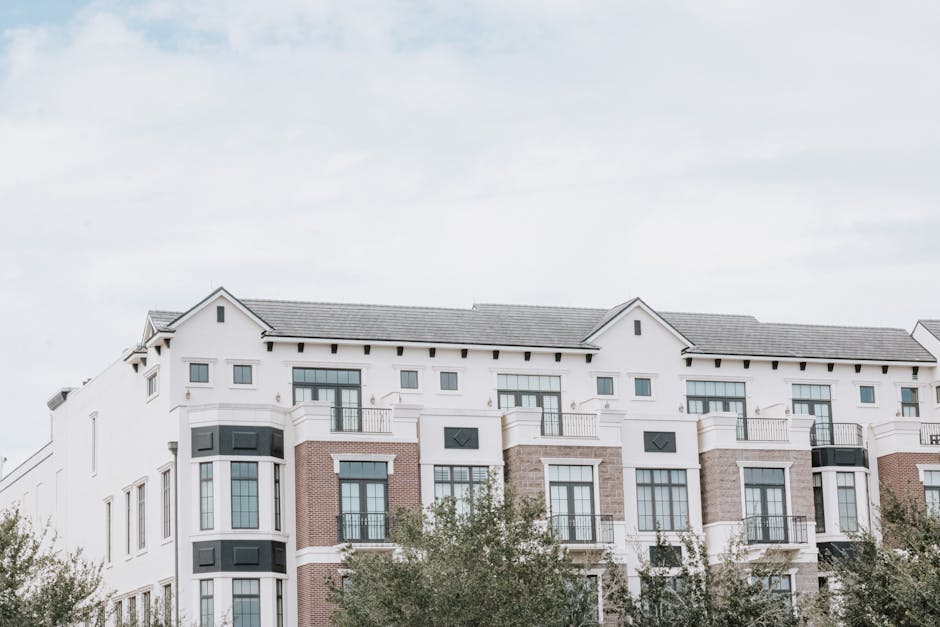
The Tampa luxury residential landscape is currently undergoing a fundamental transformation. Historically categorized as a high-growth secondary market, the region has matured into a primary destination for significant capital allocation. This shift is evidenced by the increasing frequency of eight-figure transactions and a notable escalation in the ceiling for ultra-high-net-worth acquisitions. While the record for a single-family residence in the region stands at $22.5 million, the introduction of trophy estates with nine-figure expectations signals a new era of market liquidity and valuation confidence. High-end buyers are no longer viewing the area as a seasonal alternative but as a foundational component of their real estate portfolios.

This maturation is largely driven by the influx of sophisticated investors who prioritize long-term stability and infrastructure over speculative gains. According to research from Tampa Bay Business & Wealth, the region is moving beyond its early-stage luxury condo status, with a growing emphasis on high-specification vertical living and sprawling waterfront compounds. The demand is particularly concentrated in established enclaves like Davis Islands and the historic corridors of South Tampa, where lot scarcity provides a natural hedge against volatility.
For the senior advisor, the current inventory—consisting of approximately 120 active luxury listings—represents a moment of critical selection. With a median list price hovering near $2,490,000 and an average list price exceeding $3.1 million, the market is bifurcated between legacy properties requiring renovation and newly constructed, high-performance assets that command a premium. Discerning buyers must distinguish between surface-level aesthetic upgrades and structural integrity, especially when evaluating waterfront positions.
Deciphering the Waterfront Premium and Risk Mitigation
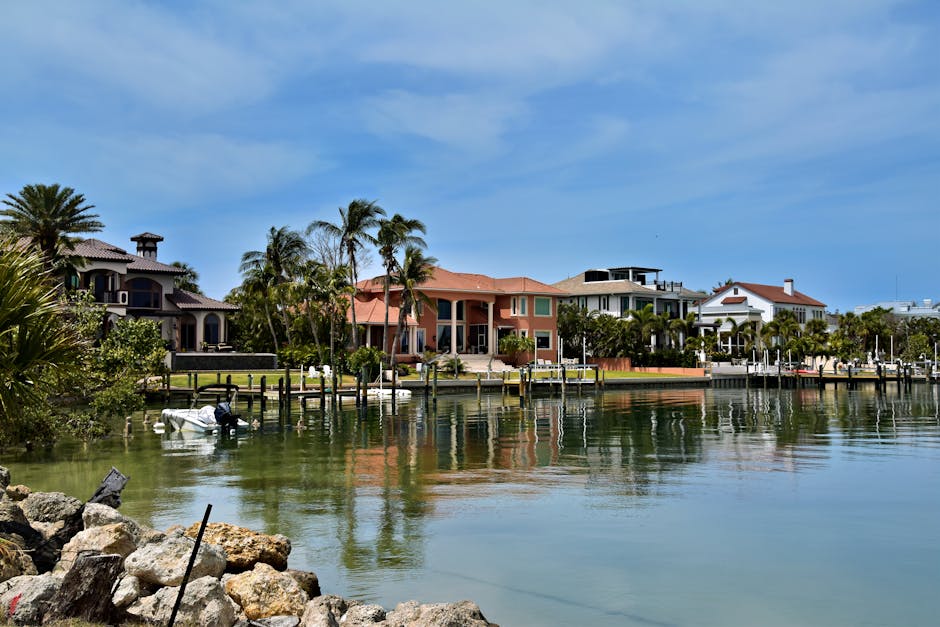
Waterfront assets remain the most resilient segment of the local market, yet they require the most rigorous due diligence. The National Law Review recently highlighted that the Tampa Bay waterfront is emerging as a primary luxury real estate market, attracting buyers who were previously focused on South Florida or the Northeast. This migration is fueled by the relative value proposition of the Gulf Coast, where acre-plus waterfront parcels offer a level of privacy and scale that is increasingly difficult to secure in competing markets.
However, the definition of “luxury” in a waterfront context has evolved. It now encompasses advanced flood mitigation technology, reinforced seawalls, and elevated finished floor heights that exceed minimum code requirements. Buyers are increasingly scrutinizing the “hard” infrastructure of a home as much as the interior finishes. In neighborhoods like Bayshore Boulevard and the deeper water canals of Culbreath Isles, the focus has shifted toward properties that integrate resilient engineering with sophisticated design. This technical focus is a prerequisite for protecting long-term equity in a coastal environment.
Furthermore, the velocity of the waterfront market is influenced by the availability of deep-water docks and bridge-free access to the Gulf. These specific utility features often dictate a property’s ceiling price more than the square footage of the residence itself. When evaluating inventory, such as the current listings in Tampa, advisors must weigh the scarcity of these marine assets against the maintenance obligations they entail. A waterfront position without adequate water depth or frontage length can severely limit future resale liquidity.
Strategic Evaluation of Inventory and Pricing Trends
The current market snapshot reveals a highly curated selection of properties. While the total count of active luxury homes remains lean at 120, the diversity of the offerings is expanding. For instance, recent activity on North Florida Avenue and West Dr. Martin Luther King Jr. Boulevard illustrates the broadening of the high-end footprint into revitalized urban sectors. These locations, while distinct from the traditional waterfront, offer significant value for buyers seeking large parcels or commercial-sale hybrid opportunities. A $2.2 million listing on North Florida Avenue represents a different risk-reward profile than a $1.55 million acquisition on North Grady Avenue, emphasizing the need for neighborhood-level expertise.
Pricing trajectories have stabilized, moving away from the rapid appreciation seen in previous cycles toward a more sustainable growth model. This stability is beneficial for the consideration-stage buyer, as it allows for more methodical decision-making. The average list price of $3,165,369 reflects a market that has found its footing at a higher baseline. Buyers should look for properties that demonstrate a clear architectural pedigree and high-quality materials, as these assets tend to hold value more effectively than mass-market speculative builds.
- Verification of recent elevation certificate and structural flood mitigation measures.
- Assessment of neighborhood-specific deed restrictions and architectural review committee protocols.
- Analysis of proximity to private aviation facilities and high-end retail hubs.
- Audit of mechanical systems, including smart home integration and climate control redundancies.
- Review of historical price per square foot trends within a 500-yard radius.
- Confirmation of dockage permits and riparian rights for waterfront parcels.
Corporate Relocation and Executive Influence
A significant driver of the local luxury sector is the ongoing relocation of executive-level talent to the region. As noted by The Business Journals, executives are increasingly choosing the Tampa and St. Pete areas for their headquarters and personal residences alike. This influx brings a specific set of demands: high-speed connectivity, proximity to international airports, and homes that can function as both private sanctuaries and venues for high-level entertaining. The “executive home” in Tampa is no longer just a large house; it is a sophisticated operations center that reflects a global aesthetic.
This corporate migration is also influencing the geography of the market. While South Tampa remains the epicenter for many, the reach is extending into the suburban-luxury segments where larger acreage is available. The interest in land and land-based estates is growing, as evidenced by the high-value land sales in the MLS snapshot. Buyers are increasingly willing to trade immediate downtown proximity for the ability to curate a custom estate that meets precise specifications. This trend is a indicator of a maturing market where buyers have the confidence to build for the long term.
The synergy between the business environment and the residential market creates a feedback loop of value. As more high-paying jobs and major corporations establish roots here, the floor for real estate prices naturally rises. This is not a speculative bubble but a realignment of the region’s economic status. For those in the consideration phase, understanding this macro-economic backdrop is essential for timing an entry into the market that aligns with broader growth cycles.
Infrastructure, Urban Density, and Accessibility
Urban density in the downtown core and surrounding neighborhoods is a double-edged sword that buyers must navigate. On one hand, the proliferation of world-class events, festivals, and concerts—documented by sources like Axios and City of Tampa traffic advisories—indicates a healthy, active environment. On the other hand, this density impacts accessibility and noise levels. A luxury acquisition must be evaluated for its “micro-location”—how it sits relative to the traffic patterns of a weekend event or the daily commute of the urban center.
Sophisticated buyers are looking for “pockets of quietude” within the city. These are homes that offer immediate access to the cultural amenities of the Riverwalk or Water Street while maintaining a private, residential feel. The ability to move seamlessly between a high-energy downtown environment and a tranquil home base is a hallmark of the modern Tampa luxury experience. When touring properties, it is advisable to visit during both peak event hours and off-peak times to truly understand the cadence of the neighborhood.
Investment in public infrastructure, from park expansions to improved transit corridors, continues to support residential valuations. As the city becomes more navigable and its public spaces more refined, the surrounding real estate benefits. This is particularly true for the historic districts, where the charm of cobblestone streets and mature oak canopies is now being paired with modern urban conveniences. The integration of legacy and progress is what defines the current market sentiment.
Comparative Analysis of the Gulf Coast Market
When assessing the broader Florida market, Tampa offers a compelling case for the analytical buyer. As highlighted by Florida Trend, the real estate landscape across the state is experiencing a period of adjustment, yet the Tampa Bay region remains a standout for its balance of lifestyle and economic fundamentals. Unlike markets that rely solely on tourism, the local economy is diversified across finance, healthcare, and technology, providing a sturdier foundation for real estate values.
The distinction between the Tampa and St. Petersburg markets is also narrowing. While St. Pete has historically been viewed as a more arts-centric and laid-back alternative, it is now competing directly with Tampa for high-end residential capital. For a buyer, this means the entire “Bay Area” should be considered as a single, interconnected luxury market. Whether it is a penthouse in a new downtown tower or a sprawling estate in a secluded enclave, the common denominator is a demand for excellence and a rejection of the generic.
Ultimately, the decision to acquire property in this market should be based on a combination of data-driven analysis and neighborhood-level nuance. The bifurcation of the market means that not all million-dollar properties are created equal. True value is found in those assets that offer a clear competitive advantage—be it water frontage, architectural significance, or strategic location. Navigating this complexity requires a steady hand and a deep understanding of the local landscape.
Selecting the right asset in the Tampa luxury market requires more than a cursory review of digital photos; it demands an on-the-ground assessment of the structural and situational factors that define long-term value. As the region continues its ascent into a primary market for global capital, the opportunities for discerning buyers are significant. To navigate the current inventory and identify properties that align with your specific investment and lifestyle objectives, we invite you to browse our curated luxury listings and contact an advisor to initiate a confidential consultation.
Your next move in Tampa luxury
Get current inventory, pricing guidance, and private-tour support from our brokerage team.
Source highlights
- Tampa’s Price Record Is $22.5 Million. This Huge Estate Is Asking $115 Million. – WSJ
- Column: Why executives keep choosing St. Pete – The Business Journals
- Tampa Bay’s most expensive luxury home sales of 2025 – Tampa Bay Times
- Why Tampa remains an early-stage luxury condo market – Tampa Bay Business & Wealth
- Florida Trend Real Estate – Florida Trend
- Tampa Bay’s Waterfront Emerges as a Primary Luxury Real Estate Market – The National Law Review
- Things To Do In Tampa This Weekend: Best Festivals & Events Going On – That's So Tampa
- Things To Do In St Pete This Weekend: Best Festivals & Events Going On In St Petersburg – I Love the Burg
