


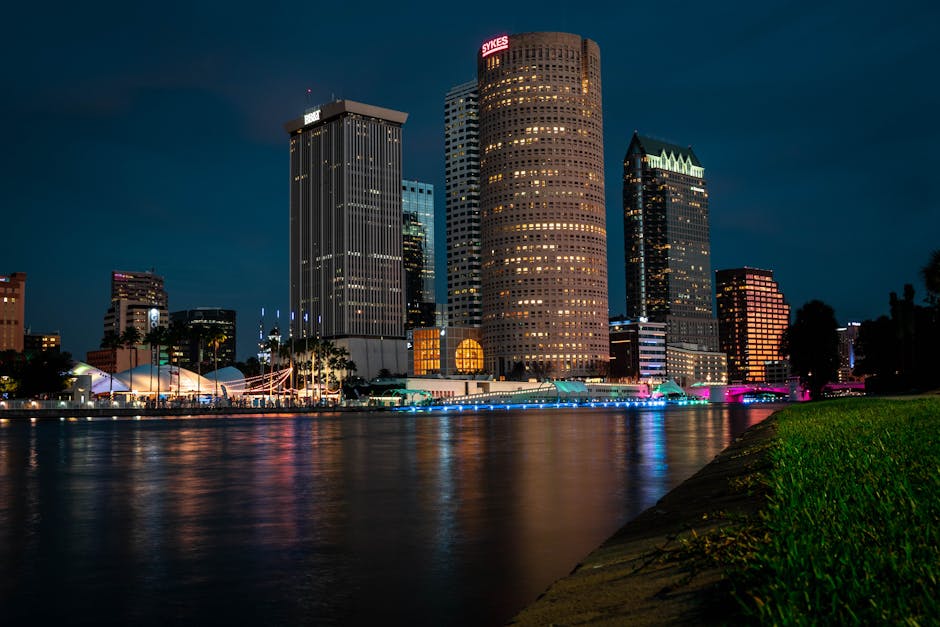
The Institutionalization of the Tampa Luxury Sector
The Tampa luxury real estate landscape has undergone a fundamental transition. What was once a market characterized by seasonal fluctuations and domestic relocation has matured into a primary destination for institutional-grade residential capital. As of May 2026, the median list price for luxury properties in the region has solidified at approximately $2,498,800, with average valuations exceeding $3.1 million. This shift reflects a broader trend of value consolidation, where high-net-worth individuals are prioritizing long-term equity preservation over speculative gains.
Recent market activity underscores this maturation. While a record-breaking estate has recently entered the market with a staggering nine-figure price tag, according to The Wall Street Journal, the real story lies in the consistent velocity of the $2 million to $5 million segment. This tier represents the core of the Tampa executive market, driven by a blend of local business expansion and the arrival of national financial firms. For the strategic buyer, the current environment demands a focus on asset quality and site specificity rather than broad market momentum.
Understanding the current inventory of 120 active luxury listings requires an analytical approach. We are seeing a divergence between legacy properties that require significant capital expenditure and new-construction estates that command a premium for immediate occupancy. In areas like Beach Park and the North Florida Avenue corridor, modern architectural signatures are beginning to replace mid-century ranch styles, creating a more contemporary aesthetic that appeals to a younger, tech-forward demographic. This evolution is not merely cosmetic; it represents a structural upgrade to the city’s housing stock.

Neighborhood Velocity: From South Tampa to the Urban Core
South Tampa remains the anchor of the luxury market, but the definition of ‘prime’ is expanding. Waterfront enclaves such as Davis Islands and Beach Park continue to see high demand, yet the scarcity of available land is pushing savvy investors toward the urban core and established historic districts. The movement toward walkable luxury is palpable, as buyers increasingly weigh the convenience of proximity to Water Street and the Riverwalk against the traditional seclusion of gated suburban estates. This behavior suggests a permanent shift in how luxury is consumed in the region.
The emergence of Tampa’s waterfront as a primary luxury real estate market is now a matter of record. As noted by The National Law Review, this transition has significant implications for land use and coastal development standards. Buyers must now navigate more rigorous building codes and environmental considerations, which, while increasing initial costs, serve to protect the long-term viability of the investment. We advise clients to prioritize properties that exceed current elevation requirements and utilize sustainable materials to mitigate future depreciation.
Beyond the immediate waterfront, neighborhoods like Palma Ceia and Culbreath Isles are exhibiting remarkable price stability. These areas benefit from established school districts and a sense of community that is difficult to replicate in newer developments. For those looking to deploy capital in the current market, we recommend a comparative analysis of price-per-square-foot metrics against recent sales in similarly situated neighborhoods to ensure entry points are aligned with historical growth trajectories. Verification of lot size and easements is critical in these densely populated areas.
Navigating the Waterfront Inventory Constraints
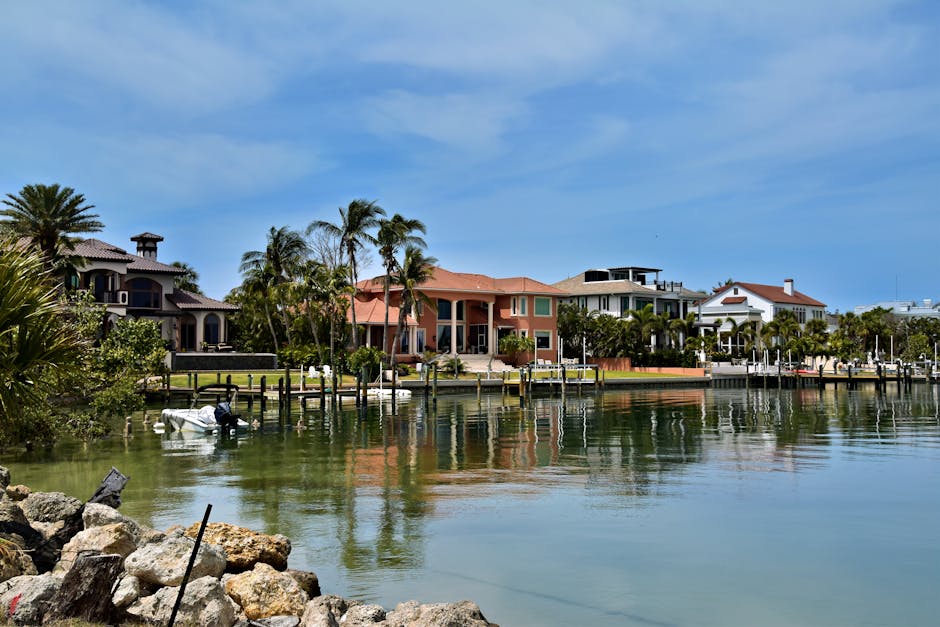
Waterfront inventory in Tampa is currently characterized by its scarcity and the complexity of its acquisition. With only a limited number of deep-water lots available, properties that offer both direct bay access and modern infrastructure are at a premium. Examples like the Troutwater Lane corridor illustrate the demand for estates that blend privacy with coastal utility. Buyers in this segment are often choosing between the immediate gratification of a turn-key residence and the longer-term potential of a custom build on a legacy lot.
When evaluating waterfront opportunities, the focus should be on the ‘hard’ assets: sea wall integrity, dockage depth, and riparian rights. The aesthetic components of a home can be altered, but the physical relationship between the structure and the water is fixed. We are observing a trend where buyers are increasingly willing to pay a premium for properties that have already secured the necessary permits for shoreline enhancements. This reflects a desire to avoid the bureaucratic delays that can often accompany coastal improvements in the current regulatory environment.
Current listings, such as those found in the luxury homes for sale database, reveal a mix of architectural styles, from Mediterranean Revival to sleek, glass-heavy contemporary designs. The latter are particularly popular among buyers relocating from the Northeast and West Coast, who seek to maximize natural light and bay views. However, the Mediterranean style remains a staple of Tampa’s architectural identity, often offering superior thermal mass and storm resilience. Deciding between these styles often comes down to a balance of personal preference and a technical assessment of long-term maintenance requirements.
Acquisition Checklist: Due Diligence in a Primary Market
In a sophisticated market like Tampa, the due diligence process must be exhaustive. The following checklist identifies the critical pillars of a successful luxury acquisition in the current 2026 landscape.
- Elevation and Flood Mitigation: Verify that the finished floor elevation meets or exceeds the most recent FEMA standards for the specific neighborhood.
- Permit History and Unrecorded Liens: Conduct a thorough search of municipal records to ensure all past renovations were properly permitted and closed out.
- Coastal Construction Control Line (CCCL): For bay-front properties, identify the exact location of the CCCL to understand limitations on future expansion.
- Infrastructure Resilience: Evaluate the age and capacity of HVAC systems, roofing materials, and windows for their ability to withstand tropical weather patterns.
- Neighborhood Development Pipeline: Review pending zoning applications within a half-mile radius to identify potential impacts on views or traffic patterns.
Each of these points represents a potential point of failure if ignored. For instance, an unrecorded lien from a previous renovation can complicate a closing and lead to unexpected costs post-acquisition. Similarly, understanding the development pipeline is essential for protecting the ‘quiet enjoyment’ of a luxury estate. Our role is to ensure that these variables are quantified and accounted for during the negotiation phase, providing a clear picture of the property’s true value.
Resilience Metrics: Comparing Tampa to National Benchmarks
While many national luxury markets have experienced a cooling trend over the past 18 months, the Tampa Bay region has demonstrated a unique counter-cyclical resilience. This is not a result of hype, but rather a reflection of robust local economic fundamentals. According to The Business Journals, the market has grown stronger even as other Tier-1 cities have seen a softening in demand. This divergence is largely attributed to a steady influx of high-earning professionals who are prioritizing Florida’s business-friendly environment and the region’s increasing cultural sophistication.
The data-backed reality is that Tampa is no longer viewed as a ‘discount’ alternative to Miami or Naples. It has established its own value proposition based on a diversified economy—spanning healthcare, finance, and technology—rather than a reliance on tourism alone. This economic diversity provides a safety net for residential values, as it ensures a constant pool of qualified buyers regardless of national macroeconomic shifts. For the investor, this means the risk of a significant downward correction is mitigated by the structural demand for executive-level housing.
Prospective buyers should look at the absorption rate of luxury listings to gauge market health. When high-quality inventory, such as the estates on Dr. Martin Luther King Jr. Boulevard or in the heart of the historic districts, moves within a 60-day window, it signals a healthy balance of supply and demand. We recommend tracking these metrics closely to identify the optimal time for entry. While the market is competitive, it remains rational; we are not seeing the frantic overbidding that characterized the early 2020s, which is a positive sign for the long-term stability of the sector.
The Vertical Evolution: Assessing Early-Stage Luxury Condos
The rise of high-rise luxury living in Tampa represents the next phase of the city’s urban evolution. Historically a market dominated by single-family estates, the demand for vertical luxury is now outstripping supply in the urban core. As explored by Tampa Bay Business & Wealth, the city is still in the early stages of its condo market maturation. This presents a unique opportunity for buyers to secure units in flagship developments that are redefining the skyline and offering amenities that were previously unavailable in the region.
Selecting a luxury condominium requires a different set of criteria than a single-family home. One must evaluate the financial health of the homeowners association, the quality of the management team, and the long-term viability of the building’s amenity package. In the 2026 market, ‘amenity creep’ has led to the inclusion of private wellness centers, concierge services, and integrated smart-home technologies as standard features. For the buyer, the focus should be on how these services are funded and maintained, as they will directly impact the resale value of the unit.
The integration of lifestyle and real estate is particularly evident during major local events, such as Riverfest or the various festivals that draw crowds to the downtown waterfront. Living in a high-end condo provides front-row access to these cultural touchpoints while maintaining a secure, private retreat. As the city continues to invest in public infrastructure and green spaces, the value of these centrally located units is expected to follow an upward trajectory. We advise clients to look for developments that offer a high ratio of owner-occupancy, as this often correlates with better maintenance and more stable valuations.
Strategic Acquisition and Advisor Guidance
Navigating the Tampa luxury market in 2026 requires more than a casual interest in local real estate; it demands a disciplined, analytical approach to asset selection. Whether you are targeting a historic estate in South Tampa or a modern waterfront masterpiece, the key to success lies in understanding the nuance of neighborhood-level data and the long-term implications of regional growth. Decisions should be based on verifiable metrics and a clear understanding of your own investment horizon. By focusing on quality, resilience, and site-specific advantages, you can secure a residence that serves as both a private sanctuary and a cornerstone of your financial portfolio.
The current market offers a unique window of opportunity for those who value clarity over noise. We invite you to utilize our expertise and deep local knowledge to refine your search and execute a strategic acquisition. To begin exploring the current inventory of high-end estates and modern residences, we encourage you to browse our curated listings. For a private consultation regarding market movement or to discuss a specific property in detail, please contact our advisory team today. Our commitment is to provide the sophisticated guidance necessary to navigate Tampa’s premier real estate landscape with confidence.
Your next move in Tampa luxury
Get current inventory, pricing guidance, and private-tour support from our brokerage team.
Source highlights
- Tampa’s Price Record Is $22.5 Million. This Huge Estate Is Asking $115 Million. – WSJ
- Tampa Bay’s most expensive luxury home sales of 2025 – Tampa Bay Times
- Tampa Bay luxury market grows stronger despite national declines – The Business Journals
- Why Tampa remains an early-stage luxury condo market – Tampa Bay Business & Wealth
- Jennifer Zales Unveils Venetian Isles Waterfront Luxury Now Offered At A New Price – Haute Living
- Tampa Bay’s Waterfront Emerges as a Primary Luxury Real Estate Market – The National Law Review
- Things To Do In Tampa This Weekend: Best Festivals & Events Going On – That's So Tampa
- City of Tampa officials warn of heavy traffic amid Riverfest and other weekend events – wtsp.com



