


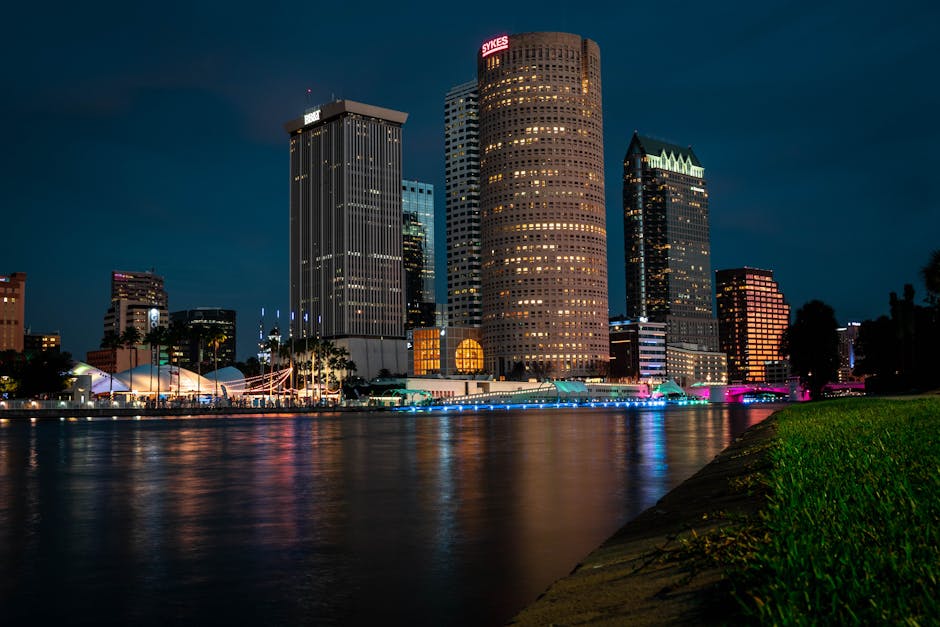
The Strategic Shift in Tampa Waterfront Assets
The transition of Tampa Bay shoreline from a high-value secondary market to a primary residential corridor is now documented by legal and market analysts alike. Experts at The National Law Review identify the waterfront as an emerging primary luxury market, driven by significant capital influx and a structural shift in how high-net-worth individuals view the Gulf Coast. Unlike previous cycles where waterfront assets were primarily viewed through the lens of recreation, today’s acquisitions are centered on long-term wealth preservation and primary domicile utility. This shift is reflected in the sophisticated architectural standards and the integration of advanced storm-hardening technologies in new constructions across Davis Islands and Beach Park.

Buyers are increasingly prioritizing depth-at-dock and riparian rights over simple proximity to the water. In the current landscape, a property’s ability to accommodate deep-draft vessels is not merely a lifestyle preference but a critical component of its resale valuation. We are seeing a concentration of activity in areas that offer direct, bridge-free access to the Gulf, particularly as the demand for private maritime excursions increases among the regional elite. Understanding the nuances of submerged land leases and coastal construction control lines is now a mandatory step in the due diligence process for any serious waterfront investor.
Furthermore, the physical geography of the bay is dictating a new hierarchy of value. Properties situated on the southern tips of Davis Islands or along the deep-water canals of Culbreath Isles are commanding premiums that reflect their scarcity. As the inventory of available coastal land diminishes, the focus has shifted toward the acquisition and redevelopment of legacy lots. This trend toward “land value plus premium” acquisitions ensures that the architectural character of these neighborhoods continues to evolve, replacing mid-century structures with high-performance, contemporary estates designed for the 2026 climate and aesthetic.

Vertical Luxury and the Condo Market Cycle
While traditional estates remain the cornerstone of the local market, Tampa is currently navigating a unique phase in its vertical development. According to analysis from Tampa Bay Business & Wealth, the city remains an early-stage luxury condo market compared to established hubs like Miami or Naples. This early-stage status provides a window of opportunity for buyers seeking modern amenities without the oversupply risks often found in more saturated high-rise environments. The concentration of new development in Water Street and the Westshore District suggests a move toward integrated urban living, where walkability and concierge services are the primary draws.
The distinction between a standard luxury unit and a truly elite vertical asset in Tampa often comes down to the exclusivity of the common areas and the ratio of residents to elevators. Sophisticated buyers are looking beyond square footage, scrutinizing the privacy protocols and the quality of the building’s physical plant. The rise of branded residences has introduced a new level of service standard, where the hospitality element is as important as the real estate itself. This service-centric model is particularly attractive to those transitioning from large estates who wish to maintain a high level of personal attention while reducing the logistical burden of home maintenance.
Investor behavior in the condo sector has also matured. We are observing fewer speculative purchases and more long-term hold strategies. This stability is bolstered by the fact that many of the new developments are being funded by domestic capital with conservative leverage. For the advisor, the task is to differentiate between projects that offer genuine long-term value and those that are simply capitalizing on temporary market enthusiasm. Verifying the track record of the development team and the financial health of the homeowners association is paramount in these high-value vertical transactions.
Neighborhood Comparative: Davis Islands vs. Beach Park
Deciding between the distinct atmospheres of Davis Islands and Beach Park requires an understanding of both logistical needs and social preferences. Davis Islands offers a self-contained, island-suburb feel where golf carts are a primary mode of transport and the community revolves around the yacht club and the local private airport. It is a choice for those who value privacy and a slower pace of life while remaining minutes from the central business district. The architectural diversity here ranges from historic Mediterranean to ultra-modern, providing options for a variety of aesthetic tastes.
Beach Park, by contrast, offers a more traditional mainland luxury experience, characterized by sprawling lots and mature oak canopies. The neighborhood is favored by those who require quick access to the Westshore business corridor and the international airport. While it lacks the “island” isolation of its neighbor, it compensates with larger land parcels and a sense of established permanence. The market movement in Beach Park has been particularly robust in the $3,000,000 to $5,000,000 range, as buyers seek more space for multi-generational living and home-based executive suites.
When comparing these areas, one must also consider the future of local infrastructure. Davis Islands’ proximity to the burgeoning Water Street development provides a unique synergy between quiet residential life and world-class dining and entertainment. Beach Park residents, meanwhile, benefit from the ongoing revitalization of the Gandy corridor, which has improved connectivity to St. Petersburg. Both neighborhoods represent blue-chip investments, but the choice often hinges on whether the buyer prioritizes the nautical lifestyle of the islands or the terrestrial convenience and scale of the mainland.
Essential Due Diligence Checklist for Luxury Buyers
- Verification of elevation certificates and modern flood mitigation infrastructure.
- Analysis of historical resale performance within specific elementary school zones.
- Assessment of dockage depth and riparian rights for waterfront parcels.
- Evaluation of private aviation accessibility and commute times to executive terminals.
- Review of planned commercial developments in adjacent corridors that may impact traffic or views.
- Comparison of HOA mandates and architectural review board stringency.
Inventory Dynamics and Market Velocity
The current luxury inventory in Tampa remains tight, with approximately 120 active listings in the premium bracket. The median list price has stabilized around $2,499,000, but this figure does not fully capture the velocity of the $5,000,000-plus segment. High-end sales in 2025, as reported by the Tampa Bay Times, show that well-positioned waterfront properties are still moving rapidly, often before they reach the public market. This “shadow inventory” of off-market listings is where many of the most significant transactions are occurring.
For buyers, this means that speed and professional networking are just as important as financial readiness. The average list price of over $3,200,000 reflects a market that has moved beyond the post-pandemic correction and into a phase of sustained growth. Buyers are more discerning than they were two years ago, focusing on the quality of finishes and the integrity of the build. We are seeing fewer “bidding wars” and more negotiated transactions that respect the underlying value of the asset. This normalization is a healthy sign for the long-term stability of the Tampa luxury market.
The role of the advisor has transitioned from a facilitator of transactions to a curator of opportunities. In a market with limited inventory, the ability to identify properties that are not yet listed or to negotiate complex contingencies is vital. Buyers are encouraged to look at specific examples like 2 Troutwater Ln or 7705 Gardner Road to understand the level of finish and lot size that defines the current $2.5M to $3.5M range. These benchmarks are essential for calibrating expectations and ensuring that an offer is both competitive and grounded in reality.
Regional Growth: The Sarasota-Tampa Synergy
The luxury real estate story in Tampa is no longer confined to the city limits. The broader regional growth, including developments like the 300 single-family homes proposed in Lakewood Ranch (reported by The Business Journals), indicates a massive expansion of the luxury footprint. This regional synergy is creating a “super-region” where executives and business owners can live in Tampa but maintain significant interests or secondary properties in Sarasota. The I-75 and Suncoast Parkway corridors have become lifelines for this mobile, affluent demographic.
This expansion is also bringing new talent and brokerage models to the area. The emergence of the Nick Janovsky Group with Premier Sotheby’s International Realty is a prime example of the sophisticated teams now operating across the bay. These groups are bringing a global perspective to local transactions, utilizing international networks to connect buyers from the Northeast and Midwest with Florida assets. This professionalization of the industry ensures that the marketing and execution of luxury sales in Tampa meet the same standards found in London, New York, or Los Angeles.
As the region matures, the distinction between “Tampa” and “St. Pete” or “Sarasota” is blurring for the high-end consumer. They view the entire bay area as a single ecosystem of luxury, choosing their primary residence based on specific neighborhood vibes rather than municipal boundaries. This holistic view of the market is essential for any buyer looking to build a diversified Florida real estate portfolio. Understanding how a new development in Lakewood Ranch might impact the value of a property in South Tampa is the kind of cross-regional analysis that defines high-level advisory work today.
Integration of Lifestyle and Event Infrastructure
Luxury real estate is inextricably linked to the cultural and social vitality of the city. Tampa’s ability to host major events, such as the heavy-traffic K-Pop weekends or major festivals reported by FOX 13 Tampa Bay, underscores its status as a world-class destination. For the luxury homeowner, these events represent more than just entertainment; they are indicators of the city’s economic health and its ability to attract and retain global interest.
The convenience of living in neighborhoods like South Tampa or Davis Islands becomes apparent during these high-activity periods. The ability to access downtown venues, professional sports arenas, and cultural centers without the frustration of suburban commutes is a significant quality-of-life driver. This urban integration is a key reason why we see a high retention rate among luxury buyers in the city core. They are not just buying a home; they are buying proximity to a curated lifestyle that includes everything from elite children’s events to high-end dining experiences along the Riverwalk.
Ultimately, the decision to acquire property in Tampa is a decision to participate in the city’s upward trajectory. Whether it is navigating the nuances of the waterfront or selecting the right high-rise unit, the process requires a partner who understands the data as well as the lifestyle. Successful acquisitions are those where the buyer moves beyond the list price and focuses on the long-term utility and enjoyment of the asset within the context of a growing, sophisticated metropolis.
Navigating the complexities of the current market requires a disciplined approach and access to real-time inventory. We invite you to browse our current luxury listings to calibrate your search with the latest available assets. For a private consultation regarding neighborhood analytics or to begin a targeted acquisition strategy, please contact an advisor today.
Your next move in Tampa luxury
Get current inventory, pricing guidance, and private-tour support from our brokerage team.
Source highlights
- Sarasota developer proposes 300 single-family homes in Lakewood Ranch – The Business Journals
- Tampa Bay’s most expensive luxury home sales of 2025 – Tampa Bay Times
- Why Tampa remains an early-stage luxury condo market – Tampa Bay Business & Wealth
- Tampa Bay’s Waterfront Emerges as a Primary Luxury Real Estate Market – The National Law Review
- Florida Trend Real Estate – Florida Trend
- New Signature Real Estate Team Emerges Across Tampa Bay: The Nick Janovsky Group Launches with Premier Sotheby’s International Realty – citybiz
- Things To Do In Tampa This Weekend: Best Festivals & Events Going On – That's So Tampa
- Things To Do In St Pete This Weekend: Best Festivals & Events Going On In St Petersburg – I Love the Burg



