


Current Inventory Dynamics and the $2.5 Million Median
The Tampa luxury residential sector has entered a phase of sophisticated stabilization. With approximately 120 active luxury listings currently on the market, the environment for high-net-worth acquisitions is defined more by selective quality than by sheer volume. While the median list price currently sits at $2,499,000, this figure often masks the significant divergence between legacy properties and the new tier of ultra-luxury builds reaching closer to the $3,300,000 average. Buyers must distinguish between homes priced for the current market and those carrying a premium based on scarcity in specific enclaves like Davis Islands or Hyde Park.

Understanding this inventory requires a shift in perspective from traditional market reports. We are seeing a compression of time-on-market for properties that meet specific architectural and elevation standards. For instance, estates like those found on Troutwater Lane or Memorial Highway represent a category of ‘permanent’ luxury where the land value and privacy buffers insulate the asset against broader economic fluctuations. Sophisticated buyers are increasingly looking past superficial aesthetics to evaluate the underlying site engineering and future-proofing of the structure, particularly in areas susceptible to coastal weather patterns.
The Waterfront Transition: From Seasonal to Primary
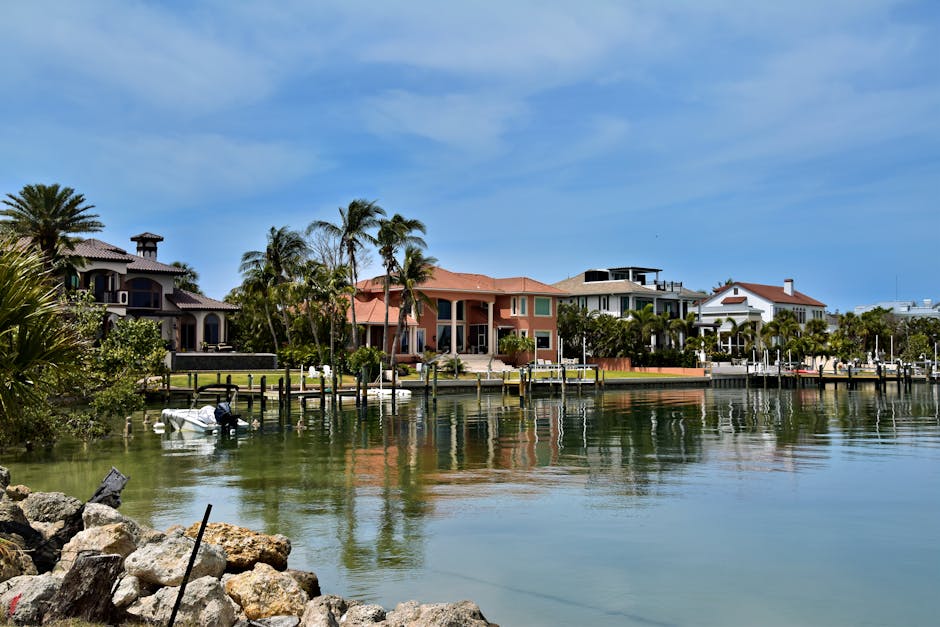
The narrative of the Tampa Bay waterfront is shifting significantly. Traditionally viewed through the lens of seasonal occupancy or vacation utility, the region’s shoreline is emerging as a primary luxury real estate market. According to recent analysis from The National Law Review, the demand for waterfront property is increasingly driven by full-time residents who require the functional infrastructure of a primary home. This includes high-speed connectivity, expansive home offices, and proximity to the growing business hubs in downtown Tampa.
This transition has profound implications for property valuations. Waterfront assets along Bayshore Boulevard and the surrounding canals are no longer compared solely to local historical data; they are being benchmarked against international coastal standards. When evaluating a waterfront acquisition, the focus must remain on the long-term viability of the shoreline. Buyers are prioritizing properties that have already integrated modern mitigation strategies, such as increased sea wall heights and advanced drainage systems. This proactive approach to asset protection is what separates a speculative purchase from a sound long-term investment in the Florida market.
Strategic Acquisitions in the High-End Condo Sector
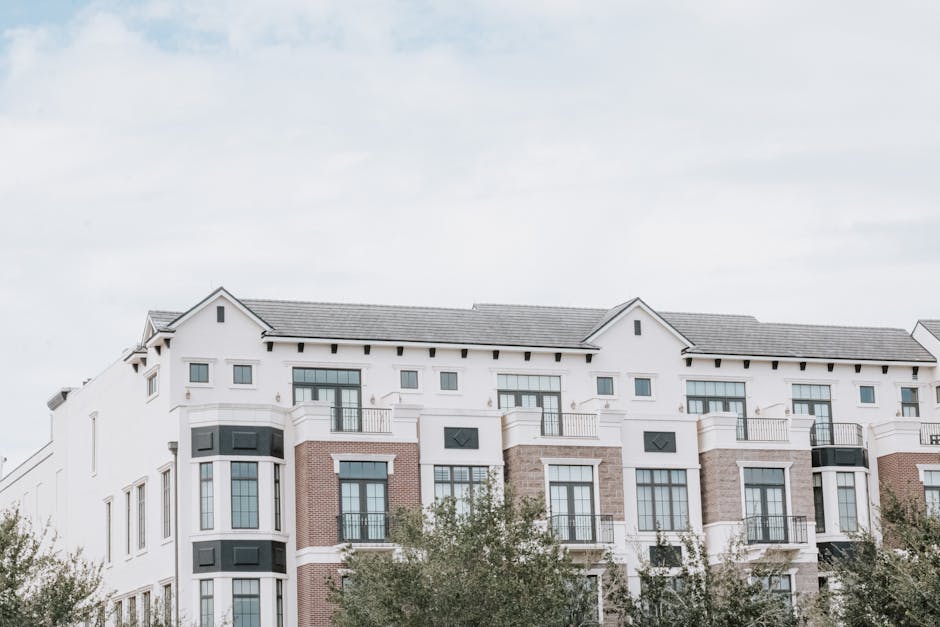
The evolution of the luxury condominium market in the region reflects a broader urban maturation. While downtown St. Petersburg has seen a rapid shift in its luxury definition, the Tampa side of the bay remains in a relatively early-stage luxury condo market. As noted by Tampa Bay Business & Wealth, this creates a unique window for buyers to secure positions in projects that will likely define the skyline for the next several decades. The current trend emphasizes vertical living that mimics the privacy and scale of a single-family home.
Investors should look for developments that prioritize low unit density and high-service amenities. The value proposition of a luxury condo in 2026 is less about the square footage and more about the exclusivity of the lifestyle services provided. Concierge reliability, private elevator access, and integrated wellness facilities are the new baselines for value retention. In neighborhoods like the Channel District or the Water Street corridor, the synergy between residential towers and high-end retail is creating a self-sustaining ecosystem that supports higher price floors compared to isolated developments.
The Private Advisor’s Due Diligence Checklist
Navigating a multi-million dollar acquisition requires a rigorous framework that extends beyond the standard inspection. In the current Tampa climate, the following factors are critical for verifying the integrity of a luxury asset:
- Elevation and Flood Mitigation: Verify the finished floor elevation (FFE) against current and projected flood maps to ensure long-term insurability and safety.
- Mechanical Redundancy: Ensure that large-scale estates, such as those exceeding 6,000 square feet, feature dual HVAC systems and integrated backup power solutions.
- Architectural Provenance: Confirm the builder’s track record in the specific neighborhood to understand the historical performance of their materials in Florida’s humidity.
- Title and Easement Clarity: In dense areas like South Tampa, verify all setbacks and easements to ensure future expansion or privacy hedges are legally permissible.
- Replacement Cost Analysis: Compare the acquisition price against the current cost of land and construction in the specific micro-market to determine intrinsic value.
Evaluating Replacement Cost in Established Neighborhoods
A critical metric for any sophisticated buyer is the replacement cost of the asset. In neighborhoods like Beach Park or Palma Ceia, the scarcity of vacant land has driven lot values to record highs. When an existing luxury home is listed for $2,650,000 or $3,000,000, an analytical buyer must calculate what it would cost to replicate that square footage on a similar lot today. Often, the current list prices represent a significant discount compared to the time and capital required for new construction, which can take 24 to 36 months to complete in the current regulatory environment.
This valuation gap is particularly evident in the 2025 sales data. Reviewing the Tampa Bay Times report on the year’s most expensive sales reveals that the highest premiums are paid for ‘turn-key’ properties that eliminate construction risk. For buyers with a shorter horizon, these ready-to-move-in estates offer immediate utility and a hedge against rising material costs. However, for those with a five-to-ten-year outlook, identifying homes with strong structural ‘bones’ in premier locations like Culbreath Isles can yield substantial equity growth through targeted modernization.
Infrastructure and Neighborhood Longevity
The desirability of a luxury neighborhood is inextricably linked to its infrastructure and accessibility. Tampa is currently experiencing a period of significant event-driven growth, which can impact local traffic patterns and privacy. As reported by WTSP, heavy traffic during peak event weekends is a reality of living in a thriving metropolitan area. When selecting a primary residence, one must consider how these patterns affect the quietude of a specific street or the ease of access to private schools and executive airports.
Neighborhoods that offer ‘internal’ walkability, such as Hyde Park Village or parts of Westchase, command a premium because they provide a buffer against the city’s broader congestion. The long-term liquidity of a home is often tied to its proximity to these lifestyle hubs without being directly impacted by the noise and traffic they generate. We advise buyers to visit potential properties during different times of the week to truly understand the rhythm of the neighborhood. A home that feels serene on a Tuesday morning may have a different character during a major event weekend at the nearby stadium or waterfront park.
The Role of Private Advisory in a Scarcity Market
In a market with only 120 active luxury units, the best opportunities are often those that never reach the public portal. Sophisticated acquisition strategy relies on deep local networks and an understanding of which owners are prepared to sell for the right price, even if their property is not officially listed. This ‘shadow inventory’ is a hallmark of the Tampa high-end market, where privacy is valued above all else. Success in this environment requires a partner who can provide neighborhood-level implications and practical takeaways rather than generic market data.
We focus on providing decision-useful guidance that helps our clients compare assets with precision. Whether you are evaluating a modern estate on Gardner Road or a historic renovation in Old Seminole Heights, the objective is to ensure that your capital is deployed into an asset with both immediate utility and long-term structural integrity. By prioritizing data-backed analysis over marketing hype, we help you navigate the complexities of the Florida luxury market with confidence and clarity.
To navigate the current inventory and identify the property that aligns with your specific portfolio requirements, we invite you to explore our curated collection of Tampa luxury listings. Our team is available for a private consultation to discuss acquisition strategies, neighborhood micro-climates, and the specific nuances of the current market. Please contact an advisor to begin a confidential discussion regarding your real estate objectives in the Tampa Bay region.
Your next move in Tampa luxury
Get current inventory, pricing guidance, and private-tour support from our brokerage team.
Source highlights
- Downtown St. Pete's definition of luxury condos shifts as the city evolves – The Business Journals
- Tampa Bay’s most expensive luxury home sales of 2025 – Tampa Bay Times
- Tampa Bay’s Waterfront Emerges as a Primary Luxury Real Estate Market – The National Law Review
- Sarasota developer proposes 300 single-family homes in Lakewood Ranch – The Business Journals
- Florida Trend Real Estate – Florida Trend
- Why Tampa remains an early-stage luxury condo market – Tampa Bay Business & Wealth
- Things to do with kids this weekend in Tampa, FL – That's So Tampa
- Things To Do In St Pete This Weekend: Best Festivals & Events Going On In St Petersburg – I Love the Burg



