



The Current State of Premium Inventory in Tampa
As we enter the summer of 2026, the premium housing sector in Tampa continues to demonstrate remarkable resilience and structural firmness. With exactly 120 active luxury listings currently populated across the regional market, we are observing a balanced yet highly competitive landscape. This inventory level reflects a stabilization phase, contrasting sharply with the volatile fluctuations observed in previous cycles. Buyers are now operating in an environment where inventory is available, but elite properties command immediate attention. According to recent reporting on how the Tampa Bay luxury market grows stronger despite national declines, local demand remains insulated by continuous corporate relocations and a fundamental shift in executive residential preferences.

Analyzing the current pricing architecture reveals a median list price resting at $2,272,925, while the average list price extends to $2,980,421. This divergence between median and average figures illustrates the presence of ultra-premium outliers that pull the average upward, yet the median provides a highly accurate gauge of the active transactional center. Properties positioned along prominent corridors—such as those recently listed near West Waters Avenue or West Dr. Martin Luther King Jr. Boulevard—demonstrate how valuations have permeated neighborhoods beyond the traditional waterfront enclaves. The dispersion of premium valuations across the city requires buyers to recalibrate their understanding of location-based premiums.
For those monitoring the broader trajectory of the region, the narrative is no longer about sudden, unprecedented spikes, but rather sustained asset retention. Sellers who price in alignment with the $2.2 million to $2.8 million corridor are experiencing steady engagement, provided their properties meet the exacting standards of today’s discerning purchasers. As we navigate the mid-year dynamics, understanding the granular differences between neighborhood micro-markets becomes the most critical component of a successful acquisition or disposition strategy.
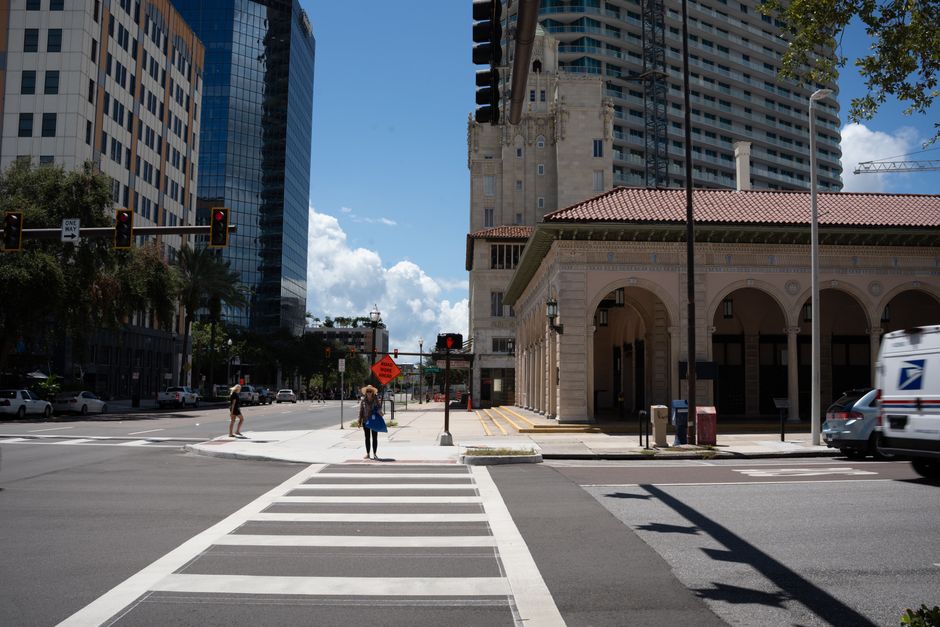
Neighborhood Dynamics and Valuation Shifts
The geographic distribution of Tampa’s elite real estate continues to evolve, yet foundational areas like South Tampa, Davis Islands, and Hyde Park retain their status as the most sought-after enclaves. These neighborhoods represent the convergence of historic architectural pedigree and immediate proximity to the urban core. However, the premium commanded by these districts is prompting active buyers to expand their search parameters. We are observing a distinct migration of capital into adjacent communities where lot sizes offer more flexibility for custom development, and where the density of new construction is actively reshaping the streetscape.
Pricing ceilings are continually being tested in this environment. The introduction of generational estates to the public market has established new benchmarks for the region’s absolute upper tier. A prime example is the recent attention garnered by a colossal listing, as detailed in coverage noting that Tampa’s price record is $22.5 million, while a huge estate is asking $115 million. While such properties represent the extreme apex of the market, their presence influences the psychological valuation framework for the entire region. They signal institutional and ultra-high-net-worth confidence in Tampa’s long-term viability as a premier global destination.
For the active buyer, these valuation shifts necessitate a highly clinical approach to comparative market analysis. Assessing a property on North Grady Avenue at $1.55 million requires a different methodology than evaluating new construction on the open bay. Buyers must isolate the value of the underlying land from the depreciating value of the physical structure. In established neighborhoods, the lot premium often dictates the majority of the asking price, leaving less room for negotiation on the dwelling itself. Understanding this ratio is essential for avoiding over-leverage in highly competitive bidding scenarios.
The interaction between commercial development and residential desirability is also playing a significant role in neighborhood selection. The expansion of premium retail, dining, and boutique commercial office spaces creates walkable nodes that heavily influence adjacent property values. Buyers are increasingly weighting these lifestyle amenities equally with the physical attributes of the homes they are considering, recognizing that neighborhood infrastructure directly correlates with sustained asset appreciation.
Assessing New Developments Versus Heritage Estates
A defining characteristic of the 2026 Tampa market is the ongoing debate between acquiring historical estates versus pursuing new construction. Heritage properties in areas like Hyde Park offer irreplaceable architectural details, established tree canopies, and a distinct sense of permanence. However, these properties frequently require substantial modernization to align with contemporary expectations regarding spatial flow, energy efficiency, and technological integration. Buyers must meticulously calculate the hidden costs of preservation and structural updates when factoring these homes into their portfolios.
Conversely, new construction offers turnkey convenience, the latest in resilient building materials, and optimized floor plans designed for modern executive living. The premium attached to these properties is substantial, effectively pricing in the developer’s risk, material costs, and the luxury of immediate occupancy. In a market where construction timelines can be unpredictable, the certainty of a completed, move-in-ready home is a highly monetizable asset. Yet, buyers must carefully evaluate the quality of finishes and the long-term durability of the architectural design to ensure it will age gracefully within the neighborhood context.
The condominium sector introduces another layer of complexity. As highlighted by local analysts discussing why Tampa remains an early-stage luxury condo market, vertical living in the region is still maturing compared to other coastal metropolises. High-rise developments offer compelling amenities and low-maintenance footprints, appealing particularly to part-time residents and empty nesters. However, the intrinsic value of land remains a dominant factor in Tampa, and buyers must weigh the lifestyle benefits of a luxury tower against the historical appreciation rates of single-family ground-level investments.
When navigating these choices, purchasers should employ a strict framework to evaluate the long-term viability of their investment. The underlying land value remains a constant, but the physical structure requires continuous assessment. The following elements should form the core of any comprehensive property evaluation prior to submitting a binding offer:
- Verification of elevation certificates and current flood zone designations to gauge future insurability and carrying costs.
- Assessment of the property envelope, focusing specifically on roof age, window impact ratings, and exterior material durability.
- Analysis of immediate neighborhood composition, including the ratio of renovated properties to original structures.
- Evaluation of the mechanical systems, emphasizing the capacity and efficiency of the HVAC in handling prolonged high-temperature seasons.
- Review of the local infrastructure pipeline, tracking incoming commercial amenities or potential traffic-altering construction.
Navigating the Buying Process Amid Peak Season Activity
Executing a real estate transaction in Tampa requires an understanding of the region’s operational cadence. The city is a hub of continuous cultural and economic activity, which directly impacts the logistics of property acquisition. For instance, evaluating properties during peak event weekends—such as those featuring major theatrical performances or downtown festivals—can provide a realistic preview of neighborhood traffic patterns. Recent reports from city officials predicting heavy traffic in Tampa amid event-packed weekends underscore the necessity of factoring accessibility into your location strategy.
Furthermore, the environmental realities of a Florida summer dictate specific operational protocols. With temperatures frequently resting in the mid-nineties and consistent afternoon precipitation patterns, the physical inspection of a property takes on heightened importance. Buyers should utilize these conditions to their advantage, observing how a property manages intense heat loads, how the site handles rapid water runoff, and whether the orientation of the home maximizes or mitigates sun exposure. A house that performs well under the stress of a June afternoon is generally a sound structural investment.
The pace of transactions in the premium sector remains deliberate. While the frenetic bidding wars of past years have largely subsided, exceptional properties still command swift action. Buyers must enter the market with their financial structures completely organized. Whether utilizing complex portfolio loans, cash acquisitions, or traditional financing, the ability to present a clean, unencumbered offer is often the deciding factor in securing a premier listing. Sellers prioritize execution certainty over marginal price increases when reviewing competing proposals.
Strategic Positioning for Sellers
For those contemplating the disposition of a premium asset, the current environment demands surgical precision in pricing and presentation. Anchoring expectations to historical anomalies or ultra-luxury outliers will inevitably result in extended days on market. The median list price of $2.27 million serves as a highly reliable indicator of where the bulk of qualified liquidity currently resides. Sellers must objectively evaluate their property against this benchmark, adjusting for specific lot premiums, recent architectural renovations, and neighborhood micro-trends.
The marketing of high-end real estate has fundamentally shifted from broad exposure to targeted, discreet positioning. The modern affluent buyer values exclusivity and curatorial presentation. Listings must be supported by flawless visual assets, comprehensive floor plans, and detailed architectural narratives that answer a buyer’s questions before they are even asked. Highlighting specific upgrades—such as whole-home generators, advanced water filtration systems, or integrated smart-home infrastructure—provides tangible justification for premium pricing and separates a property from competing inventory.
Perhaps most importantly, sellers must anticipate the rigor of the contemporary inspection process. High-net-worth purchasers are employing exhaustive due diligence protocols, scrutinizing everything from the integrity of the seawall to the age of the subterranean plumbing. Addressing deferred maintenance prior to listing is no longer optional; it is a prerequisite for maintaining leverage during the negotiation phase. A pre-inspection can identify potential obstacles, allowing the seller to rectify issues on their own timeline rather than under the duress of a pending contract.
Next Steps for Active Market Participants
The Tampa premium housing sector in mid-2026 is defined by a flight to quality. Whether analyzing the robust single-family inventory or evaluating the emerging luxury condominium landscape, participants must prioritize data-driven analysis over emotional speculation. The market rewards those who deeply understand local zoning nuances, architectural integrity, and the long-term trajectory of specific neighborhoods. With 120 active listings currently commanding attention, the opportunities for strategic acquisition and profitable disposition are significant, provided they are approached with the appropriate level of sophistication.
Moving forward requires a commitment to hyper-local intelligence. General market reports and national housing trends offer little utility when negotiating the specific terms of a multi-million dollar transaction on Davis Islands or in Hyde Park. The nuances of street-level valuations, upcoming infrastructure projects, and localized inventory constraints are the metrics that will ultimately dictate the success of your real estate endeavors. Engaging with an advisor who possesses a granular, empirical understanding of these dynamics is the most effective way to mitigate risk and optimize your position.
For a comprehensive analysis of the current inventory and to begin formulating your specific acquisition or disposition strategy, we encourage you to review our curated portfolio of Tampa luxury homes for sale. Navigating this environment requires precision, and our team is prepared to provide the targeted insights necessary for your success. When you are ready to initiate a detailed discussion regarding your real estate objectives and the specific metrics affecting your targeted neighborhoods, please contact our advisory team to schedule a private consultation.
Your next move in Tampa luxury
Get current inventory, pricing guidance, and private-tour support from our brokerage team.
Source highlights
- How Commercial Real Estate Can Navigate Tampa Bay Housing Deals, From Affordable To Luxury – Bisnow
- Luxury home prices are surging fastest in these 7 U.S. cities in 2026 – qz.com
- Tampa Bay luxury market grows stronger despite national declines – The Business Journals
- Tampa Bay’s most expensive luxury home sales of 2025 – Tampa Bay Times
- Tampa’s Price Record Is $22.5 Million. This Huge Estate Is Asking $115 Million. – WSJ
- Why Tampa remains an early-stage luxury condo market – Tampa Bay Business & Wealth
- Tampa Bay area events this weekend: A 'Wicked' performance, Broadway Unhinged and cliff diving – WUSF
- Tampa weekend events: Concerts, festivals and downtown family fun — What to know before you go – FOX 13 Tampa Bay



