



The Institutionalization of Tampa Luxury Assets
The Tampa luxury landscape has undergone a fundamental structural shift. Historically viewed as a secondary market to South Florida, Tampa has emerged as a primary destination for institutional-grade capital. According to recent reporting on Tampa’s $675 million investment surge, the city is now recognized as a capital of luxury investment. This influx of professional capital has stabilized the market, providing a floor for valuations even during periods of national economic recalibration. For the private buyer, this means the risk of localized depreciation has decreased significantly as the buyer pool has expanded from local professionals to global wealth managers and C-suite relocations.

Currently, the active inventory of luxury homes sits at approximately 120 units, a figure that highlights the scarcity of high-tier product. With a median list price of $2,272,925 and an average price exceeding $3,060,000, the entry point for true luxury assets has recalibrated upward. This pricing is reflective of a market that is no longer speculative but established. Buyers in the current cycle are prioritizing finished, turnkey assets over renovation projects, driven by high construction costs and the desire for immediate utility. Analyzing the movement of these assets requires a move away from broad city-level data and toward neighborhood-specific performance metrics.
Market resilience remains the defining characteristic of this cycle. While other Florida metros have seen inventory bloating, Tampa’s high-end sector has maintained a balanced supply-demand ratio. This is largely due to the geographic constraints of neighborhoods like Davis Islands and Harbor Island, where land is finite. As a senior advisor, I observe that the most sophisticated participants are moving away from the ‘wait and see’ approach. They recognize that the cost of capital is only one variable; the availability of premier waterfront lots and historic Hyde Park estates is the more critical constraint in a maturing market.
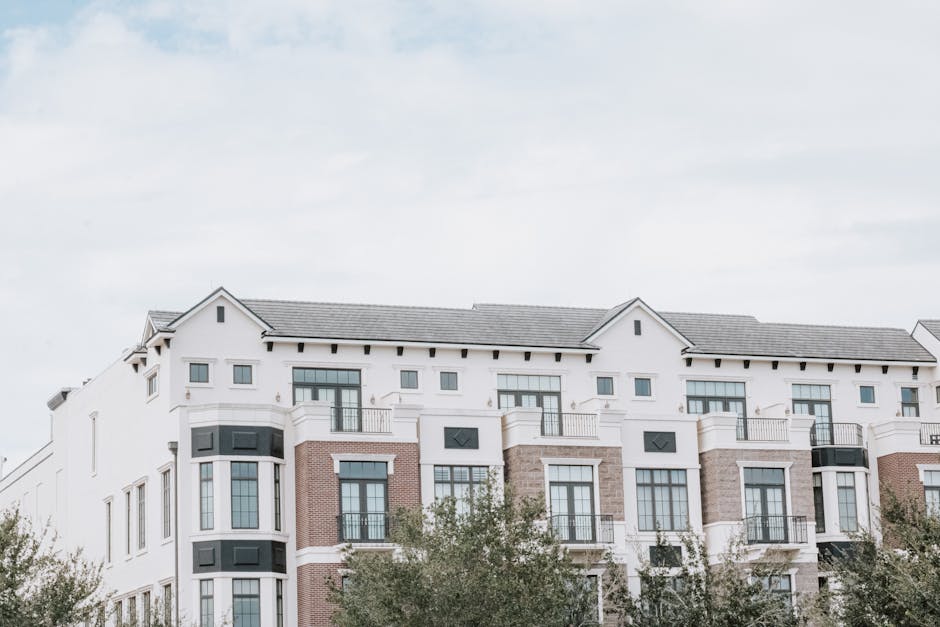
Waterfront Valuation and the Scarcity Premium
Waterfront property remains the gold standard for capital preservation in Tampa. Areas such as Venetian Isles and the coastal stretches of South Tampa continue to command the highest premiums due to their limited supply. The market recently saw significant movement with waterfront listings being recalibrated for the current environment. For instance, high-profile offerings in Venetian Isles demonstrate how adjusted pricing strategies are successfully clearing inventory. This represents an opportunity for buyers to acquire blue-chip assets at prices that reflect a more equilibrated market compared to the peaks of previous years.
The distinction between ‘deep water’ and ‘canal-front’ has never been more relevant for the long-term investor. As the size of luxury vessels increases, properties capable of accommodating significant drafts and beam widths are seeing a divergence in value from shallower alternatives. Buyers should meticulously verify riparian rights and sea wall integrity during the due diligence phase. In the current market, a well-maintained sea wall is not just a utility; it is a critical component of the asset’s appraisal value. We are seeing a trend where buyers are willing to pay a 15-20% premium for properties with recently modernized marine infrastructure.
Neighborhoods like Beach Park and Culbreath Isles are benefiting from a flight to quality. These areas offer a combination of privacy, proximity to private aviation at Tampa International, and established community character. The buyer behavior here is increasingly analytical, focusing on the price per square foot of land rather than just the structure. In a market where the average list price is over $3 million, the underlying land value often accounts for 50-60% of the total acquisition cost. Understanding this ratio is essential for those looking to hedge against future market shifts while maintaining a residence in a premier location.
The Early-Stage Luxury Condo Market
One of the most compelling narratives in Tampa is the evolution of the high-rise sector. Historically a single-family home market, Tampa is now being recognized as an early-stage luxury condo market. This transition is driven by a desire for the lock-and-leave convenience typical of global cities like New York or Miami, but with the specific lifestyle advantages of the Gulf Coast. New developments along Bayshore Boulevard and within the Water Street district are setting new benchmarks for price per square foot, often exceeding traditional single-family home averages.
The shift toward vertical luxury is not merely a trend; it is a response to the scarcity of developable land. For the buyer, this presents a different set of considerations, primarily regarding HOA health, amenity packages, and view corridor protection. As more towers rise, the value of a ‘guaranteed’ view becomes exponentially higher. Buyers are now prioritizing units in buildings with robust reserve funds and professional management, viewing these as safer long-term holds than older, smaller-scale buildings. The condo market is where we see the highest concentration of out-of-state buyers, many of whom are downsizing from large estates in the Northeast or Midwest.
Analytical buyers are focusing on the pipeline of new inventory. While several projects are in the planning phases, the number of units actually reaching completion in 2026 remains constrained. This supply-side pressure suggests that early entrants into these flagship buildings may see significant appreciation as the district matures. It is advisable to compare the service levels and staff-to-resident ratios of these new buildings, as these ‘soft’ amenities are what will differentiate premier assets in the secondary market five to ten years from now. Current market data suggests that the luxury condo segment is outperforming the broader residential market in terms of price retention.
Strategic Due Diligence for Tampa Acquisitions
In a high-stakes environment where individual transactions often exceed $5 million, a standardized approach to due diligence is insufficient. The complexity of Florida’s building codes, insurance requirements, and environmental considerations necessitates a rigorous verification process. Sophisticated buyers are now employing multi-disciplinary teams including structural engineers, insurance consultants, and land-use attorneys before waiving contingencies. This is no longer about checking boxes; it is about quantifying future ownership costs and identifying potential liabilities that could impact the exit strategy.
- Verify the elevation certificate and current flood zone designation to accurately project annual insurance premiums.
- Analyze the age and material of the roofing system and HVAC components to anticipate capital expenditures within the first 36 months.
- Review the property’s history of seawall inspections and any existing riparian rights or dock permits.
- Assess the surrounding parcels for planned developments that could impact privacy or view corridors.
- Evaluate the neighborhood’s historical price floor during market contractions to determine the asset’s defensive qualities.
- Ensure all additions or major renovations have been fully permitted and closed out with the relevant municipal authority.
The insurance landscape in Florida remains a focal point for any luxury acquisition. While Florida real estate trends show continued demand, the cost of coverage has become a material factor in the total cost of ownership. Properties built to post-2002 building codes generally command better rates and wider availability of coverage. For older estates in neighborhoods like Hyde Park, documenting historical renovations and upgrades to electrical and plumbing systems is essential for securing favorable terms. Buyers should engage an insurance broker early in the process to obtain binding quotes during the inspection period.
Neighborhood Evolution and the Migration of Wealth
The geography of wealth in Tampa is expanding beyond traditional enclaves. While Davis Islands and Hyde Park remain the most prestigious addresses, we are seeing a significant migration toward Westshore and the areas surrounding Midtown. This movement is driven by the desire for newer construction and larger lot sizes that are unavailable in the historic core. The strength of the luxury market in these emerging pockets is a testament to the city’s overall economic health. These areas offer a different value proposition, often providing modern architecture and smart-home integration that is difficult to retro-fit into older homes.
Buyer behavior has shifted toward a preference for walkability and integrated lifestyle amenities. This is why districts like Hyde Park Village have seen such sustained price growth; the ability to access high-end retail and dining without a vehicle is a rare commodity in Florida. As an advisor, I recommend looking at the ‘path of progress’—those areas adjacent to established luxury hubs that are seeing private investment in infrastructure and commercial services. These transition zones often provide the best balance of lifestyle utility and capital appreciation potential over a 5-to-10-year horizon.
Furthermore, the ‘South Tampa’ designation is being more precisely defined by buyers. The distinction between being North or South of Gandy Boulevard, for example, has significant implications for school zoning and commute times to the business districts. Investors are paying close attention to municipal investments in drainage and road improvements, as these factors directly correlate with neighborhood desirability. We are currently seeing a ‘flight to quality’ where buyers are willing to sacrifice square footage for a superior location within a highly-rated school district or a more resilient piece of land.
The Role of Data in Private Wealth Real Estate
In the current market, anecdotal evidence is no longer sufficient for making multi-million dollar decisions. The most successful buyers are those who leverage data to identify market asymmetries. For example, understanding that the most expensive sales of 2025 were often completed off-market or with minimal public marketing highlights the importance of deep local connections. These ‘quiet’ sales often represent the true ceiling of the market and provide the most accurate benchmarks for appraisal and negotiation.
We track metrics such as days-on-market for specific price tranches and the ratio of list price to sales price. Currently, well-priced assets in the $3M to $5M range are moving within 45 days, while overpriced inventory often stagnates for over six months, eventually selling at a significant discount to the original ask. This suggests that while there is ample liquidity, buyers are disciplined and refuse to overpay for average product. The ‘advisor’ role has transitioned from a facilitator of access to an analyst of value, helping clients distinguish between a fair market price and a speculative outlier.
The influence of international wealth should also be noted. As Tampa’s profile grows through events and professional sports, it has entered the conversation for global family offices. This adds a layer of stability to the market that was missing in previous decades. When a market attracts institutional interest and global wealth, the volatility typically associated with residential real estate is mitigated. For the private buyer, this means their residence is not just a lifestyle choice, but a defensive asset class within their broader portfolio. The current inventory of 120 luxury homes represents a finite set of opportunities in a city that is increasingly being viewed as a ‘safe harbor’ for capital.
Conclusion: Navigating the 2026 Acquisition Cycle
Success in the 2026 Tampa market requires a blend of local expertise and analytical rigor. The transition of the city into a luxury investment capital has raised the stakes for every transaction. Whether you are targeting a historic estate in Hyde Park, a modern waterfront masterpiece in Davis Islands, or a high-rise residence in Water Street, the fundamentals of scarcity, location, and infrastructure quality remain the primary drivers of value. The current median price of $2.2M is likely to be viewed as a baseline in the coming years as the city continues its upward trajectory.
Prospective buyers should focus on the quality of the underlying asset rather than trying to time the bottom of a market that has shown remarkable resilience. The most desirable properties often never reach the public MLS, making it essential to work with an advisor who is integrated into the private network of Tampa’s high-net-worth community. As inventory remains tight, the ability to move quickly with a verified team of experts will be the difference between securing a premier asset and missing out on a generational opportunity. The market is equilibrating, but the premium for excellence is only increasing.
To navigate these complexities and identify the most promising opportunities in the current inventory, it is essential to have a partner who understands the neighborhood-level nuances of the Tampa market. We invite you to explore our curated selection of LISTINGS URL to gauge the current state of available inventory. When you are ready to discuss your specific acquisition criteria and develop a strategic plan for your next move, please CONTACT URL an advisor for a private consultation.
Your next move in Tampa luxury
Get current inventory, pricing guidance, and private-tour support from our brokerage team.
Source highlights
- Tampa Bay’s most expensive luxury home sales of 2025 – Tampa Bay Times
- Tampa Bay luxury market grows stronger despite national declines – The Business Journals
- Why Tampa remains an early-stage luxury condo market – Tampa Bay Business & Wealth
- Florida Trend Real Estate – Florida Trend
- Jennifer Zales Unveils Venetian Isles Waterfront Luxury Now Offered At A New Price – Haute Living
- Inside Tampa’s $675 Million Surge: How the City Became Florida’s New Luxury Investment Capital – hauteresidence.com
- Tampa Bay area events this weekend: Sharkapalooza and St. Pete Italian Fest – WUSF
- Things To Do In St Pete This Weekend: Best Festivals & Events Going On In St Petersburg – I Love the Burg



