


The Maturation of Tampa Waterfront Assets
The landscape of luxury real estate in Tampa has undergone a fundamental transformation. What was once viewed by many national buyers as a secondary or seasonal destination has matured into a primary residential market of significant weight. This shift is most visible along the coastal corridors where the demand for high-end, functional waterfront property has outpaced speculative investment. Buyers are now prioritizing long-term utility, seeking residences that offer both the privacy of a retreat and the logistical advantages of a metropolitan hub.
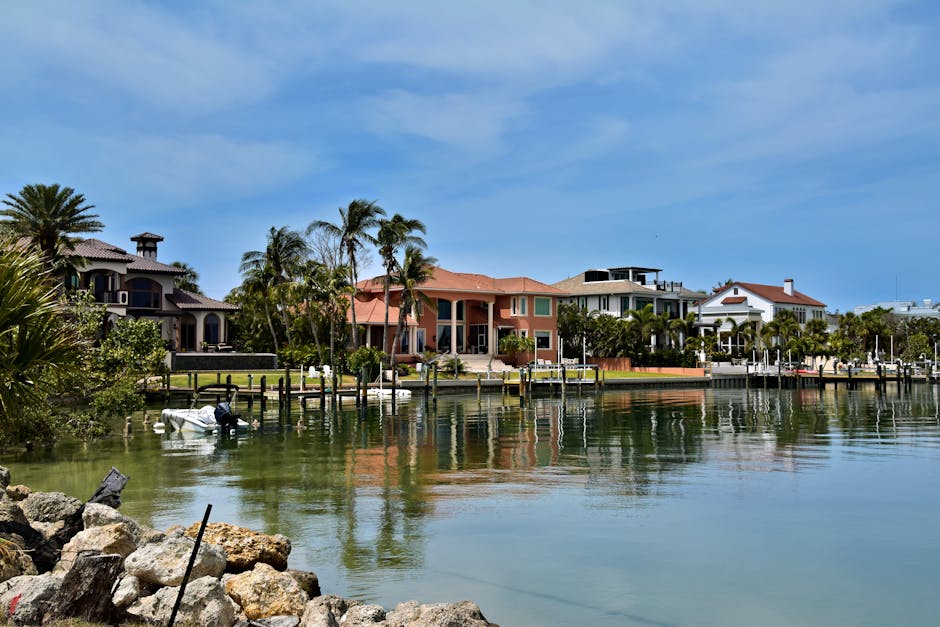
As noted by The National Law Review, the emergence of the waterfront as a primary market signifies a stabilization of the local economy. Investors and residents are no longer just looking for a view; they are looking for a permanent footprint in a region that has proven its resilience. This maturation affects everything from zoning considerations to the architectural standards of new builds, as developers pivot to accommodate families and executives who intend to occupy these homes year-round.
For the sophisticated buyer, this means that the competitive landscape has changed. The days of finding undervalued coastal gems are largely over, replaced by a market defined by transparency and high-stakes negotiation. Success in this environment requires a deep understanding of neighborhood-level micro-trends and the ability to distinguish between aesthetic appeal and structural longevity. Waterfront assets in particular require rigorous scrutiny of seawall integrity and flood mitigation strategies, which are now standard components of any serious acquisition brief.
Ultimately, the move toward primary residency status has bolstered the intrinsic value of Tampa’s most prestigious addresses. When properties are held for decades rather than flipped in cycles, the community character stabilizes, creating a more predictable and prestigious environment. This trend is a clear indicator that the region’s luxury sector has reached a level of sophistication comparable to established global markets, demanding a more analytical approach from those looking to enter or expand their portfolio.
Why Executive Relocations Prefer the St. Petersburg-Tampa Corridor
The migration of corporate leadership to the Tampa Bay area is not merely a search for better weather. It is a calculated move driven by the region’s favorable tax environment and the strategic growth of executive hubs in both Tampa and St. Petersburg. High-net-worth individuals are increasingly choosing these cities because they offer a high-functioning infrastructure that supports both professional ambitions and a refined personal life. The synergy between the two cities creates a unique dual-market advantage that few other coastal regions can match.
Reports from The Business Journals highlight that executives are increasingly drawn to the urban core and surrounding luxury enclaves for their proximity to innovation districts. This professional gravity pulls in a demographic that values efficiency and connectivity. Consequently, properties that offer quick access to private aviation terminals and major financial centers are seeing the highest retention rates. The focus has shifted toward integrated living, where the home office is as technologically advanced as the primary corporate headquarters.
Furthermore, the cultural infrastructure of the region has expanded to meet the expectations of these new residents. From high-end dining to private social clubs, the amenities available in neighborhoods like Davis Islands or the historic districts of St. Petersburg provide a social framework that facilitates networking and community building. This is a critical factor for families moving from major northern hubs; they are not just buying a house, they are buying into a network of peers and professionals.
For those navigating this relocation, understanding the nuances between the various executive corridors is essential. Whether it is the quiet prestige of a South Tampa estate or the modern high-rise luxury of the downtown waterfront, each area offers a different lifestyle profile. Investors should look for properties that bridge the gap between historic charm and modern utility, ensuring that the residence remains a functional asset in an evolving professional landscape. You can browse current opportunities via our LISTINGS URL to see how these executive preferences are manifesting in current inventory.
Inventory Mechanics: New Construction and Market Supply
The current state of the luxury inventory in Tampa is defined by a delicate balance between historic scarcity and the arrival of new, high-spec construction. With approximately 120 active luxury listings currently available, the market is tight but offers high-quality options for those ready to move decisively. The median list price has stabilized around $2,300,000, while the average list price has climbed to $3,100,916, reflecting the significant volume of ultra-high-end estates that have recently entered the market.
Market data from Tampa Bay Business & Wealth indicates that even as mortgage rates hover near 6.09%, the influx of new construction is helping to satisfy the demand for modern floor plans and smart-home integration. These new builds are often being snatched up before completion, particularly those that offer innovative architectural solutions for coastal living. For buyers, this means that the window of opportunity for customized new construction is narrow, requiring early engagement with developers and advisors.
Historical estates continue to hold their value, but they are increasingly being evaluated against the efficiency of newer models. Savvy buyers are comparing the cost of extensive renovations in established neighborhoods like Hyde Park against the premium of a turn-key modern residence in burgeoning areas. The decision often comes down to the preference for architectural character versus the desire for low-maintenance, high-efficiency systems that modern construction provides. Both property types—Residential and Land—are seeing significant activity as builders look for the next prime footprint.
Understanding these supply dynamics is crucial for timing an acquisition. As new inventory hits the market, there can be brief periods of increased selection, but the underlying demand for the Tampa lifestyle remains a constant upward pressure. Strategic buyers should maintain a close watch on the pipeline of upcoming projects and be prepared to act on off-market opportunities. To discuss specific off-market leads or to refine your search criteria, we encourage you to use our CONTACT URL for a direct consultation.
Essential Due Diligence for High-Value Acquisitions
Purchasing a luxury property in the $2 million to $5 million range requires a more rigorous level of due diligence than a standard residential transaction. The complexity of these assets—ranging from intricate seawall structures to specific coastal zoning laws—demands a specialized approach. A checklist for these acquisitions should go beyond the cosmetic and focus on the structural and legal health of the property to ensure long-term value retention.
A senior advisor should always recommend a thorough investigation of the property’s history and its surrounding environment. This includes looking at municipal development plans that could affect future views or neighborhood density. In the Tampa market, the following steps are non-negotiable for a secure investment:
- Evaluate seawall integrity and elevation certifications on all waterfront lots to mitigate future environmental risks.
- Review historical appreciation data for specific enclaves like Davis Islands or Sunset Park to confirm market stability.
- Verify buildable square footage against current municipal setback requirements for any planned renovations or additions.
- Analyze the proximity to emerging executive hubs and private aviation facilities for logistical efficiency.
- Assess the impact of recent infrastructure improvements on local neighborhood accessibility and noise levels.
- Review the specific HOA or neighborhood association bylaws for restrictions on architectural modifications.
By following this systematic approach, buyers can avoid the pitfalls that often accompany high-stakes real estate transactions. Each of these points addresses a potential variable that could impact the home’s resale value or the owner’s quality of life. The goal is to move from a position of interest to one of informed confidence, ensuring that the final acquisition aligns with both lifestyle goals and financial objectives.
Neighborhood Intelligence: From South Tampa to Venetian Isles
Neighborhood selection in Tampa is a study in distinct lifestyle profiles. While South Tampa remains the traditional center of gravity for established luxury, new pockets of prestige are emerging. For instance, properties like those found on North Florida Avenue at $2,200,000 or near W Dr. Martin Luther King Jr. Boulevard at $2,900,000 demonstrate the expanding reach of high-value investment into areas that offer larger lot sizes and unique architectural possibilities. These ‘edge’ neighborhoods are attracting a younger, more design-conscious demographic of buyers.
On the waterfront side, the market is seeing a renewed focus on private enclaves. As reported by Haute Living, the Venetian Isles area continues to attract significant attention with newly priced luxury offerings. These neighborhoods offer a specific type of boating-centric lifestyle that is hard to replicate. The ability to dock a vessel directly behind one’s residence remains one of the most powerful drivers of value in the region, particularly as accessible dockage becomes scarcer across the Florida coast.
Internal movements within the city also reflect a desire for community and walkability. Areas like North Grady Avenue, where listings are seeing prices around $1,550,000, offer a more residential feel while remaining minutes from the urban core. This balance of privacy and proximity is a recurring theme in buyer requests. Advisors must help clients weigh the trade-offs between the established prestige of a South Tampa zip-code-equivalent area and the growth potential of these emerging secondary luxury markets.
Ultimately, the right neighborhood is the one that fits the buyer’s daily rhythm. Whether it is the historic oak-lined streets of Hyde Park or the modern, expansive vistas of a waterfront estate, the diversity of Tampa’s luxury landscape is its greatest strength. By analyzing current sales data and neighborhood development plans, we can identify which areas are poised for the next phase of growth. The diversity of property types, including Commercial Sale and Land, further enriches the market, providing options for varied investment strategies.
Valuation Analysis: Navigating the $3 Million Entry Point
As the average list price in Tampa’s luxury sector approaches $3.1 million, the definition of ‘entry-level luxury’ has been recalibrated. Buyers looking at this price point are no longer just looking for a large home; they are looking for a cohesive architectural statement and high-end finishes as standard. Valuation in this tier is driven by more than just square footage; it is driven by exclusivity, provenance, and the quality of the built environment. According to the Tampa Bay Times, the record-breaking sales of 2025 have set a new benchmark for what is possible in the region.
To navigate these valuations, one must look at the specific attributes that justify a premium. This includes things like custom cabinetry, imported stone, advanced security systems, and professionally designed outdoor living spaces. In Tampa, the ‘outdoor room’ is a significant value-add, often accounting for a substantial portion of the total property valuation. When comparing properties, buyers should look for a seamless transition between indoor and outdoor spaces, as this is a hallmark of the modern Florida estate.
Inventory turnover in the $3 million range remains steady, indicating that there is a deep pool of qualified buyers for well-priced, high-quality assets. However, overpriced properties or those with significant deferred maintenance are seeing longer days on market. This highlights the importance of an accurate valuation before listing or making an offer. Sellers must be realistic about their property’s position in the hierarchy, while buyers must be prepared to pay a premium for truly exceptional real estate that meets all their criteria.
For those interested in the broader economic context of these valuations, Florida Trend provides ongoing analysis of how real estate trends correlate with the state’s overall economic health. This macro view can help buyers understand the long-term viability of their investment. In a market where the average price is climbing, the focus should remain on quality over quantity. An expertly curated home in a prime location will always outperform a larger, less thoughtful property in the long run.
Strategic Timing and Local Infrastructure Integration
Success in the Tampa luxury market is often a matter of timing. Understanding the local event calendar and infrastructure projects can provide a strategic advantage. For example, the seasonal influx of visitors for major events—from Memorial Day weekend festivals to high-profile sporting events—often correlates with a surge in real estate activity. Buyers who are active during off-peak windows or who understand the impact of local cultural shifts can often find better terms or unique opportunities. Local guides like the Tampa Bay Date Night Guide offer insight into the lifestyle patterns that drive neighborhood desirability.
Infrastructure is another critical piece of the valuation puzzle. The ongoing investment in the downtown waterfront, the expansion of local transit options, and the improvement of public parks all contribute to the long-term desirability of nearby luxury residences. Properties that are within walking distance of these amenities or that benefit from improved traffic flow are seeing higher appreciation rates. A senior advisor will always look at the municipal planning board’s five-year plan to see how future projects will impact a specific address.
Finally, the sense of community in Tampa is a powerful, if intangible, driver of value. The city’s ability to host diverse events—from blues festivals to high-end jazz performances—creates a rich cultural tapestry that appeals to the sophisticated buyer. This ‘quality of life’ factor is often what tips the scale for an executive deciding between Tampa and another coastal city. When the logistical advantages of the region are combined with a vibrant social scene, the resulting market is one that remains robust regardless of broader economic fluctuations.
The path to a successful acquisition in this environment is clear: combine data-backed analysis with a deep understanding of local neighborhood dynamics. By focusing on primary residency utility, structural integrity, and long-term infrastructure integration, you can secure an asset that serves as both a private sanctuary and a sound financial pillar. We invite you to explore our current LISTINGS URL to identify properties that meet these high standards, and to reach out to our team at our CONTACT URL when you are ready to discuss your next move in the Tampa luxury market.
Your next move in Tampa luxury
Get current inventory, pricing guidance, and private-tour support from our brokerage team.
Source highlights
- Column: Why executives keep choosing St. Pete – The Business Journals
- Tampa Bay’s most expensive luxury home sales of 2025 – Tampa Bay Times
- Mortgage rates fall to 6.09% as new construction lifts Tampa supply – Tampa Bay Business & Wealth
- Tampa Bay’s Waterfront Emerges as a Primary Luxury Real Estate Market – The National Law Review
- Jennifer Zales Unveils Venetian Isles Waterfront Luxury Now Offered At A New Price – Haute Living
- Florida Trend Real Estate – Florida Trend
- Things To Do In Tampa This Weekend: Fun Festivals & Events In Tampa This Weekend – That's So Tampa
- Tampa Bay-area events this weekend: Sharkapalooza and St. Pete Italian Fest – WUSF
