


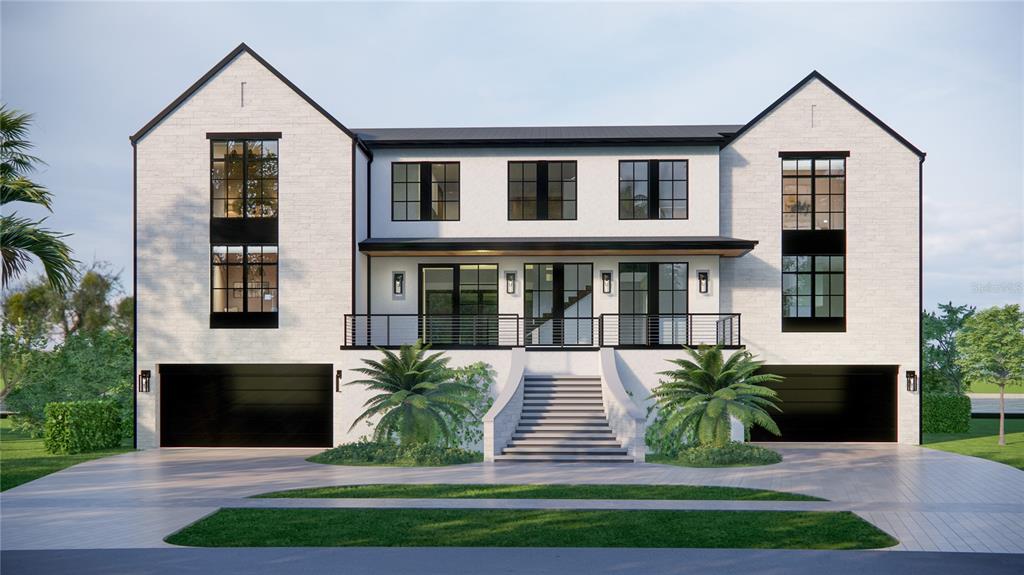
Strategic Shifts in the Tampa Luxury Market
The Tampa luxury real estate sector has transitioned from a period of rapid appreciation to one of sophisticated stability. As of mid-2026, the market presents a nuanced landscape for the high-net-worth buyer, characterized by a median list price of approximately $2,300,000 and an average reaching beyond $3,111,000. This pricing reflects a shift in buyer intent, where the emphasis has moved from speculative gains to long-term utility and architectural merit. Current inventory levels, with roughly 120 active luxury listings, suggest a balanced environment where well-positioned assets command premium valuations while mispriced properties face extended days on market.
Sophisticated investors are increasingly looking at the structural integrity and lifestyle integration of properties rather than surface-level aesthetics. The emergence of high-value sales, as documented in Tampa Bay’s most expensive luxury home sales of 2025, underscores the continued appetite for trophy assets in established enclaves. Buyers are no longer settling for generic renovations; they are seeking custom builds that offer technological resilience and sustainable design. This movement is particularly evident in South Tampa and the coastal fringes, where elevation and modernized infrastructure have become non-negotiable requirements for capital preservation.
Understanding this landscape requires a move away from broad market generalities toward a neighborhood-level analysis. The interplay between local demand and out-of-state migration continues to drive the narrative. For those navigating this space, the objective is clear: identify assets that offer a combination of scarcity, location-based permanence, and functional superiority. Browse current opportunities through our curated LISTINGS URL to gauge the current quality of available inventory across the region.
The Executive Migration and Regional Competition
A significant driver of the current market activity is the sustained influx of corporate leadership and entrepreneurs relocating to the Tampa Bay area. While Tampa remains a primary draw, the competitive landscape has broadened. Executives are increasingly evaluating the broader metropolitan area, with many finding the professional and cultural synergy in neighboring districts compelling. This trend is highlighted by recent analysis on why executives keep choosing St. Pete, citing a mix of walkability and commercial opportunity that rivals traditional Tampa hubs.
In Tampa proper, neighborhoods such as Hyde Park and Davis Islands continue to hold a dominant position for those seeking proximity to the central business district and top-tier educational institutions. The migration is not merely about residential placement but about establishing a long-term base for professional operations. This has led to an increased interest in properties that offer flex-space or dedicated home-office wings with enterprise-grade connectivity. The demand for these features has created a micro-market where homes equipped for high-level remote management command a significant premium over traditional layouts.
This executive movement also influences the retail and service landscape, further solidifying property values. As high-income households cluster in specific corridors, the commercial infrastructure—private clubs, high-end dining, and boutique retail—responds in kind. This creates a self-reinforcing cycle of desirability. When evaluating a potential acquisition, it is essential to consider not just the property, but the trajectory of the surrounding commercial developments and the demographic profile of incoming residents.
Condominium Market Evolution and Vertical Luxury
Tampa is currently witnessing a maturation of its vertical luxury sector. Historically viewed as a secondary option to single-family estates, high-rise living is now a primary choice for a specific segment of the affluent population. This shift is explored in recent industry reports detailing why Tampa remains an early-stage luxury condo market with significant growth potential. The appeal lies in the turn-key nature of these properties, combined with five-star amenities that are difficult to replicate in a private residence.
New developments along the waterfront are redefining the skyline, offering floor-to-ceiling glass, private elevators, and terrace sizes that rival backyard spaces. For the modern buyer, the value proposition includes 24-hour security, concierge services, and curated wellness facilities. This vertical expansion is particularly concentrated near Water Street and the Channel District, where the urban fabric is being rewoven to accommodate a more pedestrian-centric, high-density luxury experience. This maturation suggests that the “early-stage” label is quickly fading as the market reaches a new level of sophistication.
However, the condo market requires a different due diligence framework. Buyers must scrutinize association health, long-term maintenance schedules, and the density of neighboring planned developments that could impact views or privacy. Unlike single-family homes, the value of a condo unit is intrinsically tied to the management of the building as a whole. As the supply of high-end units increases, the distinction between standard luxury and truly exceptional offerings will become more pronounced, favoring buildings with unique architectural pedigree and robust service models.
Inventory Dynamics and Value Assessment
The current inventory reflects a diverse range of opportunities, from historic restorations to contemporary waterfront builds. Notable examples include properties like those found on North Florida Avenue, listed at $2,200,000, or larger-scale commercial and land opportunities such as the $2,900,000 offering on Dr Martin Luther King Jr Boulevard. These figures illustrate the breadth of the market, where land value and redevelopment potential often compete with move-in-ready luxury. For a buyer, understanding the replacement cost of these assets is critical in a climate where construction expenses remain elevated.
Average list prices of $3,111,332 can be misleading without context. In prime neighborhoods like Bayshore Boulevard, price per square foot remains at a premium, while emerging areas offer larger lot sizes for a similar investment. The strategy for 2026 involves identifying “value pockets” where infrastructure improvements are planned but not yet fully priced into the residential market. This requires a deep understanding of local zoning and municipal planning initiatives that could alter the character of a neighborhood over the next five to ten years.
Due Diligence Checklist for the Tampa Luxury Buyer
To ensure a successful acquisition in the current environment, buyers should utilize a rigorous evaluation framework that goes beyond the aesthetic. The following checklist identifies critical areas of verification for high-end properties in the region.
- Verify the current flood zone designation and review the property’s elevation certificate to assess insurance requirements and structural resilience.
- Conduct a thorough analysis of the association’s financial reserves and long-term maintenance plans for condominium or gated community acquisitions.
- Examine the property’s history of system upgrades, specifically focusing on HVAC capacity, roofing materials, and hurricane-rated impact windows.
- Review local zoning maps for any proposed developments or commercial changes within a half-mile radius that could impact future property value.
- Assess the smart-home infrastructure for scalability and security, ensuring the technology is not proprietary or nearing obsolescence.
- Evaluate the tax implications and current assessment status, as luxury properties often trigger significant adjustments upon transfer.
Adhering to this framework allows buyers to move from a position of interest to one of informed confidence. Each of these points addresses a potential risk factor that, if overlooked, could diminish the long-term enjoyment or equity of the property. In a market as dynamic as Tampa’s, the details of the transaction often carry more weight than the initial offer price.
Neighborhood Nuance and Lifestyle Integration
Selecting a luxury home in Tampa is as much about the surrounding environment as it is the structure itself. The city’s cultural life provides a rich backdrop for residential life, with events such as those covered by WUSF on local music and jazz events offering a glimpse into the sophisticated local social scene. From the historic charm of Seminole Heights to the manicured streets of Westchase, each area offers a distinct tempo of life.
For families, the proximity to elite private and preparatory schools remains a primary driver. In neighborhoods like Beach Park or Palma Ceia, the availability of high-end housing is tightly coupled with school district boundaries and proximity to private academies. Meanwhile, the professional cohort often prioritizes ease of access to Tampa International Airport and the Westshore business district, leading to sustained demand for luxury townhomes and villas in the Westshore area. This diversity of choice ensures that the market can accommodate a wide range of lifestyle requirements.
Furthermore, the integration of outdoor living remains a hallmark of Florida luxury. Properties that offer seamless transitions between indoor and outdoor spaces, including high-specification pool areas and outdoor kitchens, are particularly prized. As the local climate remains a primary draw for northern transplants, the quality of a property’s exterior landscaping and privacy screening becomes a major factor in the final valuation. Buyers should look for properties that have invested in mature landscaping and durable outdoor materials that can withstand the sub-tropical environment.
Future Outlook and Advisory Strategy
The outlook for the Tampa luxury market remains positive, supported by strong demographic trends and a diversifying local economy. The recent emergence of specialized real estate groups, such as the Nick Janovsky Group, signals a move toward higher levels of service and market specialization. This professionalization of the industry benefits buyers by providing access to more granular data and off-market opportunities.
As we move through 2026, the key for buyers and sellers alike will be patience and precision. Sellers must ensure their properties are presented in peak condition, with all documentation and inspections ready for scrutiny. Buyers, on the other hand, should remain focused on their long-term objectives, avoiding the temptation to over-leverage or compromise on core requirements. The current environment favors the disciplined participant who understands that real estate is a multi-decade commitment to both a home and a community.
Navigating these complexities requires a dedicated advisor who understands the local nuances and can provide data-backed guidance. Whether you are looking to acquire a primary residence or a strategic addition to your portfolio, we are here to provide the expertise necessary for a successful transaction. Please browse our current LISTINGS URL to begin your search, and CONTACT URL our team to schedule a private consultation and market review tailored to your specific needs.
Your next move in Tampa luxury
Get current inventory, pricing guidance, and private-tour support from our brokerage team.
Source highlights
- Tampa Bay’s most expensive luxury home sales of 2025 – Tampa Bay Times
- Column: Why executives keep choosing St. Pete – The Business Journals
- Why Tampa remains an early-stage luxury condo market – Tampa Bay Business & Wealth
- Florida Trend Real Estate – Florida Trend
- New Signature Real Estate Team Emerges Across Tampa Bay: The Nick Janovsky Group Launches with Premier Sotheby’s International Realty – citybiz
- Luxury Real Estate Market Report — March 2026 – Haute Living
- Tampa Bay-area music events this weekend: Alien Ant Farm and jazz vocalist Sasha Tuck – WUSF
- 40+ Best Things to Do in Tampa Bay this Month: Events and MORE! – Tampa Bay Date Night Guide
