



Inventory Efficiency and the $2.3 Million Benchmark
The Tampa luxury real estate sector has entered a phase of calculated stability as we move through May 2026. Current data indicates a refined inventory of approximately 120 active luxury listings, maintaining a median list price of $2,300,000. This figure represents a baseline for buyers seeking high-end finishes and prime locations, while the average list price has climbed to $3,117,232. This divergence between the median and average reflects a growing segment of ultra-high-net-worth assets that are pulling the upper end of the market toward historic highs. Sophisticated buyers are no longer seeing the rapid, unchecked appreciation of previous years; instead, they are encountering a market defined by price resilience and asset quality.
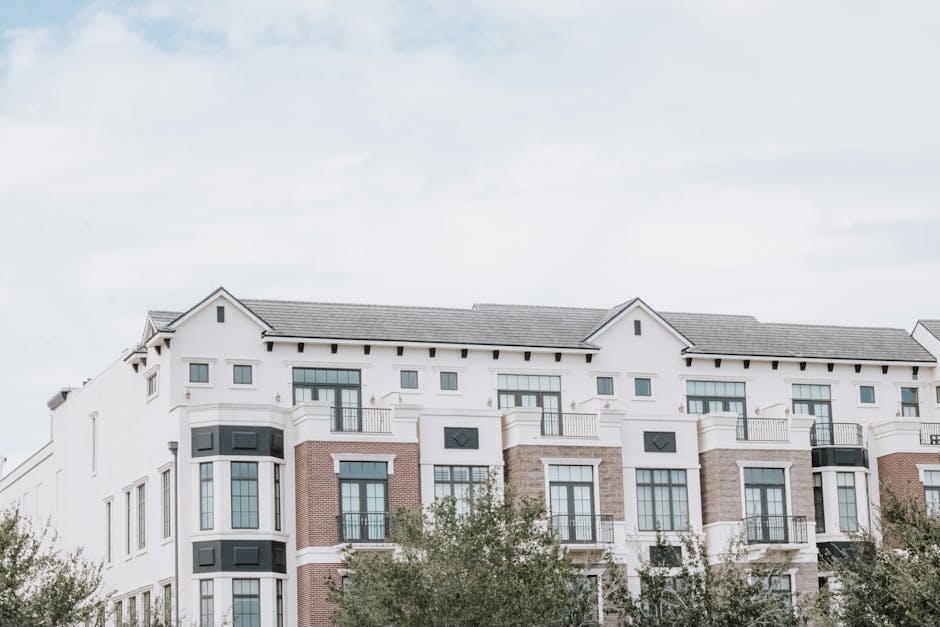
Recent reports from MSN highlight that Florida’s luxury surge continues despite broader national tax shifts, with record listings appearing in the most desirable coastal corridors. In Tampa, this surge is manifesting as a flight to quality. Buyers are prioritizing properties with updated infrastructure and intelligent design over sheer square footage. As we navigate the current weather cycle, with temperatures reaching 31.1°C (88°F), the emphasis on energy-efficient climate control and resilient building materials has become a primary driver in valuation. Navigating this landscape requires a deep understanding of which properties hold their value through market cycles and which are simply riding a temporary wave of popularity.
To succeed in this environment, one must distinguish between ‘asking price’ and ‘intrinsic value.’ For instance, a property at 6304 North Florida Avenue, listed at $2,200,000, demonstrates the expansion of luxury standards into neighborhoods previously considered outside the traditional high-end bubble. This move indicates that the luxury footprint in Tampa is widening, providing opportunities for capital allocation in areas that offer substantial architectural character and urban proximity. Decision-making should be based on a three-to-five-year horizon, focusing on neighborhood infrastructure improvements and long-term zoning stability rather than short-term aesthetic trends.

Strategic Differentiation: Condos versus Single-Family Estates
A critical decision for the 2026 buyer involves the choice between the maintenance-free lifestyle of high-rise living and the privacy of a traditional estate. Tampa remains an early-stage luxury condo market, according to Tampa Bay Business & Wealth. While the skyline is expanding, the inventory of vertical luxury remains relatively constrained compared to more saturated markets like Miami. This scarcity has protected values in newer developments along the Water Street and Bayshore corridors, where service-oriented amenities and advanced security systems are non-negotiable for executive-level buyers.
Conversely, the single-family market is seeing a resurgence in demand for ‘compound’ style properties. Buyers are increasingly seeking land parcels that allow for auxiliary structures, such as guest houses or sophisticated home offices. A prime example is the availability of land and residential assets on North Grady Avenue, where listings near $1,550,000 offer the potential for customized development. This segment of the market requires careful verification of setback requirements and drainage engineering, particularly given the seasonal rainfall patterns typical of the region. Comparing the price per square foot between a managed condo and a private estate reveals that while the estate may offer lower initial costs, the long-term carry costs of specialized landscaping and pool maintenance must be factored into the overall investment strategy.
For those looking at commercial-to-residential conversions or mixed-use land, such as the parcels available on West Dr Martin Luther King Jr Boulevard for $2,900,000, the complexities of municipal planning become paramount. These acquisitions are less about immediate occupancy and more about the long-term development of the neighborhood’s luxury profile. Advisors often suggest that these types of purchases be vetted through environmental audits and density studies to ensure that the intended use aligns with the city’s future vision. In a market where the average sale often exceeds three million dollars, the cost of due diligence is a minor fraction of the potential risk of an ill-informed acquisition.
Geographic Nuance: Beyond the Traditional Waterfront
While the waterfront views of Davis Islands and Bayshore Beautiful remain the gold standard, the 2026 market is seeing a shift in capital toward interior neighborhoods with high elevation and historical significance. Areas like Hyde Park and even parts of Seminole Heights are attracting buyers who value walkability and cultural proximity over a bayfront lot. The market movement here is driven by a desire for a more integrated lifestyle, where high-end dining and private social clubs are within a short distance of one’s residence. This behavior reflects a broader trend among affluent buyers who prioritize time-efficiency and community engagement.
Data from the Tampa Bay Times regarding the most expensive sales of 2025 shows that while the highest prices are still fetched by bayfront properties, the highest percentage of appreciation is often found in these ‘second-tier’ luxury enclaves. This suggests that for a buyer looking for both a residence and a sound financial vehicle, exploring the streets just a few blocks back from the water can yield properties with better structural integrity and lower insurance premiums. Verification of flood zone designations and historical preservation rules is essential in these areas to avoid future renovation hurdles.
Buyer behavior in 2026 is also influenced by regional economic shifts. As noted by The Business Journals, executives are increasingly choosing the St. Petersburg and Tampa region for corporate headquarters, bringing a new wave of demand for luxury housing that serves as both a private sanctuary and a venue for professional hosting. This dual-purpose requirement is changing how homes are staged and marketed, with an emphasis on oversized kitchens, dedicated wine rooms, and integrated smart-home technology that can be managed remotely.
The 2026 Luxury Acquisition Checklist
Before moving forward with a high-value transaction in the current market, buyers should verify several key components of the property’s standing. The following checklist provides a framework for evaluating assets in the $2M+ range to ensure long-term viability and lifestyle alignment.
- Verify the age and specifications of the HVAC system to ensure efficiency during peak summer humidity.
- Assess the property’s elevation and modern drainage systems against the latest FEMA flood map revisions.
- Examine the proximity to planned infrastructure projects or commercial developments that may impact local traffic or privacy.
- Request a comprehensive list of all smart-home integrations and confirm their compatibility with current security standards.
- Review the last five years of homeowners association meeting minutes for any indications of upcoming special assessments or litigation.
- Analyze the price-per-square-foot history of the immediate three-block radius to ensure the list price is supported by recent closed sales.
- Confirm that any historical designations do not overly restrict the potential for modern interior renovations or additions.
Market Extremes: From Median to the Nine-Figure Estate
While the median price point offers a snapshot of the general luxury market, the true health of the region is often measured by its ceiling. Currently, Tampa’s price record stands at $22.5 million, but the recent listing of a massive estate for $115 million, as reported by the Wall Street Journal, has shifted the national perception of the area. This isn’t just a local anomaly; it is a signal that Tampa is now being viewed as a global destination for wealth, competing with established markets like Palm Beach or the Hamptons. For the standard luxury buyer, this ‘halo effect’ often leads to increased interest from international investors, which can tighten inventory and stabilize prices at the lower end of the luxury spectrum.
Understanding these extremes is crucial for anyone looking to browse luxury listings with a critical eye. When the ceiling of a market rises so dramatically, it creates a vacuum that pulls up the value of surrounding properties. However, it also introduces a level of volatility at the very top. Most successful acquisitions in this climate are occurring in the ‘sweet spot’ between $2.5 million and $7 million, where the balance between luxury amenities and market liquidity is most favorable. Properties in this range often sell more quickly than the nine-figure trophies, as they appeal to a broader base of domestic executives and local business owners.
Furthermore, the Florida Trend real estate reports emphasize that as valuations increase, the sophistication of the financing and title work must follow suit. We are seeing more cash transactions and complex trust-based purchases, which require a specialized team of advisors to navigate. Verification of all property lines, easements, and riparian rights is more important than ever when dealing with legacy assets that may not have changed hands in several decades.
The Executive Migration and Local Infrastructure
The decision to relocate to Tampa is often driven by a combination of fiscal policy and lifestyle quality. The region’s ability to host major events, from high-profile sporting matchups to cultural festivals, adds a layer of intangible value to property ownership. Whether it is the influx of visitors for WWE events or the local markets that define the character of neighborhoods like Seminole Heights, the cultural fabric of Tampa is a significant draw. These events not only provide entertainment but also drive the local economy, supporting the high-end services and dining options that luxury residents expect.
As the market continues to evolve, the importance of working with an advisor who understands these micro-movements cannot be overstated. Deciding on a property is a multifaceted process that involves comparing architectural integrity, neighborhood trajectory, and long-term capital preservation. The 120 properties currently available represent a diverse cross-section of what Tampa has to offer, but only a fraction will meet the stringent criteria of a truly sophisticated buyer. By focusing on data-backed decisions and avoiding the hype of temporary market trends, investors can secure assets that will serve as both a home and a cornerstone of their financial portfolio.
Navigating the complexities of the 2026 Tampa luxury market requires more than just access to the MLS; it requires a strategic partner who can interpret inventory shifts and provide decision-useful guidance. Whether you are seeking a modern high-rise residence on the waterfront or a historic estate in the city’s heart, the current landscape offers significant opportunities for those prepared to act with precision. We invite you to explore our curated selection of properties and connect with a senior advisor to discuss your specific requirements. To begin your search or schedule a private consultation, please contact an advisor today and review our latest luxury listings.
Your next move in Tampa luxury
Get current inventory, pricing guidance, and private-tour support from our brokerage team.
Source highlights
- Florida luxury real estate surges amid record listings, tax shifts – MSN
- Tampa Bay’s most expensive luxury home sales of 2025 – Tampa Bay Times
- Tampa’s Price Record Is $22.5 Million. This Huge Estate Is Asking $115 Million. – WSJ
- Column: Why executives keep choosing St. Pete – The Business Journals
- Why Tampa remains an early-stage luxury condo market – Tampa Bay Business & Wealth
- Florida Trend Real Estate – Florida Trend
- Tampa leaders, WWE star Titus O’Neil promote alternative event for young people amid 'teen takeover' trend – FOX 13 Tampa Bay
- Things to do with kids this weekend in Tampa, FL – That's So Tampa
