


The Maturation of Tampa’s High-End Asset Class
Tampa is no longer a secondary market for seasonal residents; it has solidified its position as a primary destination for high-net-worth individuals seeking long-term capital preservation and lifestyle utility. The 2026 market data indicates a significant maturation in how properties are valued and traded. While historical trends favored speculative growth, the current landscape is defined by a demand for finished, high-specification assets that can serve as permanent family headquarters. This shift is evidenced by the increasing duration of residency and the integration of professional infrastructure within residential designs.

Current inventory metrics show approximately 120 active luxury listings, with a median list price established at $2,300,000. However, the average list price of $3,126,055 suggests a heavy concentration of ultra-high-end inventory that is skewing the upper tier of the market. This divergence requires buyers to look beyond top-line figures and analyze the underlying cost-per-square-foot metrics in specific enclaves like South Tampa and Davis Islands. Buyers are moving away from emotional acquisitions, instead focusing on the fundamental durability of the investment within the broader Florida economic context.
The record-breaking potential of the market is underscored by historic listings that challenge national benchmarks. For instance, an expansive estate on the waterfront recently reached an asking price of $115 million, a figure that would have been unthinkable in the local market just five years ago. According to reporting by the Wall Street Journal, this estate signals Tampa’s entry into a global league of luxury real estate, attracting international interest that further stabilizes local valuations.

Valuing Waterfront Real Estate in a Global Context
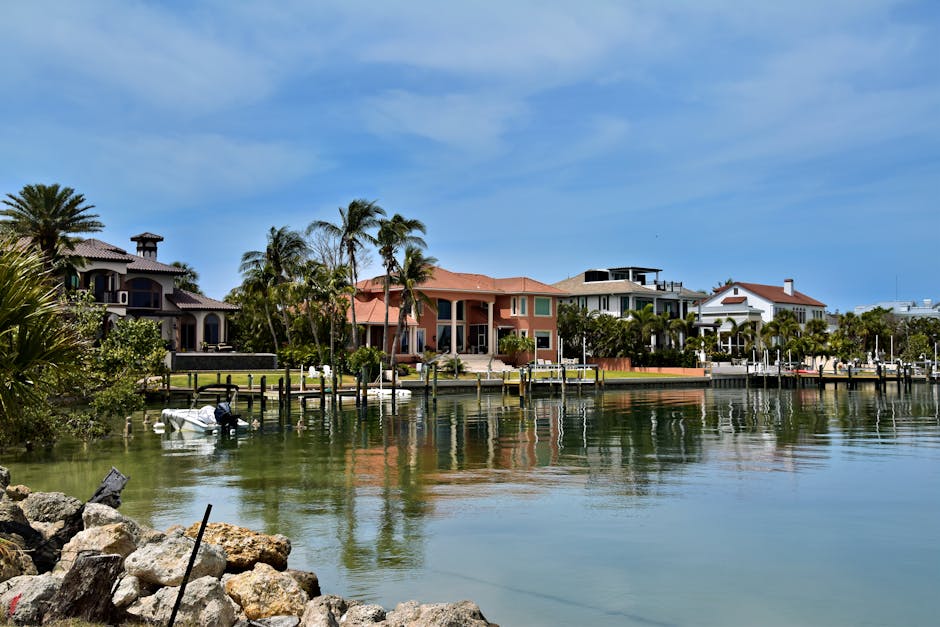
Waterfront property remains the most liquid asset class in the region, yet the criteria for excellence have evolved. Proximity to the bay is no longer the sole driver of value; rather, the focus has shifted to elevation, seawall integrity, and deep-water access for larger vessels. The National Law Review recently highlighted how Tampa Bay’s waterfront has emerged as a primary luxury market, driven by legal and tax structures that favor long-term ownership. This legal framework provides a level of certainty that is highly valued by sophisticated investors looking to hedge against volatility in other sectors.
Areas such as Bayshore Boulevard and the surrounding waterfront corridors continue to see robust competition. The limited supply of buildable shoreline has created a natural floor for pricing, ensuring that even during periods of broader economic adjustment, these specific parcels retain their desirability. For buyers, the challenge lies in identifying properties that offer both immediate lifestyle benefits and the potential for structural upgrades. The current inventory includes notable opportunities, such as estates on North Florida Avenue or Dr. Martin Luther King Jr. Boulevard, which offer a different profile of urban luxury and commercial-residential synergy.
When evaluating these waterfront assets, it is essential to consider the logistical advantages of the location. Waterfront living in Tampa offers a unique combination of maritime access and urban connectivity. This dual utility is a primary driver for the modern executive who requires a seamless transition between a private retreat and a professional hub. As a result, properties that feature private docks alongside state-of-the-art home office suites are commanding the highest premiums in the current 2026 cycle.
Inventory Dynamics and Market Absorption Rates
Supply levels in the luxury sector have seen a measured increase, providing buyers with a broader range of options than in previous years. Much of this new inventory is the result of long-term development projects finally reaching completion. According to Tampa Bay Business & Wealth, mortgage rates falling to 6.09% combined with new construction has lifted the supply, creating a more balanced environment for negotiation. This stabilization allows for a more methodical approach to acquisition, moving away from the frantic bidding wars of the early 2020s.
Despite the increase in supply, the absorption rate for high-quality, move-in-ready homes remains high. Properties that are priced accurately—often near the $2.3 million median mark—tend to see consistent engagement. In contrast, over-leveraged properties or those requiring significant remediation are sitting on the market for longer durations. This distinction underscores the importance of condition and location. For example, a well-maintained residence on North Grady Avenue may move faster than a larger, more expensive estate that lacks the same level of finish or modern infrastructure.
Analytical buyers are currently focusing on the delta between list price and final sale price to gauge market sentiment. In the 2026 market, the power has shifted slightly toward the buyer, provided they are prepared to execute with speed and clarity. Success in this environment requires a deep understanding of neighborhood-level movements and the ability to distinguish between temporary price corrections and long-term value trends. Working with an advisor who can interpret these nuanced data points is critical for making an informed decision.
Essential Due Diligence for Tampa Luxury Acquisitions
Navigating a multi-million dollar transaction requires a rigorous due diligence process that goes beyond a standard home inspection. In the Tampa market, environmental and structural factors play a disproportionate role in the long-term viability of an investment. Sophisticated buyers prioritize a multi-layered approach to verification, ensuring that every aspect of the property—from the geological foundation to the historical title—is scrutinized. This level of oversight is necessary to protect capital and ensure a smooth transition of ownership.
The following checklist outlines the non-negotiable elements of a high-end acquisition strategy in the current market:
- Verification of seawall integrity and recent engineering certifications for all waterfront parcels.
- Analysis of elevation certificates and their direct impact on future insurance premiums and renovation potential.
- Review of historical preservation restrictions in neighborhoods like Hyde Park and Seminole Heights.
- Assessment of building materials, specifically prioritizing concrete block construction over frame for wind and moisture resistance.
- Evaluation of smart-home infrastructure and its compatibility with modern security and utility standards.
- Verification of riparian rights and dockage permitting for any property with water access.
Beyond the physical structure, buyers must also consider the social and cultural infrastructure of their chosen neighborhood. Tampa’s weekend events, ranging from vintage markets to high-profile concerts, contribute to the overall desirability and resale value of local real estate. Sources like That’s So Tampa provide a glimpse into the active lifestyle that maintains the region’s appeal for young professionals and families alike. Aligning an acquisition with these cultural nodes often results in higher long-term satisfaction and investment security.
Strategic Neighborhood Selection and Executive Migration
The regional real estate narrative is increasingly defined by the synergy between Tampa and St. Petersburg. Executives and entrepreneurs are no longer confined to a single side of the bay; instead, they are choosing locations based on professional clusters and aesthetic preferences. A column in The Business Journals explored why executives keep choosing St. Pete, citing its walkable urban core and concentrated professional opportunities. This migration pattern has a direct impact on Tampa’s luxury market, as individuals often maintain a primary residence in Tampa while participating in the St. Pete business ecosystem.
South Tampa remains the primary choice for those seeking proximity to top-tier private schools and the central business district. The architectural diversity here—ranging from Mediterranean Revival to sleek Modernism—allows buyers to express personal style while remaining within a high-value enclave. Meanwhile, areas like Seminole Heights are seeing a surge in high-end renovations, attracting a demographic that values character and community. This geographic diversification is a healthy sign for the market, as it spreads demand across multiple sub-markets and reduces the risk of localized bubbles.
When selecting a neighborhood, it is vital to consider the long-term development plans for the surrounding area. Projects like Water Street and the ongoing expansion of the Westshore district are reshaping the urban core and creating new centers of gravity for luxury living. Properties situated near these development nodes often see enhanced appreciation as the infrastructure matures. A senior advisor can provide insights into these planned movements, helping you position your investment in the path of progress.
The Intersection of New Construction and Legacy Estates
The 2026 market presents a unique choice between the character of legacy estates and the efficiency of new construction. Legacy homes in areas like Hyde Park offer a historical pedigree and architectural detail that is difficult to replicate. These properties are often viewed as ‘trophy’ assets, held for generations and rarely appearing on the open market. However, they require a commitment to maintenance and a deep understanding of historical preservation guidelines. For many, the prestige of owning a piece of Tampa history outweighs the operational complexity.
On the other hand, new construction is dominating the sales charts for 2026. These homes offer the latest in environmental technology, hurricane-rated glazing, and open-concept floor plans designed for the modern lifestyle. According to the Haute Living Market Report, move-in-ready new builds are commanding a significant premium due to the rising costs and timelines associated with custom construction. For a buyer who prioritizes immediate utility and low maintenance, new construction is often the most pragmatic path.
Choosing between these two paths requires a clear assessment of your long-term goals. If your objective is a unique heritage asset with high architectural value, a legacy estate is the superior choice. If your priority is operational ease and modern luxury, focusing on current listings for new construction will yield the best results. Both paths offer significant potential, provided the acquisition is handled with the appropriate level of technical expertise and market insight.
Navigation Tactics for the 2026 Luxury Buyer
Success in the current Tampa market is reserved for those who approach the process with clinical precision. This involves assembling a team of experts—including legal counsel, tax professionals, and specialized real estate advisors—to vet every aspect of a potential purchase. The focus should be on identifying properties that offer a balance of intrinsic value, functional design, and geographic stability. In a market where the average sale price exceeds $3 million, the cost of an oversight is substantial, making meticulous preparation the most valuable tool in your arsenal.
As the market continues to evolve, staying informed on regional trends and emerging neighborhoods will provide a competitive edge. Whether you are seeking a waterfront sanctuary or a sophisticated urban residence, the opportunities in 2026 are diverse and compelling. The key is to act with confidence backed by data, ensuring that your acquisition serves as a cornerstone of your portfolio for years to come. To begin your search or to receive a tailored analysis of specific properties, we invite you to contact an advisor today and explore our curated selection of high-end opportunities.
Your next move in Tampa luxury
Get current inventory, pricing guidance, and private-tour support from our brokerage team.
Source highlights
- Tampa’s Price Record Is $22.5 Million. This Huge Estate Is Asking $115 Million. – WSJ
- Column: Why executives keep choosing St. Pete – The Business Journals
- Tampa Bay’s most expensive luxury home sales of 2025 – Tampa Bay Times
- Mortgage rates fall to 6.09% as new construction lifts Tampa supply – Tampa Bay Business & Wealth
- Tampa Bay’s Waterfront Emerges as a Primary Luxury Real Estate Market – The National Law Review
- Luxury Real Estate Market Report — March 2026 – Haute Living
- Things To Do In Tampa This Weekend: Fun Festivals & Events In Tampa This Weekend – That's So Tampa
- Tampa weekend events: Vintage market, murder mystery dinner and more – Axios
