



Strategic Positioning in the 2026 Tampa Luxury Sector
The Tampa luxury real estate market in 2026 operates with a level of maturity that distinguishes it from the speculative volatility seen in previous cycles. With 120 active luxury listings and a median list price currently hovering around $2,388,780, the local inventory reflects a calculated alignment between seller expectations and buyer scrutiny. Unlike many national markets experiencing cooling periods, Tampa maintains a trajectory of resilience, driven by a consistent influx of high-net-worth individuals prioritizing tax advantages and Gulf Coast accessibility. This movement has pushed the average list price to approximately $3,147,389, a metric that highlights the widening gap between standard residential offerings and true high-tier assets.
Success in this environment requires a move away from generic market reports toward a more granular understanding of neighborhood-specific movement. Buyers are no longer just looking for square footage; they are evaluating the architectural integrity and long-term utility of estates in areas ranging from the historic corridors of Hyde Park to the sprawling privacy of Avila. The market has shifted toward “quiet luxury,” where the value is found in the quality of materials, smart home integration, and sustainable design rather than overt opulence. This analytical approach to acquisition is what separates the casual observer from the sophisticated investor who understands that Tampa’s growth is still in its primary stages.
According to recent reports from The Business Journals, the local market continues to grow stronger despite national declines. This divergence is largely attributed to the “sticky” nature of the Florida migration trend. While some predicted a reversal of the pandemic-era relocation, the reality in 2026 shows a permanent shift in corporate hubs and private wealth management toward the Tampa Bay corridor. For the buyer, this means that while the entry price has increased, the stability of the investment has solidified, provided they focus on properties that offer unique architectural value or premier geographic placement.
Neighborhood-Level Implications: Davis Islands and Bayshore
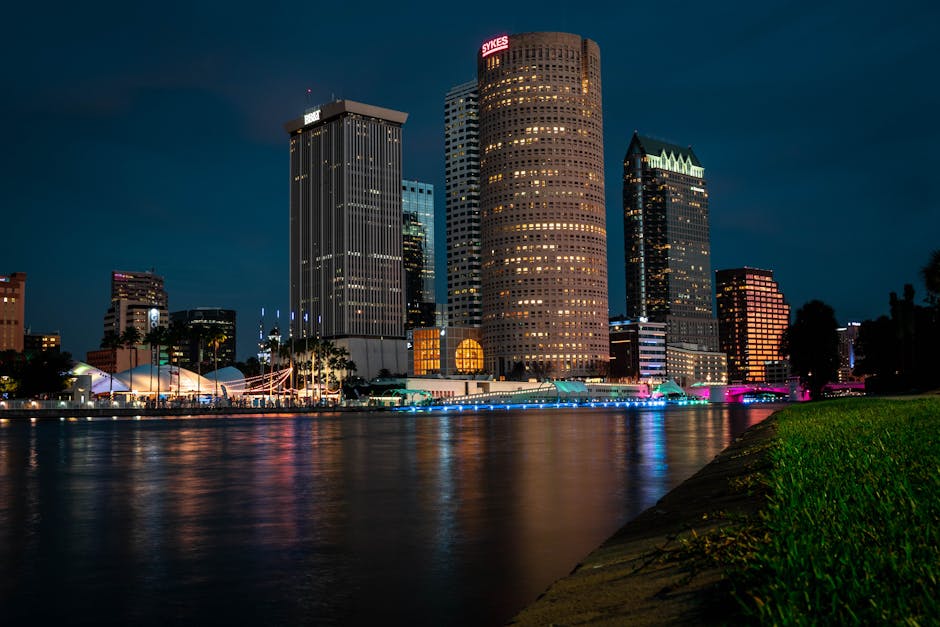
Davis Islands and Bayshore Boulevard remain the twin pillars of the local high-end market, though their buyer profiles have begun to diverge. Davis Islands, with its private airport and yacht club access, continues to attract those seeking a self-contained lifestyle within minutes of the downtown core. The scarcity of available lots here has created a secondary market for older homes specifically for their land value, as buyers look to commission custom builds that meet modern hurricane-rated standards. The behavior here is increasingly buy-and-hold, with very few properties returning to the market within a five-year window, further tightening the available inventory.
Bayshore Boulevard, conversely, has seen a shift toward the “vertical estate.” As the waterfront becomes increasingly built out, the demand for ultra-luxury condominiums with unobstructed views of Hillsborough Bay has intensified. These are not typical apartment units; they are expansive, whole-floor residences designed to mirror the privacy and scale of a single-family home. This trend is a response to a buyer demographic that values the “lock-and-leave” convenience of a managed building without sacrificing the prestige associated with a Bayshore address. The valuation of these units often rivals traditional waterfront estates, reflecting a change in how the affluent define domestic space.
Beyond the traditional hubs, we are seeing significant movement in areas like North Tampa and Westchase. High-value transactions, such as the recent listing of 6304 N Florida Avenue for $2,200,000, indicate that the luxury boundary is expanding. These interior estates offer a different value proposition, focusing on acreage, private equestrian facilities, or proximity to elite golf courses. For the buyer looking for a diversified portfolio, these emerging pockets offer the potential for higher appreciation rates as the city’s infrastructure continues to catch up with its residential expansion.
Critical Verification for Luxury Acquisitions
Before moving forward with a high-value transaction in the current market, certain technical and environmental factors must be verified. The following checklist provides a framework for evaluating a property’s long-term viability and structural integrity within the Tampa ecosystem.
- Confirm the elevation certificate and current flood zone designation to accurately project insurance costs and renovation limitations.
- Audit the property’s smart-home infrastructure for scalability and security protocols, ensuring the tech stack is not proprietary or obsolete.
- Verify the age and material of the roofing system, prioritizing concrete tile or high-grade metal for maximum wind resistance and longevity.
- Analyze recent comparable sales within a 0.5-mile radius specifically for lot value vs. improvement value to ensure appraisal stability.
- Investigate local deed restrictions or HOA bylaws that may impact planned modifications, such as accessory dwelling units or expanded pier construction.
- Assess the proximity to upcoming infrastructure projects or commercial developments that could affect noise levels or traffic patterns.
While the aesthetic appeal of a property is often the initial draw, these technical verifications are what protect the capital investment. In a market where the average price exceeds $3 million, the margin for error in due diligence is slim. Sophisticated buyers often employ independent engineers to supplement standard home inspections, particularly when dealing with waterfront properties that require specific seawall and dock integrity assessments.
The Evolution of the Vertical Luxury Market
Tampa’s transition into a primary luxury condo market is no longer a forecast—it is a reality. As noted by Tampa Bay Business & Wealth, the city is still in the early stages of this evolution, which suggests a significant runway for growth. The current inventory of luxury units downtown and along the waterfront is being absorbed by a mix of regional downsizers and out-of-state arrivals who prefer the density and social proximity of the city core. This shift is reshaping the skyline and the local economy, as high-end retail and dining follow the wealth into these vertical clusters.
One of the key drivers of this condo surge is the professional management aspect. For owners who maintain multiple residences, the ability to have a 24-hour concierge, secure parking, and climate-controlled storage is a non-negotiable requirement. This has led to a competitive “amenity war” among developers, where standard features now include private wine cellars, wellness centers, and even dedicated office suites for the hybrid professional. When comparing these options to single-family homes, the decision often comes down to the trade-off between private land and integrated services.
However, the maturity of this market also means that buyers must be more selective. Not all luxury towers are created equal. The distinction between a “premium” building and a “true luxury” building often lies in the density—fewer units per floor, higher ceiling heights, and more robust acoustic damping between residences. Evaluating the developer’s track record and the building’s reserve fund is just as critical as the view from the balcony. As more supply enters the market, those units with the most unique floor plans and highest-quality finishes will be the ones that retain their value during market shifts.
Decoding Record-Breaking Estates and Market Ceilings
The ceiling for Tampa luxury real estate continues to be redefined by outlier transactions that set new benchmarks for the region. A notable example is the massive estate recently highlighted by the Wall Street Journal, which asked $115 million in a market where the previous record was significantly lower. While such listings are rare, they serve as a catalyst for the entire luxury sector, signaling to national and international buyers that Tampa is capable of supporting world-class assets. These properties often feature custom craftsmanship and land assemblies that are impossible to replicate, justifying their premium to the right collector.
For the typical luxury buyer, these record-breakers act as a psychological anchor, making $5 million to $10 million properties seem like a grounded value by comparison. This “halo effect” is visible in neighborhoods like Venetian Isles and Culbreath Isles, where waterfront estates are seeing price adjustments based on the new upper-tier reality. Recently, Haute Living reported on significant waterfront listings in Venetian Isles being offered at adjusted prices to meet the current demand for turnkey luxury. This responsiveness to market data is a sign of a healthy, functioning ecosystem where buyers and sellers are finding equilibrium.
When analyzing these high-end movements, it is important to look past the sticker price and examine the utility. A $10 million estate in Tampa often provides a level of privacy and square footage that would cost three times as much in Miami or Palm Beach. This “relative value” is a key component of the Tampa pitch. As the infrastructure in the city core improves and the social scene becomes more sophisticated, the gap between Tampa and its more expensive South Florida counterparts is likely to close, making current acquisitions look prescient in hindsight.
Lifestyle Integration and High-Value Social Clusters
Living in Tampa is increasingly defined by the integration of professional success and curated leisure. The city’s social calendar has evolved to reflect its growing affluent population, with events that cater to a sophisticated palate. Whether it is attending high-end festivals or exploring the latest culinary openings, the lifestyle here is active and outward-facing. For instance, That’s So Tampa frequently highlights weekend festivals and events that serve as meeting grounds for the local community, from vintage markets to exclusive gala events.
This social connectivity is a major draw for buyers moving from more isolated luxury enclaves. The ability to engage with a professional network at a local club or attend a world-class performance downtown adds a layer of value that isn’t found in the property’s deed. We see this play out in the demand for homes near the cultural centers of the city. Proximity to the Straz Center or the revitalized Water Street district has become a priority for buyers who want their residence to be a base for an urban-adjacent lifestyle. This shift toward “amenitized living” extends beyond the condo market and into the surrounding single-family neighborhoods.
Furthermore, the physical environment of Tampa supports this high-end lifestyle year-round. Even with the typical Florida humidity, the proximity to the bay and the Gulf provides a natural cooling effect and a backdrop for a variety of outdoor pursuits. Sophisticated buyers often look for properties that blur the line between indoor and outdoor living, with expansive terrace spaces, outdoor kitchens, and negative-edge pools. In Tampa, the “backyard” is often a primary living area, and the most successful designs reflect this by prioritizing views and ventilation. The synergy between the climate, the social scene, and the real estate market creates a compelling case for long-term residency.
Decision-Useful Metrics for 2026
In the current landscape, the most successful buyers are those who treat their home search with the same rigor as a corporate acquisition. This means looking beyond the staging and the sunset views to evaluate the underlying data. With 120 luxury homes currently on the market, there is enough choice to be selective but not enough to be indecisive. Properties that are priced correctly and offer high-grade finishes are moving within 30 to 45 days, while those that overreach on price without the corresponding quality are seeing extended days on market. This bifurcated market rewards the informed buyer who can recognize value before it becomes obvious to the broader public.
As you navigate the options available, consider the long-term trajectory of the specific pocket you are targeting. Is there new infrastructure planned? Are the surrounding homes being renovated to a higher standard? These are the indicators of future stability. The Tampa luxury market is no longer a secret, but it still offers significant opportunities for those who understand its nuances. By focusing on structural quality, neighborhood data, and lifestyle alignment, you can secure an asset that serves both as a sanctuary and a sound financial pillar.
To explore the current inventory and identify properties that align with your specific criteria, we invite you to view our curated LISTINGS URL. Our advisors specialize in the analytical brief, providing the data and local insight necessary to make a confident decision in this competitive market. When you are ready to discuss a strategic acquisition or need a private consultation regarding your current holdings, please CONTACT URL an advisor to begin the process.
Your next move in Tampa luxury
Get current inventory, pricing guidance, and private-tour support from our brokerage team.
Source highlights
- Tampa Bay’s most expensive luxury home sales of 2025 – Tampa Bay Times
- Tampa’s Price Record Is $22.5 Million. This Huge Estate Is Asking $115 Million. – WSJ
- Tampa Bay luxury market grows stronger despite national declines – The Business Journals
- Why Tampa remains an early-stage luxury condo market – Tampa Bay Business & Wealth
- Tampa Bay’s Waterfront Emerges as a Primary Luxury Real Estate Market – The National Law Review
- Jennifer Zales Unveils Venetian Isles Waterfront Luxury Now Offered At A New Price – Haute Living
- Things To Do In Tampa This Weekend: Fun Festivals & Events In Tampa This Weekend – That's So Tampa
- Tampa weekend events: Vintage market, murder mystery dinner and more – Axios
