


The Structural Shifts in High-End Valuations
Tampa’s premium real estate sector continues to mature, shedding its status as an emerging destination and firmly establishing itself as a primary target for institutional and private capital. For affluent buyers evaluating the landscape in mid-2026, the metrics demand careful scrutiny. With a median list price currently hovering around $2.49 million and an average pushing past $3.15 million, the delta between median and average points to a heavily weighted upper quartile. This skew is driven by significant trophy assets defining the uppermost tier of the market, which pull the overall average upward while the bulk of transaction volume remains concentrated closer to the median.

Understanding these valuation models is critical for executing a precise acquisition. The active inventory of luxury properties sits near 120 available assets, a constraint that continues to dictate leverage in negotiations. Sellers of well-positioned, updated homes in established corridors hold pricing power, while legacy properties requiring substantial modernization are seeing extended days on market. Buyers must distinguish between aspirational pricing and market-supported valuations, particularly as some sellers anchor their expectations to recent record-breaking sales rather than comparable neighborhood data.
Recent developments underscore this aggressive pricing strategy at the apex of the market. High-profile listings, such as an unprecedented estate seeking to redefine local benchmarks, illustrate the growing confidence among ultra-high-net-worth sellers. As reported by the Wall Street Journal, ambitious upper-tier valuations reflect a broader belief in Tampa’s trajectory as a global wealth hub. However, discerning buyers recognize that these extreme outliers do not automatically recalibrate the price-per-square-foot baseline for standard luxury inventory.

Navigating Core Tampa Enclaves and Regional Migration
Geographic selection remains the most consequential decision in a Tampa acquisition. The historic streets of Hyde Park and the prestigious waterfront perimeters of Davis Islands continue to command premium multiples, driven by severe land scarcity and high barriers to entry. In these core areas, a significant portion of transactions occur off-market or within tightly controlled networks, requiring buyers to maintain proactive relationships with well-connected advisors rather than relying solely on public syndication platforms.
Further south, the Bayshore Beautiful and Palma Ceia corridors offer distinct architectural identities, balancing proximity to the urban core with established canopy streets. The nuance here lies in hyper-local zoning and flood elevation requirements. Two adjacent properties may present similar aesthetic value but carry vastly different long-term carrying costs based on structural base flood elevations and newer construction codes. Buyers evaluating these zones must prioritize rigorous physical due diligence over surface-level finish assessments.
Simultaneously, the broader Tampa Bay economic narrative is influencing residential demand patterns. The influx of corporate leadership and executive relocation has expanded the traditional boundaries of the luxury search. As noted by The Business Journals, executives are increasingly analyzing structural advantages across the bay, factoring in lifestyle amenities, infrastructure developments, and commute times when selecting their primary residence. This regional approach requires a macro understanding of how capital is flowing throughout the entire metropolitan area.
Evaluating Premium Waterfront Equities
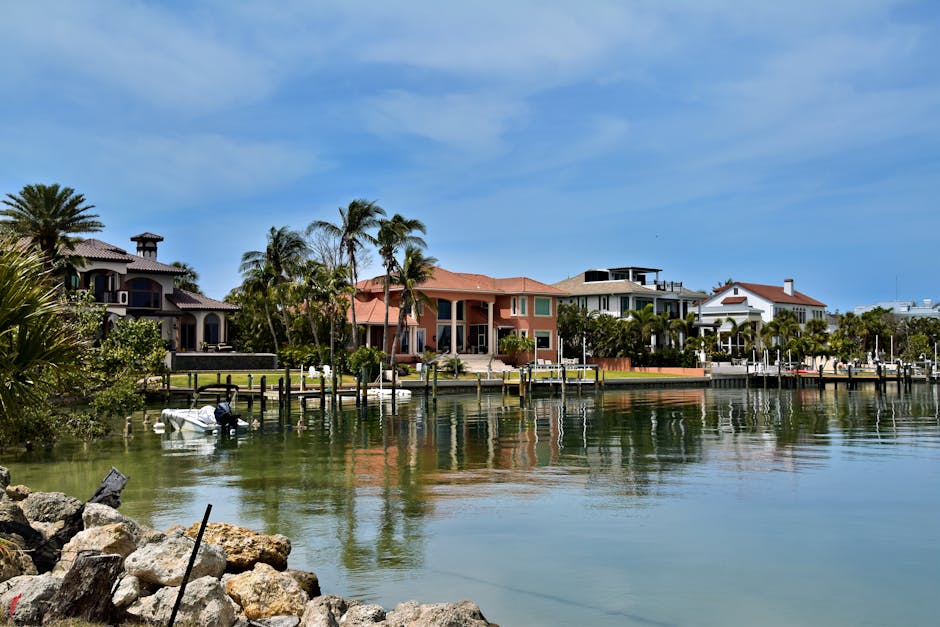
Waterfront assets form the cornerstone of Tampa’s prestige market, yet they introduce complex variables that demand sophisticated analysis. Not all deep water is equal. Navigability, bridge clearances, and specific exposure to tidal forces dictate the intrinsic value of a waterfront lot often more than the structure built upon it. A property offering unobstructed access to the Gulf of Mexico commands a different pricing paradigm than one constrained by fixed bridges, appealing to a distinct buyer demographic with specific maritime requirements.
The premium attached to these properties is substantial and structurally sound, given the absolute finite nature of the coastline. The National Law Review recently highlighted this sector’s emergence as a primary target for sophisticated capital, emphasizing that coastal real estate here is increasingly viewed as a robust asset class independent of broader residential fluctuations. For purchasers, this means waterfront acquisitions must be analyzed both as immediate lifestyle enhancements and long-term equity holds.
Furthermore, coastal construction standards have evolved dramatically. Buyers must assess whether a legacy property requires immediate seawall reinforcement or if a newer build adheres to the latest stringent wind mitigation and elevation codes. The cost of modernizing a waterfront property can quickly erode perceived value, making the initial assessment of structural integrity and compliance a non-negotiable step in the acquisition process. Properties that already meet these rigorous modern standards justify their premium by offering immediate peace of mind and predictable carrying costs.
Strategic Acquisition Due Diligence
Executing a successful purchase in a compressed inventory environment requires a systematic approach to due diligence. The aesthetic appeal of a property often masks structural or neighborhood-level complexities that can impact long-term value. Moving from passive observation to active negotiation necessitates a framework that prioritizes risk mitigation and precise valuation.
When assessing available properties, consider the following critical evaluation metrics:
- Elevation and Base Flood Metrics: Verify current FEMA zoning and recent structural compliance, as this directly dictates long-term insurability and holding costs.
- Micro-Location Nuances: Analyze traffic patterns, upcoming municipal infrastructure projects, and proximity to high-density commercial corridors that may alter the neighborhood character.
- Architectural Provenance versus Trendy Renovations: Distinguish between superficial, short-lived cosmetic updates and fundamentally sound, timeless architectural integrity.
- Comparative Capital Improvements: Assess whether the seller’s asking price correctly reflects genuine structural improvements or simply an inflated view of market appreciation.
- Off-Market Context: Understand how recent unlisted, private transactions in the immediate vicinity influence the true valuation baseline.
This disciplined framework prevents emotional overpayment. By anchoring the decision-making process to concrete, verifiable data points rather than subjective appeal, buyers can navigate even the most aggressive pricing environments with confidence. The goal is not merely to secure an asset, but to secure it at a valuation that aligns with long-term capital preservation.
Integrating Lifestyle and Civic Dynamics
Beyond the physical structure, a high-end acquisition is an integration into the civic and cultural fabric of the city. Tampa’s evolution is characterized by a rapid expansion of cultural programming, culinary development, and large-scale civic events. The proximity to these lifestyle amenities heavily influences property demand and, consequently, valuation. Neighborhoods that offer seamless, walkable access to curated commercial districts or prominent green spaces hold a distinct market advantage.
The pace of the city requires buyers to factor local logistics into their property selection. High-density weekends, marked by major festivals or significant sporting events, transform traffic flow and access points across the urban core. According to reports from local network affiliates, municipal traffic management during these peak periods can significantly impact the ease of movement. Buyers prioritizing privacy and unimpeded access may favor enclaves with isolated ingress and egress, while those seeking immediate immersion in the city’s energy will prioritize central locations despite the occasional logistical friction.
Furthermore, broader economic indicators continue to support the region’s steady growth. Publications monitoring statewide trends, such as Florida Trend, consistently point to sustained corporate investment and population retention in the Tampa Bay area. This underlying economic stability provides a strong foundational argument for the long-term viability of luxury real estate investments here, assuming the initial acquisition is structured correctly.
Securing Your Position in the Market
The current landscape presents distinct opportunities for capitalized buyers who operate with analytical rigor. While headline figures focus on median jumps and record-setting outliers, the actual mechanics of a successful acquisition rely on hyper-local intelligence and decisive action. Inventory constraints mean that properly priced, structurally superior homes do not linger, demanding that buyers remain fully prepared to execute when the correct asset is identified.
We advise maintaining a fluid, continuously updated view of the market, detached from generic national narratives. The nuances of Tampa’s distinct neighborhoods require specialized guidance to accurately decipher. Whether evaluating the long-term equity potential of a coastal estate or the immediate lifestyle yield of a historic urban property, the approach must be systematic and grounded in local market realities.
To begin a structured analysis of the current inventory, we invite you to review our active portfolio of Tampa luxury homes for sale. For a private consultation regarding your specific acquisition parameters or to discuss off-market opportunities not publicly syndicated, please contact our advisory team. We provide the discrete, data-driven representation required to navigate this tier of the market.
Your next move in Tampa luxury
Get current inventory, pricing guidance, and private-tour support from our brokerage team.
Source highlights
- Tampa Bay’s most expensive luxury home sales of 2025 – Tampa Bay Times
- Tampa’s Price Record Is $22.5 Million. This Huge Estate Is Asking $115 Million. – WSJ
- Column: Why executives keep choosing St. Pete – The Business Journals
- Why Tampa remains an early-stage luxury condo market – Tampa Bay Business & Wealth
- Florida Trend Real Estate – Florida Trend
- Tampa Bay’s Waterfront Emerges as a Primary Luxury Real Estate Market – The National Law Review
- Things To Do In Tampa This Weekend: Best Festivals & Events Going On – That's So Tampa
- 40+ Best Things to Do in Tampa Bay this Month: Events and MORE! – Tampa Bay Date Night Guide
