



The Structural Shift Toward Primary Waterfront Residences
The Tampa waterfront is undergoing a significant transition as high-net-worth individuals shift from seasonal occupancy to year-round residency. Historically, many of the estates lining Bayshore Boulevard and the surrounding inlets served as secondary homes, but the development of robust local infrastructure and professional services has solidified these areas as primary residential hubs. This movement is not merely a change in lifestyle preference but a fundamental shift in how local land is valued. Investors and buyers are increasingly prioritizing long-term utility, seeking properties that offer both aesthetic seclusion and proximity to the growing commercial core of the city.
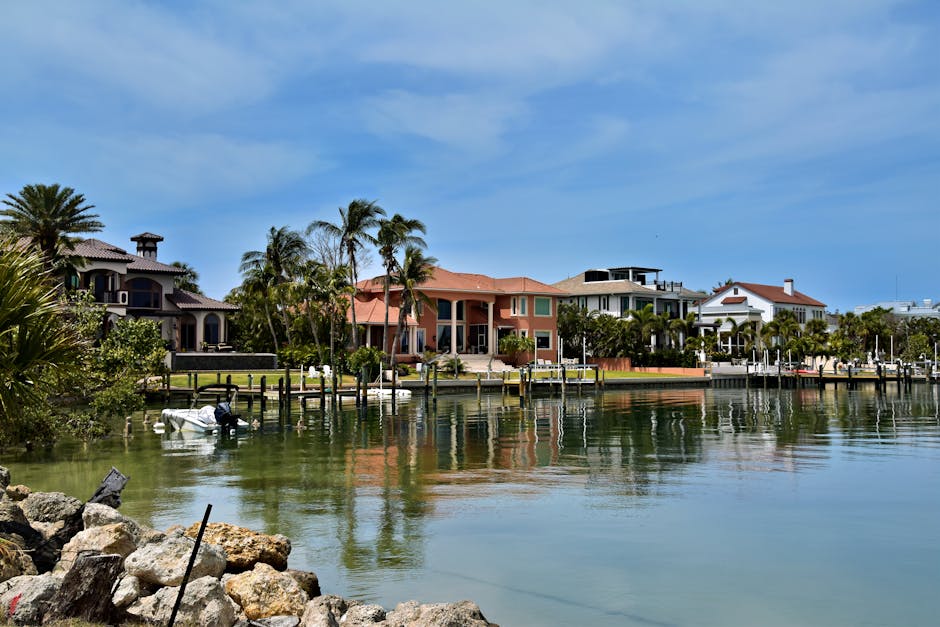
As Tampa Bay’s waterfront emerges as a primary luxury real estate market, we are seeing a marked increase in the technical complexity of acquisitions. Buyers are no longer satisfied with simple aesthetic updates; they are looking for resilient engineering and advanced environmental protections. The demand for new construction on Davis Islands and in the Beach Park area reflects this need for modern standards that older estates often lack. This maturation of the market suggests that the region is competing on a global stage, attracting capital that might have previously stayed in more traditional financial hubs.
The impact on inventory is clear. Waterfront lots are being consolidated to create larger private compounds, a trend that is reducing the total number of available units while simultaneously driving up the average price point. This consolidation is particularly evident in neighborhoods where historic homes are being replaced by sprawling contemporary estates designed for executive families. The focus has moved toward creating self-contained environments that include sophisticated home offices, wellness suites, and extensive outdoor living spaces that function as private retreats within the urban landscape.

Decision-making for buyers in this segment now requires a deeper understanding of riparian rights and shoreline stabilization. As the market reaches this new level of maturity, the value of the land often exceeds the value of the existing structures. For those looking to enter this space, the calculation is increasingly about the future potential of the site rather than the immediate condition of the house. This analytical approach to acquisition is a hallmark of the current market cycle, where sophisticated data and long-term projections outweigh the emotional pull of a property.
Executive Migration and the St. Petersburg Complement
The influx of C-suite executives into the Tampa region is reshaping the residential landscape. While South Tampa remains the traditional bastion of prestige, there is a notable trend of executives choosing St. Pete for its unique blend of urban walkability and high-end residential options. This cross-bay migration has created a more integrated regional luxury market, where buyers often compare properties in Beach Park or Culbreath Isles with the penthouse offerings of downtown St. Petersburg. The competition between these two hubs is driving innovation in architectural design and amenity packages across the board.
For the affluent buyer, this regionality provides a broader spectrum of choice. A traditional estate in an established Tampa neighborhood offers a different value proposition than a modern high-rise overlooking the bay. However, the underlying driver remains the same: a desire for efficiency and proximity to the region’s burgeoning business districts. As more corporations establish footprints in the area, the demand for high-end housing within a short commute of the business cores has intensified. This has led to a compression of inventory in prime locations, where the convenience of the commute is as much of a luxury as the home itself.
The migration pattern is also influencing the types of properties coming to market. We are seeing a rise in “lock-and-leave” luxury options, such as high-end townhomes and condominiums that offer the same level of finish as a single-family estate but with reduced maintenance requirements. This appeals to the mobile executive who may split time between multiple cities. The ability to maintain a high standard of living without the logistical burden of a large grounds staff is a significant factor in the current purchasing decisions of the global elite relocating to Florida.
Understanding these migration flows is critical for both buyers and sellers. Sellers must position their properties to appeal to the specific needs of relocating executives, emphasizing security, privacy, and connectivity. Buyers, on the other hand, should look at these migration patterns as indicators of future neighborhood stability. Areas that are attracting long-term residents with high human capital are likely to maintain their value better than those driven purely by speculative investment. The regional synergy between Tampa and St. Petersburg ensures that the luxury market remains diverse and resilient.
Inventory Dynamics and Valuation Thresholds
Current market data shows a median list price of $2,490,000 across the luxury segment, a figure that reflects the sustained demand for high-quality residential assets. With an active inventory count of approximately 120 units, the market remains relatively tight, favoring sellers who have well-positioned and correctly priced properties. However, the average list price of $3,165,369 indicates that the upper tier of the market—those estates priced well above the median—is exerting significant influence on the overall landscape. This disparity suggests that buyers are willing to pay a substantial premium for truly exceptional properties.
Analyzing specific market movements provides further clarity. For instance, properties like the one at 6304 N Florida Avenue, listed at $2,200,000, demonstrate how luxury pricing is expanding into corridors previously considered outside the traditional high-end zones. This outward movement is a response to the scarcity of inventory in the traditional core and a testament to the ongoing revitalization of various Tampa neighborhoods. Similarly, large-scale listings on MLK Boulevard, such as the $2,900,000 residential-commercial hybrid, indicate a growing appetite for versatile land use among private investors and developers.
Inventory levels for properties priced between $1,500,000 and $2,000,000, such as 5010 N Grady Avenue, are moving at a different velocity than the ultra-luxury tier. In this mid-luxury range, we see higher turnover and more aggressive competition among local buyers. This segment often acts as a feeder for the upper-tier market, as successful professionals upgrade within the region. Monitoring the absorption rate in this bracket is essential for predicting future demand in the $3 million and above category, as it reflects the health of the local wealth engine.
Valuation in the current climate requires a meticulous approach. Traditional appraisals often struggle to keep pace with the rapid appreciation seen in specific micro-pockets of South Tampa. As a result, savvy buyers are relying more on private advisory and off-market data to determine the fair market value of a property. Comparing lot size, historical significance, and modern infrastructure is more important than ever. The goal is to identify properties where the intrinsic value of the location and the quality of the build provide a buffer against broader market fluctuations.
Critical Verification Steps for High-Value Acquisitions
When evaluating a property in the multi-million dollar range, the standard inspection process is insufficient. For the sophisticated buyer, due diligence must encompass structural, legal, and environmental factors that could impact long-term asset value. The following checklist outlines the essential areas for verification before committing to a luxury acquisition in the Tampa region:
- Verification of riparian rights and littoral boundaries for all waterfront estates to ensure private dockage and shoreline usage are legally protected.
- A comprehensive review of Architectural Review Committee (ARC) guidelines in historic neighborhoods to understand limitations on future renovations or expansions.
- Detailed flood elevation certification and an assessment of existing mitigation systems, including seawall integrity and drainage infrastructure.
- Analysis of recent comparable sales within a tight radius, specifically looking at closed transactions rather than aspirational list prices.
- Review of all active permits and historical code compliance to ensure that previous high-end renovations were executed according to local standards.
The Maturation of the Regional Luxury Condo Sector
The regional condominium market is evolving from an “early-stage” market into a more sophisticated and established sector. As noted in recent analysis of why Tampa remains an early-stage luxury condo market, the transition involves a move toward larger floor plans and service-rich environments that rival the amenities of five-star resorts. This maturation is essential for attracting a demographic that has traditionally preferred single-family homes but is now looking for the security and convenience of high-rise living. The current crop of new developments is specifically designed to meet these elevated expectations.
The appeal of vertical living in Tampa is increasingly tied to the concept of a controlled environment. High-net-worth buyers are prioritizing buildings that offer advanced security, private elevator entries, and comprehensive concierge services. These features provide a level of privacy that can be difficult to achieve in a traditional neighborhood setting. Furthermore, the concentration of luxury condos near the downtown and Water Street districts allows for a lifestyle that integrates world-class dining and cultural events without the need for extensive travel, a significant draw for the time-constrained executive.
Resale value in the condo sector is increasingly driven by the quality of the building’s management and the long-term viability of its amenity package. Buyers are looking past the initial “newness” of a project and investigating the health of the homeowners association and the history of the developer. This shift toward quality and sustainability is a positive sign for the market, as it encourages developers to build to a higher standard. Those looking at the condo market as an investment should focus on projects that offer unique architectural features or irreplaceable views, as these factors remain the best hedges against future inventory increases.
As we look toward the next several years, the pipeline for luxury condos remains robust, but the focus is shifting from volume to exclusivity. We are seeing fewer units per floor and more customized interior options. This bespoke approach is necessary to compete in a market where the buyer has multiple high-quality options. For the strategic buyer, the condo market offers an opportunity to secure a prime piece of the city’s skyline, but it requires a careful comparison of the long-term costs associated with high-rise maintenance and the potential for future development to obstruct views.
Pricing Extremes and Market Reality
The Tampa market has recently seen headlines about astronomical asking prices, including an estate seeking over $100 million. While these figures capture public attention and highlight the city’s growing profile, they often exist in a different reality than the broader luxury market. According to the Tampa price record discussions, there is a significant delta between record-setting asks and the actual liquidity of the market. This gap serves as a reminder that even at the highest levels, valuation must be grounded in comparable data and realistic market expectations.
The record for the most expensive home sale in the region remains well below these headline-grabbing numbers, but the ceiling is undoubtedly rising. A review of Tampa Bay’s most expensive luxury home sales of 2025 reveals a consistent appetite for properties in the $10 million to $20 million range. These transactions are typically driven by local business leaders or those relocating from high-tax states who see the value in Florida’s tax-friendly environment. These buyers are sophisticated and rarely overpay for a property simply because of its asking price; they are looking for intrinsic value and long-term appreciation potential.
For owners of high-end estates, the challenge lies in positioning a property to stand out in a market where buyers are increasingly discerning. A property must tell a compelling story—whether through its historical pedigree, its architectural significance, or its unique location. Generic luxury is no longer enough to command a record-setting price. Sellers who are successful in the current environment are those who understand the nuances of their neighborhood and can provide a transparent look at the property’s performance and maintenance history.
Buyers should view extreme asking prices as data points but not as definitive market markers. The real value is found in the “middle-upper” tier—estates that offer exceptional quality without the speculative premium often attached to headline properties. By focusing on the fundamentals of location, build quality, and land value, buyers can ensure that their acquisition remains a solid asset through various economic cycles. The goal is to find the intersection of luxury and logic, where the home provides both an elevated lifestyle and a prudent financial foundation.
Seasonal Considerations and Strategic Entry
As we move into the warmer months of May, with temperatures frequently reaching into the low 90s, the rhythm of the Tampa luxury market shifts. This period is often characterized by a final push of activity before the summer slowdown. Buyers who are active during this transition period often have a strategic advantage, as they can assess how a property performs in the Florida heat. Evaluating the efficiency of HVAC systems and the integrity of building envelopes is easier when environmental conditions are at their most demanding. This is a critical time for due diligence that many off-season buyers overlook.
Local events also play a role in the logistics of the market. For instance, weekend traffic in the downtown and Riverwalk areas often peaks during festivals such as Riverfest. High-profile events can impact the accessibility of certain neighborhoods and provide a glimpse into the local lifestyle and density. For buyers looking at properties near the urban core, visiting during an event-packed weekend offers a realistic view of the area’s energy and the impact of city-wide festivals on private residence access. This contextual understanding is vital for making an informed decision about where to plant roots.
The current market environment requires a advisor who can provide analytical depth and neighborhood-level expertise. With 120 active luxury listings and a median price point that continues to hold steady, the opportunities for entry are there for those who know where to look. Whether you are seeking a primary waterfront estate on Davis Islands or a sophisticated condo in the evolving downtown corridor, the focus should remain on long-term value and structural integrity. The maturation of the Tampa market is a signal to the world that this is a region with staying power, offering a unique combination of economic growth and high-quality living.
To navigate this complex landscape effectively, we invite you to view our current inventory and connect with our team for a private consultation. Success in the Tampa luxury market is built on precise data and local insight. We encourage you to browse our exclusive listings to gain a sense of the current inventory and then contact an advisor to discuss your specific requirements. We provide the analytical framework and market intelligence necessary to ensure your next acquisition is both a lifestyle achievement and a sound strategic move.
Your next move in Tampa luxury
Get current inventory, pricing guidance, and private-tour support from our brokerage team.
Source highlights
- Column: Why executives keep choosing St. Pete – The Business Journals
- Tampa’s Price Record Is $22.5 Million. This Huge Estate Is Asking $115 Million. – WSJ
- Tampa Bay’s most expensive luxury home sales of 2025 – Tampa Bay Times
- Why Tampa remains an early-stage luxury condo market – Tampa Bay Business & Wealth
- Florida Trend Real Estate – Florida Trend
- Tampa Bay’s Waterfront Emerges as a Primary Luxury Real Estate Market – The National Law Review
- Things To Do In Tampa This Weekend: Best Festivals & Events Going On – That's So Tampa
- Things To Do In St Pete This Weekend: Best Festivals & Events Going On In St Petersburg – I Love the Burg
