


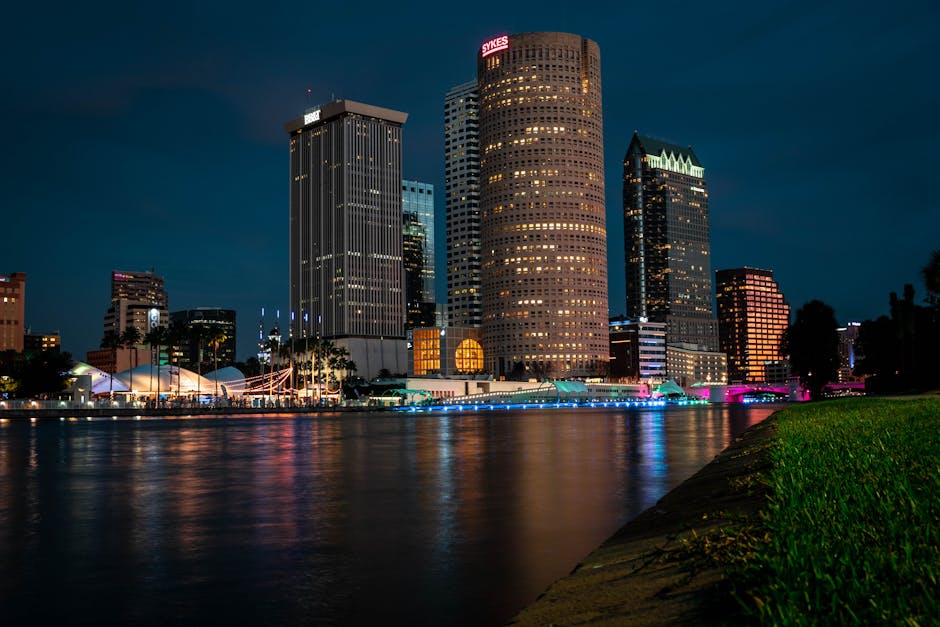
The Evolution of Value in the Bay Area
The Tampa luxury real estate market has transitioned from a period of rapid appreciation into a sophisticated phase defined by price discovery and asset-specific valuation. Currently, the market maintains a lean inventory of approximately 120 active luxury listings, with a median list price established at $2,490,000. This baseline indicates a market that has matured beyond speculative growth, now catering to a buyer pool that prioritizes architectural integrity and long-term utility over transient trends. For advisors and investors, the focus has shifted toward identifying properties that offer a hedge against volatility through location-specific scarcity and high-specification construction.
While the average list price hovers around $3,168,660, the ceiling for the region continues to expand. The recent market entry of high-profile estates, including the record-shattering $115 million asking price for a significant local compound, as reported by the Wall Street Journal, underscores the emergence of a hyper-luxury tier. This new segment operates independently of standard market fluctuations, driven by global wealth rather than local economic cycles. Buyers active in this space are no longer looking for temporary seasonal residences; they are seeking primary family offices and generational assets that reflect the region’s rising status as a financial and tech hub.
The Bifurcation of Waterfront Assets
In the current landscape, the distinction between ‘waterfront’ and ‘navigable deep-water access’ has become the primary driver of price divergence. Areas like Davis Islands and the Bayshore corridor continue to command a significant premium because they offer a combination of proximity to the urban core and superior maritime infrastructure. As detailed by The National Law Review, Tampa Bay’s waterfront has emerged as a primary luxury market, moving away from its historical reputation as a secondary or vacation-focused destination. This shift necessitates a deeper dive into riparian rights, seawall integrity, and elevation certificates before any acquisition.
We are seeing increased scrutiny regarding the ‘quality of the view’ versus ‘quality of the build.’ Modern buyers are increasingly favoring properties like those found on Troutwater Lane or North Florida Avenue, where contemporary designs meet rigorous coastal building codes. The demand for ‘new’ or ‘recently renovated’ remains high, as the cost and timeline for custom construction in the current labor market make turnkey assets more attractive. Investors are advised to compare the price-per-foot of mid-tier waterfront against high-end inland properties in neighborhoods like Beach Park, where the value proposition often lies in lot size and privacy rather than water frontage.
Executive Migration and the Corporate Footprint
The sustained influx of C-suite executives and financial professionals from the Northeast and West Coast continues to underpin the local luxury sector. This migration is not merely a tax-play but a strategic relocation driven by the region’s expanding corporate infrastructure. According to the Business Journals, executives are increasingly choosing the Tampa-St. Pete corridor for its operational efficiency and quality of professional life. This has created a secondary surge in the luxury condo market, which serves as a transitional asset for those entering the market or as a low-maintenance ‘lock-and-leave’ option for frequent travelers.
The preference for the ‘live-work-play’ model is manifesting in the high-density luxury developments near Water Street and the Westshore District. These buyers are looking for integrated security, concierge services, and proximity to private aviation facilities. Analysis from Tampa Bay Business & Wealth suggests that while Tampa remains an early-stage luxury condo market compared to Miami, the velocity of sales in the $2M+ range indicates a rapid maturation. This segment offers a different risk profile than single-family homes, often appealing to those who prioritize urban connectivity and high-level amenities over traditional suburban sprawl.
Critical Assessment Framework for 2026 Acquisitions
Navigating a market with 120 active units requires a disciplined approach to due diligence. High-end buyers must look beyond the aesthetic staging and evaluate the underlying structural and environmental factors that will dictate future liquidity. The current interest rate environment, while less impactful at the luxury level due to a high percentage of cash transactions, has nonetheless forced a recalibration of what constitutes ‘fair market value.’ When evaluating a potential acquisition, use the following technical checklist to ensure the asset aligns with institutional-grade standards:
- Verify the structural integrity of seawalls and dockage, ensuring they meet the requirements for deep-water vessels if applicable.
- Analyze the elevation certificates and current flood insurance mandates, prioritizing properties built to post-2023 coastal resilience standards.
- Assess the smart-home infrastructure, specifically looking for integrated security, high-redundancy climate control, and enterprise-grade networking.
- Evaluate the proximity to high-performing private schools and elite social clubs, which remain the primary drivers of neighborhood stability.
- Examine the local zoning and development pipeline to identify potential impacts on privacy or view corridors over the next decade.
Each of these points represents a significant factor in the long-term appreciation of a property. For instance, a home on Davis Islands may have a higher entry price, but its proximity to the urban core and the stability of its land value often make it a superior capital allocation compared to properties in developing outer rings. Buyers are increasingly asking for historical data on utility performance and maintenance schedules, treating a home purchase more like a business acquisition than a lifestyle choice.
The Secondary Market vs. New Construction Standards
The gap between ‘legacy luxury’ and ‘modern luxury’ is widening. Properties built in the early 2000s are often facing significant discount pressures unless they have undergone comprehensive system-wide upgrades. Today’s buyer expects high-efficiency HVAC systems, impact-rated glass throughout, and sustainable materials that can withstand the Florida climate with minimal maintenance. This trend is visible in the movement of inventory in South Tampa, where older estates are frequently being acquired for their lot value to make way for custom builds that meet 2026 technical requirements.
Insights from Florida Trend highlight that the luxury sector is leading the way in adopting resilient building practices. These standards are not just about safety; they are about maintaining the insurability and liquidity of the asset. When comparing a $3 million renovated legacy home to a $3 million new construction, the smart money is increasingly flowing toward the latter, even if it means sacrificing a small amount of square footage for superior build quality and lower carrying costs. This shift is a direct response to the evolving insurance landscape in the Southeast.
Regional Resilience and Infrastructure Maturity
Beyond the individual property, the value of Tampa luxury real estate is inherently tied to the region’s infrastructure investments. The expansion of the Tampa International Airport, the redevelopment of the downtown waterfront, and the continued improvement of the Westshore business district provide a macro-economic floor for property values. Unlike smaller coastal markets that rely solely on tourism, Tampa’s economy is diversified across healthcare, finance, and logistics. This economic depth provides a level of security for real estate investors that is rarely found in traditional ‘resort’ markets.
As we monitor market movement, the behavior of high-net-worth buyers remains focused on long-term hold strategies. We see fewer ‘flippers’ and more ‘builders,’ as individuals invest significant capital into customizing their primary residences. This commitment to the area is reflected in the stability of prices in the most desirable neighborhoods. While the broader market may see fluctuations, the core luxury districts in Tampa continue to show resilience, backed by a steady stream of incoming capital and a limited supply of truly premium land. Decision-making in 2026 is less about timing the market and more about the precision of the selection.
Success in the current environment requires a partner who understands the technical nuances of the local landscape and the specific requirements of affluent buyers. Whether you are liquidating a significant asset or looking to reallocate capital into the region’s most exclusive enclaves, a data-driven approach is essential. We invite you to explore our curated selection of high-specification properties to understand the current standard of excellence in the market. To discuss your specific acquisition criteria or to receive a private valuation of your current holdings, browse our available LISTINGS URL and CONTACT URL to schedule a confidential consultation with a senior advisor.
Your next move in Tampa luxury
Get current inventory, pricing guidance, and private-tour support from our brokerage team.
Source highlights
- Column: Why executives keep choosing St. Pete – The Business Journals
- Tampa’s Price Record Is $22.5 Million. This Huge Estate Is Asking $115 Million. – WSJ
- Tampa Bay’s most expensive luxury home sales of 2025 – Tampa Bay Times
- Why Tampa remains an early-stage luxury condo market – Tampa Bay Business & Wealth
- Florida Trend Real Estate – Florida Trend
- Tampa Bay’s Waterfront Emerges as a Primary Luxury Real Estate Market – The National Law Review
- Things to do with kids this weekend in Tampa, FL – That's So Tampa
- Tampa weekend events: Concerts, festivals and downtown family fun — What to know before you go – FOX 13 Tampa Bay
