


Current State of the Tampa High-End Sector
The Tampa luxury real estate landscape in early 2026 reflects a transition from the frenetic pace of previous years toward a more analytical and inventory-rich environment. With approximately 120 active luxury listings and a median list price established at $2,490,000, the market now demands a higher level of due diligence from buyers. The average list price of $3,160,319 indicates a significant concentration of ultra-high-net-worth estates, particularly in established enclaves like Davis Islands and along the Bayshore Boulevard corridor. This shift provides an opportunity for strategic positioning, as buyers can now evaluate properties with a focus on long-term value preservation rather than mere speed of acquisition.

Decision-useful guidance starts with understanding the disparity between list prices and closing realities. While top-tier properties in areas like South Tampa continue to command premiums, the increase in inventory allows for a more comprehensive comparison of architectural integrity and lot utility. Investors and primary residents are increasingly scrutinizing the underlying land value, especially as larger parcels become harder to secure. Historical data suggests that while the volume of transactions may fluctuate, the demand for well-positioned estates remains consistent among the executive class relocating from high-tax states.
Neighborhood Volatility and Value Retention
Specific sub-markets within Tampa are exhibiting unique behavioral patterns. In Hyde Park and Beach Park, the focus remains on renovated historic estates and modern custom builds that respect the traditional aesthetic. Meanwhile, areas such as Culbreath Isles and Palma Ceia are seeing a revitalization as older structures are replaced by high-performance, resilient architecture. Buyers should compare the renovation potential of existing structures against the cost-per-square-foot of new construction, which has been influenced by shifting material costs and labor availability in the Gulf Coast region. These localized movements are critical for identifying entry points that offer the best path to appreciation over a five-to-ten-year horizon.
Executive movement is a primary driver of these neighborhood dynamics. As noted in recent reports on why executives keep choosing the region, the proximity to corporate hubs and the quality of private infrastructure are paramount. This trend is not limited to Tampa proper; the surrounding areas, including St. Petersburg, are benefiting from a spillover of demand for high-end amenities. Evaluating a property requires looking beyond the gates and assessing the long-term municipal plans for the surrounding blocks, ensuring that the residential character of the area is protected from encroaching commercial density.
Waterfront Integrity and Coastal Resilience
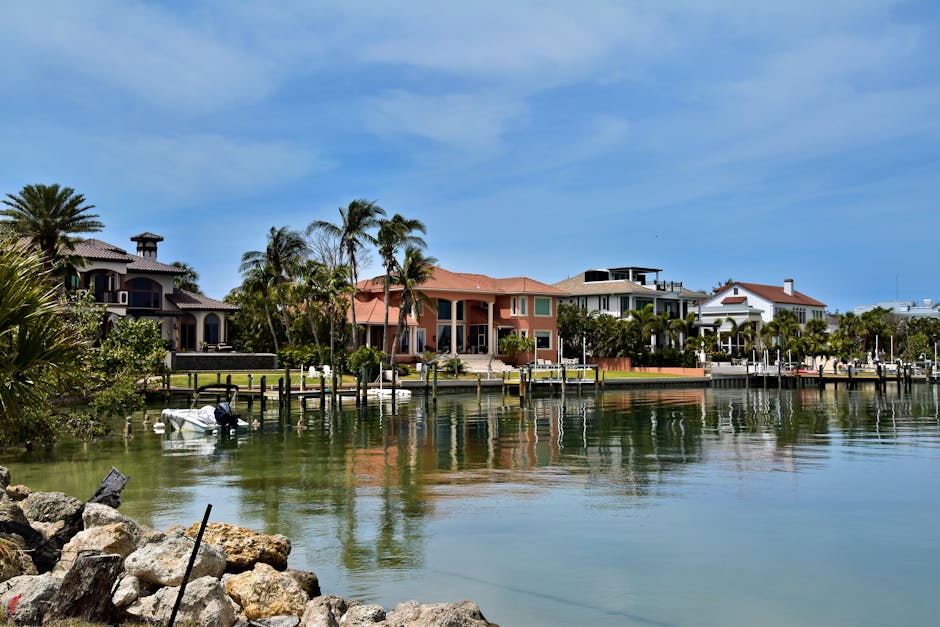
Waterfront property remains the pinnacle of the Tampa market, but the criteria for selection have evolved. According to analysis from the National Law Review, Tampa Bay’s waterfront has emerged as a primary luxury market, shifting away from seasonal usage toward year-round primary residency. This shift necessitates a focus on structural resilience and updated building codes. Buyers must verify the elevation, seawall integrity, and drainage systems of any potential acquisition. Modern estates, such as those found on the newer developments of the Westshore area, often incorporate these features into their core design, providing a baseline of security that older estates may lack.
When comparing waterfront options, the distinction between open bay views and canal access is significant. Canal-front properties in areas like Venetian Isles or Snell Isle offer protection for vessels but may lack the expansive vistas found on the open water. Conversely, open-bay estates command the highest premiums but require more rigorous maintenance schedules. A senior advisor would suggest that buyers prioritize properties with recent seawall certifications and integrated flood mitigation systems. These technical aspects are now as critical to the valuation as the interior finishes or the prestige of the address.
Strategic Verification for 2026 Acquisitions
In a market where the average list price exceeds $3 million, the margin for error in the due diligence phase is slim. Buyers are encouraged to look past the staging and focus on the technical systems that sustain a large-scale estate. This includes smart-home integration, HVAC efficiency, and the longevity of roofing materials. Furthermore, understanding the property’s historical performance in various weather cycles provides a more accurate picture of its true cost of ownership. The following checklist serves as a baseline for any high-value transaction in the current climate.
- Seawall and dockage structural assessment by a licensed marine engineer.
- Verification of all permits for recent renovations or structural additions.
- Detailed analysis of historical utility costs and mechanical system lifecycles.
- Assessment of private security infrastructure and neighborhood surveillance protocols.
- Review of localized drainage and municipal infrastructure improvement plans.
- Comparison of non-MLS private sales data to validate the current list price.
Beyond the physical structure, the legal and zoning context must be verified. Many premium parcels in Tampa are subject to specific neighborhood overlay districts that dictate everything from fence heights to the types of vegetation allowed. Engaging with an advisor who understands these hyper-local regulations is essential for preventing future complications, especially for those planning significant modifications to a property post-purchase. This level of granularity ensures that the investment aligns with both lifestyle needs and regulatory realities.
Inventory Expansion and Construction Dynamics
Supply levels are being bolstered by a wave of new construction that is finally reaching completion. As mortgage rates have stabilized—recently falling to approximately 6.09%—the market has seen a surge in new inventory lifting the Tampa supply. This new stock is particularly concentrated in the luxury condo market and high-end infill projects. For buyers, this means more choices and, more importantly, more leverage during negotiations. Builders who were previously insulated by low inventory are now more willing to discuss concessions or custom finishes to secure a contract.
The influx of new construction also provides a benchmark for pricing existing homes. If a brand-new estate with modern warranties is priced similarly to a twenty-year-old property requiring updates, the older home must offer a superior location or lot size to justify its position. Buyers should utilize the current inventory of luxury homes for sale to conduct these side-by-side comparisons. Observing how long specific property types remain on the market—such as the recent listings on Troutwater Lane or Florida Avenue—can reveal which architectural styles and price points are resonating with the current buyer pool.
Pricing Records and Psychological Benchmarks
The upper echelon of the Tampa market is currently testing new psychological benchmarks. While the standing price record remains $22.5 million, the market is closely watching massive estates with asking prices reaching as high as $115 million, as reported by the Wall Street Journal. These outlier listings reset the expectations for what is possible in the region, signaling a transition into a global luxury destination. However, the majority of the market’s strength lies in the $3 million to $7 million range, where the bulk of executive transactions occur. Understanding where a specific property sits relative to these record-setters helps in assessing its future liquidity.
Historical context is provided by reviewing the most expensive luxury home sales of 2025. These data points confirm that the most resilient properties are those that combine a prime location with timeless design. While modern aesthetics are currently in favor, the estates that hold their value through multiple market cycles often feature classical proportions and high-quality natural materials. A disciplined buyer will avoid overpaying for transient design trends and instead focus on the core attributes that have historically driven demand in the most prestigious Tampa neighborhoods.
Strategic Decision-Making in the Current Climate
Deciding when and where to enter the Tampa market requires a synthesis of data and local intuition. With the spring season bringing events like Riverfest and various cultural festivals to the downtown and waterfront areas, the visibility of the city is at a peak. This often correlates with a seasonal uptick in buyer activity, but the astute investor knows that the best opportunities often arise during periods of quiet observation. Analyzing the market movement during these high-activity windows provides insight into which neighborhoods are truly in demand and which are merely benefiting from seasonal attention. The goal is to identify properties that offer a competitive advantage through their unique site characteristics or architectural pedigree.
The current market state favors the prepared buyer. By focusing on fundamental value, structural integrity, and neighborhood long-term prospects, one can navigate the complexities of 2026 with confidence. To begin a refined search of the active inventory or to discuss the specific nuances of a particular enclave, we invite you to explore our curated listings and contact an advisor to develop a tailored acquisition strategy that aligns with your portfolio objectives.
Your next move in Tampa luxury
Get current inventory, pricing guidance, and private-tour support from our brokerage team.
Source highlights
- Column: Why executives keep choosing St. Pete – The Business Journals
- Tampa’s Price Record Is $22.5 Million. This Huge Estate Is Asking $115 Million. – WSJ
- Tampa Bay’s most expensive luxury home sales of 2025 – Tampa Bay Times
- Mortgage rates fall to 6.09% as new construction lifts Tampa supply – Tampa Bay Business & Wealth
- Tampa Bay’s Waterfront Emerges as a Primary Luxury Real Estate Market – The National Law Review
- Jennifer Zales Unveils Venetian Isles Waterfront Luxury Now Offered At A New Price – Haute Living
- Things To Do In Tampa This Weekend: Best Festivals & Events Going On – That's So Tampa
- Riverfest and other events take over Tampa this weekend | What to know before you go – wtsp.com



