


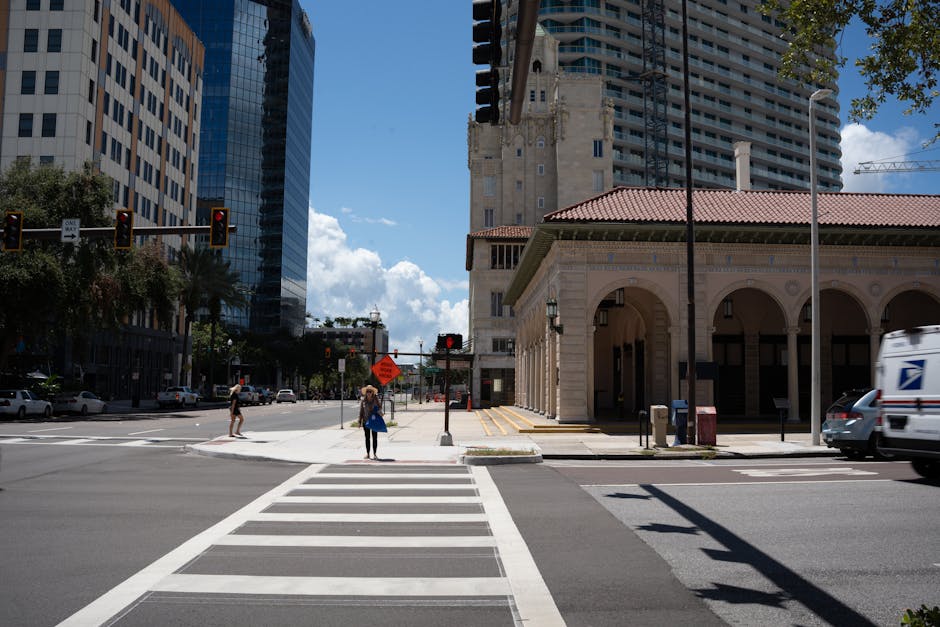
The Structural Shift in Tampa’s High-End Inventory
The Tampa luxury real estate market has reached a point of institutional maturation. As of May 2026, the inventory profile has stabilized into a more predictable rhythm compared to the volatile fluctuations of previous years. With approximately 120 active luxury listings currently available, the median list price has settled at $2,498,800, while the average list price remains elevated at $3,172,412. This gap between median and average suggests a significant concentration of ultra-high-net-worth assets at the top of the market, requiring a more nuanced approach to valuation than a standard comparative market analysis can provide.
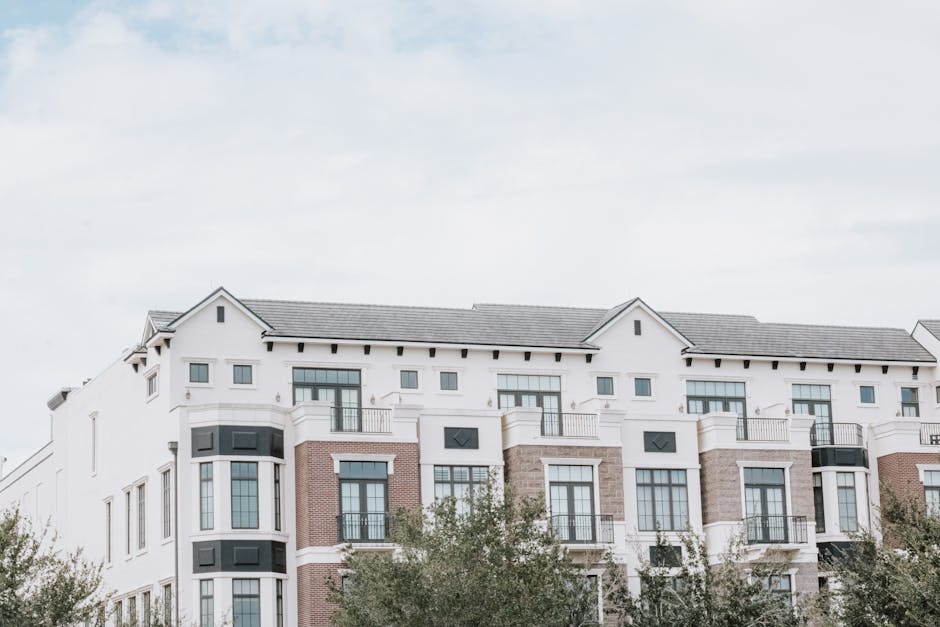
Buyers in the current environment are no longer competing in the frenzied atmosphere of the early 2020s. Instead, we are seeing a shift toward quality over speed. The market is defined by a discerning cohort of purchasers who prioritize architectural integrity, advanced security integration, and lot positioning. For the senior buyer advisor, the task has moved from securing any available asset to identifying those that offer the highest probability of value retention over a ten-to-fifteen-year horizon. This involves a deep analysis of land value versus improvement costs, particularly as building expenses in Florida continue to reflect global supply chain adjustments.
Current market movement indicates that while inventory remains relatively tight by historical standards, the velocity of sales has slowed just enough to allow for thorough due diligence. Residential properties dominate the luxury landscape, though we are seeing increased interest in commercial-sale opportunities and land acquisitions for custom builds. High-end buyers are increasingly looking at Troutwater Lane and North Florida Avenue as indicators of localized pricing floors. When an estate like 2 Troutwater Lane lists at $2,650,000, it provides a concrete benchmark for contemporary construction in established corridors, allowing advisors to calibrate expectations for nearby off-market opportunities.
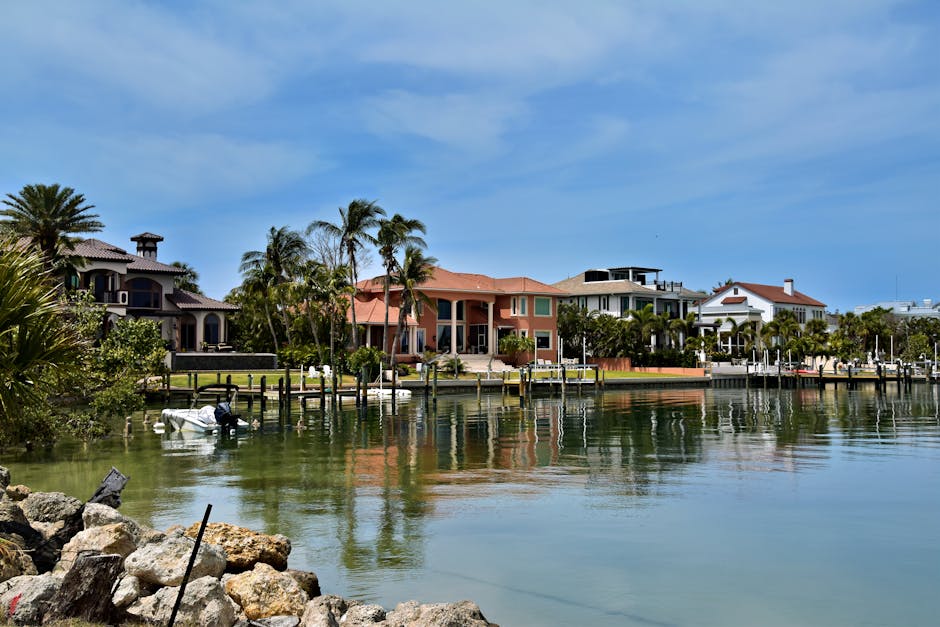
Executive Relocation and the Commercial-Residential Correlation
The sustained demand for high-end Tampa residential property is inextricably linked to the region’s commercial growth. Business leaders are not just buying homes here; they are moving their headquarters and operations to the Sunbelt. This trend is particularly evident in the cross-bay movement between Tampa and St. Petersburg. According to The Business Journals, executives continue to favor this region due to the favorable tax environment and the concentration of emerging tech and financial hubs. This professional migration creates a floor for the luxury market, as high-earning individuals seek residences that reflect their professional status and lifestyle requirements.
This executive influx has fundamentally changed neighborhood demographics in areas like Davis Islands and Hyde Park. These are no longer just residential enclaves; they are hubs for the region’s decision-makers. The proximity to Water Street Tampa and the Westshore Business District is a primary driver for property value. When analyzing a potential purchase, one must consider the ‘commute utility’—even for those with flexible working arrangements. The ability to transition from a private estate to a board meeting in under fifteen minutes remains a premium feature that sustains high demand regardless of broader economic headwinds.
Furthermore, the data suggests that these executive buyers are increasingly looking for ‘turnkey’ luxury. There is a diminishing appetite for extensive renovations among the C-suite cohort. Properties that offer immediate occupancy with high-spec finishes—such as those found in recent sales on W Dr. Martin Luther King Jr. Boulevard—often command a significant premium over homes requiring even minor updates. This preference for move-in-ready assets has created a distinct pricing tier where the cost-per-square-foot is secondary to the immediate utility and aesthetic completion of the home.
Assessing Value in an Era of Record-Breaking Listings
The Tampa market recently garnered national attention with an estate asking $115 million, a figure that dwarfs the previous city record of $22.5 million. As reported by the Wall Street Journal, these outlier listings signal a new ceiling for the region. However, for the majority of luxury buyers, these trophy assets serve as marketing signals rather than direct comparables. It is essential to distinguish between ‘aspirational pricing’ and ‘achievable market value.’ While these headline-grabbing numbers elevate Tampa’s profile on the global stage, the core of the luxury market remains centered between $2.5 million and $7 million.
To navigate this landscape, an advisor must look at the actual closing data rather than just list prices. Recent records from the Tampa Bay Times highlight that the most successful transactions in 2025 and early 2026 were those where sellers aligned their expectations with current appraisal realities. Buyers are currently in a position to negotiate on terms, if not always on price, and the inclusion of high-value contingencies is becoming more common. This environment rewards the patient buyer who is willing to wait for a property that meets 90% of their criteria rather than settling for an inferior asset during a market peak.
The concentration of wealth in specific corridors like Culbreath Isles and Beach Park continues to drive the ‘neighborhood effect.’ When a property lists for over $2 million, such as the contemporary offerings on N Florida Avenue, it reinforces the value of the surrounding older stock. We are seeing a trend where older homes on prime lots are being purchased for land value, with new construction aiming for the $3 million plus bracket. This cycle of renewal is a healthy indicator of a maturing market, suggesting that the underlying land value in Tampa’s premier neighborhoods is being consistently recognized by both developers and private buyers.
The Maturation of the Luxury Condominium Sector
While single-family estates remain the preference for many, the luxury condominium market in Tampa is undergoing a significant evolution. Historically, Tampa was seen as an early-stage market for high-end vertical living. However, as noted by Tampa Bay Business & Wealth, the delivery of branded residences and full-service buildings has shifted the perception of condo living from a downsizing option to a primary residence choice for affluent professionals. The convenience of lock-and-leave living, combined with five-star amenities, has created a new competitive vertical within the luxury space.
This shift is particularly evident in the downtown core and along Bayshore Boulevard. The buyer profile for these units often overlaps with the single-family market, as many individuals maintain multiple residences or prioritize the security and services offered by high-rise living. The pricing for these units has shown remarkable resilience, often exceeding the cost-per-square-foot of nearby land-based homes. This is due to the scarcity of prime waterfront sites and the high cost of vertical construction in coastal environments. For a buyer, comparing a penthouse in a new development to a historic home in Hyde Park requires a different set of evaluation metrics, focusing on HOA stability and long-term amenity maintenance.
As the condo market matures, we are seeing more ‘end-user’ buyers and fewer speculators. This transition is vital for the long-term health of the sector. Buildings with high owner-occupancy rates tend to maintain their value better and experience lower volatility. Investors and advisors are now looking closely at the ‘reserve studies’ and ‘management quality’ of these buildings, recognizing that the lifestyle experience is only as good as the building’s operational integrity. For those seeking a modern aesthetic with panoramic views of Hillsborough Bay, the condo market offers a level of finishes that is often hard to replicate in a private renovation without significant time and expense.
Strategic Selection: A Buyer’s Verification Framework
Before moving forward with a high-value acquisition, it is imperative to utilize a structured framework for verification. The complexity of Florida real estate, particularly in coastal zones, requires a more rigorous approach than other markets. Buyers should prioritize the following elements during their initial review of any property:
- Elevation and Flood Zone Verification: Confirm the exact elevation certificate and understand the implications for long-term insurance premiums and renovation restrictions.
- Hardening and Mitigation: Assess the age and rating of the roof, impact-rated windows, and the presence of whole-home backup power systems.
- Shoreline Integrity: For waterfront properties, a specialized inspection of seawalls and docks is non-negotiable, as these are high-cost maintenance items.
- Underlying Land Use: Verify that neighboring properties or nearby commercial zones do not have pending zoning changes that could impact privacy or views.
- Advanced Systems Audit: Move beyond the standard home inspection to include a specialized review of smart home automation, HVAC filtration, and pool equipment.
By following this framework, a buyer can move from an emotional reaction to a logical, data-driven decision. This process often reveals hidden value or potential liabilities that are not immediately apparent during a walkthrough. In a market where the median entry point is nearly $2.5 million, the cost of an oversight is substantial. Engaging specialized consultants for each of these areas is the hallmark of a sophisticated purchase strategy.
Geographic Resilience: Comparing Historic Neighborhoods
Geographic selection remains the most significant predictor of long-term appreciation in the Tampa market. Neighborhoods like Davis Islands and Hyde Park have shown remarkable resilience across multiple economic cycles. These areas benefit from a combination of historic charm, strict architectural guidelines, and proximity to the city’s best private schools and dining. When evaluating current Tampa luxury listings, it is useful to compare the price-per-square-foot across these different enclaves to understand where the relative value lies. For instance, Beach Park may offer larger lot sizes for the same price point as a smaller, more centrally located home in Hyde Park.
The behavioral patterns of buyers in these neighborhoods are also shifting. We are seeing more ‘inter-neighborhood’ moves, where families stay within the same district but upgrade to a larger or newer home. This internal churn is a sign of neighborhood loyalty and satisfaction. It also means that the best properties often sell before they ever hit the open market. Maintaining a presence in these communities and having an advisor with deep local ties is often the only way to access the most desirable inventory. The market movement in these areas is driven by reputation and ‘social proof’ as much as it is by traditional real estate metrics.
In contrast, newer luxury developments in areas further from the core offer a different value proposition. These properties often feature larger footprints and more modern amenities at a more accessible price point. However, they lack the ‘scarcity value’ of the historic neighborhoods. For the investment-minded buyer, the trade-off between modern convenience and the long-term stability of a ‘blue-chip’ location is the primary decision point. Understanding these neighborhood nuances is essential for any executive or family relocating to the area, as the lifestyle experience varies significantly from one block to the next.
Inventory Velocity and Seasonal Market Entry
Market timing in Tampa is often influenced by seasonal weather patterns and the school calendar. While the market is active year-round, the ‘spring surge’ typically begins in late February and extends through May. Current weather data for early May 2026 shows typical early-summer conditions, with temperatures reaching the low 30s Celsius (early 90s Fahrenheit) and a high probability of afternoon rain. This is a critical time for buyers to observe how properties handle Florida’s intense sun and precipitation. It is the ideal season to test drainage systems and the efficiency of climate control within a home.
According to Florida Trend, the state’s real estate market remains a primary driver of the regional economy, and Tampa continues to outperform many other Florida metros in terms of inventory health. The velocity of the market—measured by ‘days on market’—tends to decrease as we head into the summer months, providing a slight advantage to buyers who are willing to navigate the heat. A property that has been on the market for more than 60 days in this environment often presents a negotiation opportunity, as sellers may be motivated to close before the start of the new school year or the peak of the hurricane season.
Ultimately, the decision to enter the market should be based on individual requirements rather than an attempt to ‘time the bottom’ or ‘catch the peak.’ With the current average list price exceeding $3.1 million, the focus should be on finding an asset that fits the buyer’s long-term strategic plan. The Tampa luxury market has moved past the era of easy wins; it is now a market for those who value stability, quality, and a sophisticated urban-coastal lifestyle. By focusing on the fundamentals of location, construction quality, and executive-driven demand, buyers can secure a position in one of the most resilient real estate markets in the country.
Identifying the right property in this maturing market requires more than just access to the MLS; it requires a partnership with an advisor who understands the subtle shifts in neighborhood dynamics and the analytical realities of high-end valuation. Whether you are seeking a historic estate in Hyde Park, a modern masterpiece on Davis Islands, or a full-service residence overlooking the bay, the current inventory offers significant opportunities for those prepared to move with precision. We invite you to browse our curated selection of luxury listings and contact an advisor today to schedule a private briefing on current off-market opportunities and strategic acquisition plans tailored to your specific requirements.
Your next move in Tampa luxury
Get current inventory, pricing guidance, and private-tour support from our brokerage team.
Source highlights
- Column: Why executives keep choosing St. Pete – The Business Journals
- Tampa’s Price Record Is $22.5 Million. This Huge Estate Is Asking $115 Million. – WSJ
- Tampa Bay’s most expensive luxury home sales of 2025 – Tampa Bay Times
- Why Tampa remains an early-stage luxury condo market – Tampa Bay Business & Wealth
- Jennifer Zales Unveils Venetian Isles Waterfront Luxury Now Offered At A New Price – Haute Living
- Florida Trend Real Estate – Florida Trend
- Things To Do In Tampa This Weekend: Best Festivals & Events Going On – That's So Tampa
- Things To Do In St Pete This Weekend: Best Festivals & Events Going On In St Petersburg – I Love the Burg



