


The Evolution of the Tampa Luxury Floor
The definition of luxury in the Tampa Bay region has undergone a fundamental recalibration. Current market data reveals a median list price of $2,498,800 for premium properties, signaling that the entry-point for the high-end segment has solidified well above previous historical averages. With active luxury inventory holding at 120 units, the scarcity of top-tier assets continues to dictate terms for both domestic and migrating buyers. This transition reflects a broader shift where the $1 million mark, once the standard for prestige, now represents the baseline for well-maintained single-family homes in established corridors rather than the pinnacle of the market.
For the sophisticated investor, understanding this $2.5 million floor is critical for benchmarking value. We are seeing a concentration of activity in areas like Davis Islands and Hyde Park, where the demand for modern architectural standards and proximity to the urban core creates a competitive bidding environment. The average list price of $3,171,587 further illustrates the weight of the upper-echelon estates, particularly those featuring significant acreage or deep-water access. These figures are not merely reflections of inflation but are indicative of a structural shortage of modern, turnkey luxury residences that meet current buyer expectations.
Waterfront Stability vs. Vertical Expansion
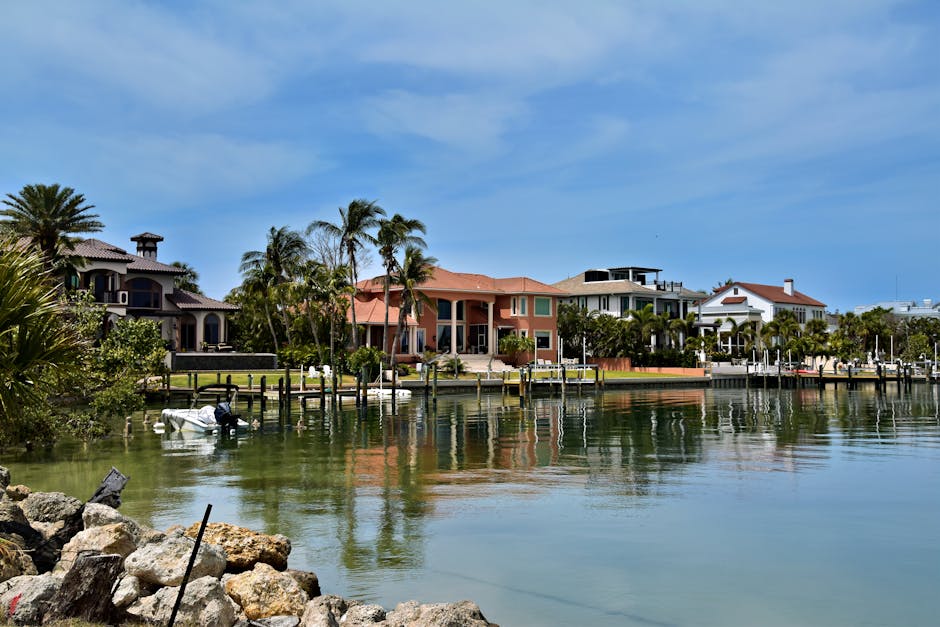
The choice between a sprawling waterfront estate and a high-rise residence is increasingly driven by a desire for operational simplicity versus legacy land value. Traditional strongholds like Venetian Isles continue to attract those focused on maritime utility, with recent pricing adjustments making these locations particularly compelling for buyers looking for immediate equity positioning. For example, recent market movements highlight properties in Venetian Isles being offered with renewed focus on competitive valuation in a tightening market.
Simultaneously, the vertical luxury segment is maturing. Tampa remains an early-stage luxury condo market, offering a unique window for acquisitions before the full build-out of the Water Street and Westshore districts. High-rise buyers are prioritizing security, concierge services, and the ability to maintain a global footprint without the overhead of traditional estate management. This divergence in buyer preference is creating two distinct sub-markets: one anchored in the permanence of the shoreline and another focused on the lifestyle efficiency of the urban skyline.
Buyer Psychology and Market Resilience
Despite broader national fluctuations, the local luxury sector maintains a distinct trajectory. Local market strength is supported by a steady influx of capital from high-tax states, with buyers prioritizing asset preservation and tangible utility. Professional analysis indicates that the Tampa Bay luxury market grows stronger even when other major metros see cooling trends. This resilience is largely attributed to the relative value proposition of Florida Gulf Coast real estate when compared to established international hubs.
Acquisition behavior currently leans toward the analytical. Buyers are less susceptible to emotional premiums and are instead focusing on long-term viability, flood mitigation infrastructure, and the quality of surrounding developments. We are observing a trend where buyers are willing to wait for the right asset—often identified through private placement or off-market channels—rather than settling for inventory that requires significant post-closing renovation. This patience is a hallmark of the current market cycle, where the cost of capital is secondary to the quality of the underlying asset.
The Essential Luxury Acquisition Checklist
For buyers navigating the current inventory of luxury homes for sale, due diligence must extend beyond aesthetic appeal. The following parameters are essential for evaluating high-value assets in the current climate:
- Verification of seawall age and structural integrity for all waterfront parcels.
- Assessment of base flood elevation (BFE) relative to current and projected insurance mandates.
- Analysis of historical preservation restrictions in neighborhoods like Palma Ceia and Hyde Park.
- Review of HOA or CDD reserve funds and long-term capital improvement plans.
- Proximity to planned infrastructure projects, such as the expansion of the Riverwalk or Westshore transit hubs.
- Evaluation of smart-home integration and sustainable energy backup systems.
Each of these points represents a potential hedge against future market volatility. While the median list price remains high, the true value of a property is often found in its technical readiness and its location relative to future urban growth patterns. Strategic buyers should coordinate with technical advisors early in the inspection period to ensure these metrics are fully vetted.
Inventory Constraints and Record-Breaking Outlooks
The scale of luxury in Tampa is reaching unprecedented levels. While the current record sale stands at $22.5 million, the market is beginning to see listings that challenge the very definition of regional value. Notably, some estates are now entering the market with asking prices exceeding $100 million, signaling a new tier of ultra-luxury that is disconnected from the standard residential metrics. These trophy assets are often handled with extreme discretion, moving through networks that bypass traditional listing services.
This upward pressure at the top of the market has a cascading effect on the $2.5 million to $5 million segment. As the ceiling rises, properties in the mid-luxury range are often re-evaluated based on their replacement cost rather than historical comps. For buyers, this means that speed of execution remains a factor, despite the overall analytical tone of the market. When a property meets the criteria for both location and modern infrastructure, it typically exits the market within a shorter window than the average 120-day cycle seen in previous years.
Infrastructure and Lifestyle Integration
The desirability of Tampa’s luxury corridors is inextricably linked to the city’s ongoing investment in public spaces and cultural events. Seasonal activities like the Riverfest and major weekend festivals contribute to the social fabric that makes neighborhoods like Downtown and the Channel District attractive to high-net-worth individuals. Local officials often coordinate traffic and security logistics for these events to maintain the accessibility of the urban core, which is a key consideration for residents who value seamless movement between their private estates and city amenities.
Understanding the intersection of private property and public investment is a core competency for the serious buyer. As the city continues to expand its footprint, the luxury market is shifting toward a more integrated model where the home serves as a sanctuary that is also deeply connected to the region’s economic and social hubs. This holistic view of real estate—where data, infrastructure, and lifestyle converge—is what will continue to drive the Tampa market forward through the remainder of 2026 and beyond.
Navigating these complexities requires more than just access to the MLS; it requires an advisor who understands the nuances of the local landscape and the specific behavior of the luxury segment. Whether you are analyzing a potential waterfront acquisition in Culbreath Isles or a vertical asset in the urban core, precise data and a strategic approach are your most valuable tools. To explore the current inventory and discuss your specific requirements, we invite you to contact an advisor and review our curated selection of properties currently available.
Your next move in Tampa luxury
Get current inventory, pricing guidance, and private-tour support from our brokerage team.
Source highlights
- Tampa’s Price Record Is $22.5 Million. This Huge Estate Is Asking $115 Million. – WSJ
- Tampa Bay’s most expensive luxury home sales of 2025 – Tampa Bay Times
- Tampa Bay luxury market grows stronger despite national declines – The Business Journals
- Why Tampa remains an early-stage luxury condo market – Tampa Bay Business & Wealth
- Jennifer Zales Unveils Venetian Isles Waterfront Luxury Now Offered At A New Price – Haute Living
- Florida Trend Real Estate – Florida Trend
- Things To Do In Tampa This Weekend: Best Festivals & Events Going On – That's So Tampa
- City of Tampa officials warn of heavy traffic amid Riverfest and other weekend events – wtsp.com



