


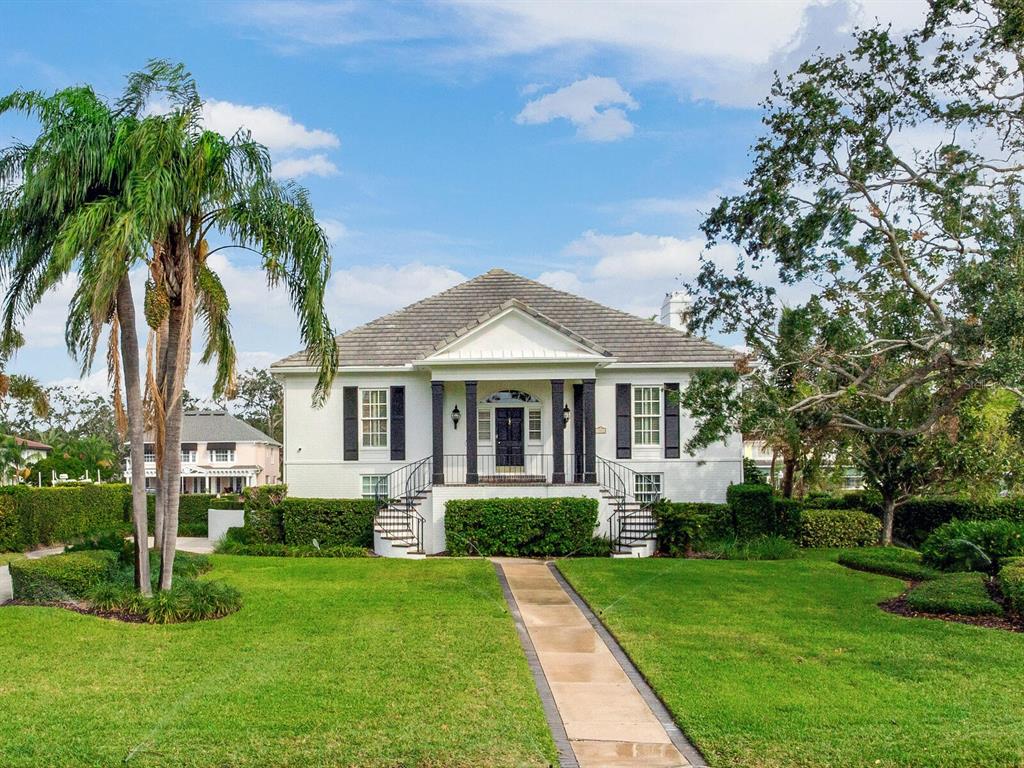
The Institutional Shift: Tampa’s Evolution into a Primary Luxury Market
For decades, the Tampa Bay region was categorized as a high-growth secondary market, a destination primarily for seasonal residents or those seeking a lower cost of living relative to the Northeast. However, as we move through the second quarter of 2026, the data indicates a fundamental structural shift. Tampa has matured into a primary luxury market, characterized by permanent capital migration and a significant increase in ultra-high-net-worth individuals choosing the region as their principal residence. This evolution is reflected in the record-breaking valuations currently being sought, such as the massive estate recently listed for one hundred and fifteen million dollars, a figure that would have been unthinkable in the local landscape less than a decade ago.
While many national markets have seen a cooling of luxury demand due to broader economic volatility, the local sector remains robust. According to recent reporting by The Business Journals, the Tampa Bay luxury market continues to grow stronger even as other metropolitan areas experience declines. This resilience is anchored by a diverse professional base and the consistent influx of wealth from financial hubs. For the sophisticated buyer, this means that the window for ‘early entry’ pricing has effectively closed, replaced by a market where value is driven by scarcity, architectural significance, and proximity to the urban core.
The implications of this shift extend beyond mere price appreciation. We are seeing a new level of sophistication in buyer demands, with a focus on smart integration, wellness-centric design, and sustainable building practices. This is no longer a market driven by speculative flipping; it is a market of long-term asset accumulation. As we analyze the trajectory of the remainder of 2026, the focus for serious investors should be on identifying properties that offer unique geographical advantages that cannot be replicated, particularly as the supply of developable land in premium enclaves continues to dwindle.
Inventory Scarcity and the Two Million Dollar Threshold
Current market analytics provide a clear snapshot of the competitive environment. There are currently only one hundred and twenty active luxury listings in the primary Tampa corridor, a figure that highlights the persistent supply-demand imbalance. The median list price has stabilized at approximately $2,498,800, with an average list price exceeding $3,171,587. For buyers, these figures serve as a baseline; properties priced below the two million dollar mark in premium neighborhoods like Hyde Park or Davis Islands are increasingly rare and often require significant renovation to meet modern standards.
Successful acquisition in this environment requires a move away from passive searching and toward a proactive, advisory-led strategy. The market move-speed for ‘turnkey’ properties—those requiring no immediate capital expenditure—remains accelerated. We are observing that well-positioned assets, such as those on North Florida Avenue or the high-value commercial-residential blends near the Martin Luther King Jr Boulevard corridor, are attracting multiple offers within the first two weeks of listing. Buyers must be prepared to act with precision, backed by comprehensive valuation data rather than emotional impulse.
Furthermore, the property types in high demand are diversifying. While traditional residential estates lead the volume, there is a growing interest in luxury land acquisitions and commercial sale opportunities that allow for customized residential developments. This is particularly evident in the fringe areas of established luxury neighborhoods where the ‘lot value’ alone is beginning to mirror the prices of completed homes from the previous cycle. Navigating this requires a deep understanding of local zoning and a historical perspective on how these sub-markets have performed during periods of restricted inventory.
Neighborhood Dynamics: Assessing Specificity in High-Value Enclaves
Geographic specificity is the primary driver of value in the Tampa luxury sector. Neighborhoods such as Hyde Park offer a blend of historical charm and immediate walkability to high-end retail, which remains a top priority for younger affluent buyers. Conversely, Davis Islands provides a level of seclusion and a private aviation-friendly atmosphere that appeals to a different demographic of high-net-worth individuals. Understanding the subtle differences in buyer behavior between these areas is critical for an advisor when matching a property to a client’s long-term lifestyle and financial goals.
As highlighted by Haute Living, even established waterfront markets like Venetian Isles are seeing strategic price adjustments to reflect current interest rate environments and inventory levels. This demonstrates that while the market is strong, it is also rational. Overpriced assets will sit, providing opportunities for savvy buyers to negotiate on properties that may have been missed by the broader market. A specific focus on the ‘micro-market’ level—sometimes down to the individual block—is necessary to understand why one property commands a twenty percent premium over its neighbor.
We are also seeing the emergence of ‘secondary’ luxury pockets that are rapidly becoming primary targets. Areas that were once overlooked are now benefiting from the spillover of demand from the urban core. For investors, the key is to identify where the infrastructure is being upgraded next. The expansion of high-end dining and private social clubs into these areas often precedes a significant jump in residential valuations. Analyzing the permit data and commercial development pipeline is often more decision-useful than looking at past sales alone.
Critical Verification: Due Diligence Checklist for Strategic Acquisitions
Before proceeding with a high-value acquisition in the current climate, buyers must move beyond the aesthetic appeal of a property and conduct a rigorous technical evaluation. The following points are essential for verifying the long-term viability of a luxury asset in the Tampa region:
- Verify the Finished Floor Elevation (FFE) relative to the updated coastal construction control lines to ensure long-term insurability and flood resilience.
- Conduct a comprehensive audit of any historical preservation restrictions that may limit structural modifications or exterior renovations.
- Analyze the homeowners association (HOA) reserve studies and upcoming assessments, particularly in high-rise condo developments.
- Evaluate the age and condition of all sea wall structures and docking facilities for waterfront assets, as these represent significant capital liabilities.
- Review the surrounding development pipeline to ensure that views and privacy levels will not be compromised by future neighboring projects.
Completing this checklist provides a level of security that is often overlooked in the rush to secure a property in a low-inventory environment. It is these technical details—not the interior finishes—that determine the ultimate exit velocity and resale value of a luxury home. Our advisory team prioritizes these variables to ensure that every acquisition aligns with the client’s broader portfolio strategy.
Waterfront Assets: The Premium of Privacy and Permitting
Waterfront real estate remains the most prestigious segment of the Tampa market, but it is also the most complex. As The National Law Review points out, Tampa’s waterfront is emerging as a primary luxury real estate market on a global scale. This status brings with it increased regulatory scrutiny. Buyers must be aware of the stringent permitting processes involved in any waterfront modification. Whether it is a new dock installation or a full-scale seawall replacement, the timelines and costs associated with these projects have increased significantly in 2026.
Privacy has also become a quantifiable luxury. In an era of increased digital transparency, properties that offer natural shielding, gated access, and private shorelines are commanding unprecedented premiums. We are seeing a shift where buyers are willing to trade total square footage for a higher degree of seclusion. This is particularly true for estates on the outer edges of Davis Islands or within private enclaves in Beach Park. These locations offer a level of ‘quiet luxury’ that is increasingly sought after by the region’s top executives and public figures.
Furthermore, the condo market is playing an increasingly important role in the waterfront segment. As discussed by Tampa Bay Business & Wealth, the region is still in the early stages of a high-end condo boom. For many, the transition to a low-maintenance, high-security waterfront condominium is the preferred path. These developments often offer amenities that rival five-star resorts, making them a compelling alternative to traditional single-family estates, especially for those who travel frequently.
Market Logistics: Infrastructure and Seasonal Timing
A sophisticated acquisition strategy must also account for the logistical realities of the region. As of May 1, 2026, we are entering a period of significant activity. High-profile events such as Riverfest and various weekend festivals in downtown Tampa create substantial traffic and logistical challenges for those moving or touring properties. Reports from Axios indicate that heavy congestion is expected throughout the weekend, a factor that seasoned residents use to time their movements and property viewings. Understanding these local rhythms is essential for a seamless experience.
Weather is another variable that must be integrated into the decision-making process. The current forecast for the first weekend of May shows a high probability of rain, which is a standard feature of the late spring transition in Florida. For buyers, rainy-day viewings are actually an advantage. It allows for an immediate assessment of a property’s drainage systems, roof integrity, and how the interior spaces handle the diffused light of a tropical afternoon. A property that feels bright and well-ventilated during a Tampa rainstorm is a property with superior architectural design.
Infrastructure development is also a key long-term indicator of value. The city’s investment in public spaces, such as the continued expansion of the Riverwalk and improvements to the urban core’s transit options, directly impacts the desirability of adjacent luxury residential projects. Buyers who focus on properties with easy access to these amenities—while remaining insulated from the associated noise and traffic—will see the best long-term performance. It is this balance of connectivity and isolation that defines the most successful luxury acquisitions in the current cycle.
Strategic Positioning: Advisory for the Next Portfolio Addition
The Tampa luxury market in 2026 is no longer a place for the casual buyer. It is a market that rewards those who approach it with a professional, data-driven mindset. With median list prices holding steady near $2.5 million and high-value assets like the Troutwater Lane or MLK Boulevard listings drawing international attention, the need for expert guidance has never been greater. The current inventory of one hundred and twenty homes represents a highly curated selection of assets that require a deep understanding of local market mechanics to successfully navigate.
When comparing properties, look beyond the initial list price. Evaluate the cost-per-square-foot relative to the specific neighborhood average, but weight it heavily against the uniqueness of the lot and the quality of the construction. In a market where ‘luxury’ is a term often applied loosely, the ability to distinguish between superficial upgrades and fundamental quality is what separates a successful investment from a costly mistake. Our role is to provide that clarity, ensuring that every acquisition is supported by rigorous analysis and a clear understanding of the region’s growth trajectory.
For those ready to move forward, the first step is to establish a clear set of criteria and engage with an advisor who understands the nuances of the primary luxury market. Whether you are looking for a secluded waterfront estate or a sophisticated urban residence, the opportunities in Tampa remain significant for those who act with conviction. We invite you to explore our current selection of high-end listings and then reach out to our team to contact a private advisor for a confidential consultation regarding your next acquisition.
Your next move in Tampa luxury
Get current inventory, pricing guidance, and private-tour support from our brokerage team.
Source highlights
- Tampa’s Price Record Is $22.5 Million. This Huge Estate Is Asking $115 Million. – WSJ
- Tampa Bay’s most expensive luxury home sales of 2025 – Tampa Bay Times
- Tampa Bay luxury market grows stronger despite national declines – The Business Journals
- Why Tampa remains an early-stage luxury condo market – Tampa Bay Business & Wealth
- Jennifer Zales Unveils Venetian Isles Waterfront Luxury Now Offered At A New Price – Haute Living
- Tampa Bay’s Waterfront Emerges as a Primary Luxury Real Estate Market – The National Law Review
- Things To Do In Tampa This Weekend: Best Festivals & Events Going On – That's So Tampa
- City of Tampa officials warn of heavy traffic amid Riverfest and other weekend events – wtsp.com



