


The Divergence of Florida High-End Real Estate
As we navigate the second quarter of 2026, the Tampa luxury real estate sector continues to demonstrate a significant divergence from national housing trends. While many metropolitan areas across the United States have faced a cooling period characterized by inventory stagnation and price corrections, the local high-end tier remains remarkably resilient. This stability is driven primarily by a persistent influx of domestic capital and a demographic shift that favors established Florida tax jurisdictions over traditional financial hubs in the Northeast and West Coast.
Current market data indicates a stabilization of the median list price near $2,500,000, with an average list price for premium assets climbing toward $3,293,462. This pricing strength is not merely speculative; it is supported by a scarcity of finished inventory. With approximately 120 active luxury listings currently available, the market is favoring sellers who possess turn-key assets in established neighborhoods. According to reports from The Business Journals, the regional market has grown stronger even as broader economic indicators suggested a wider national slowdown, reinforcing Tampa’s status as a safe-haven for real estate investment.
The transition from a speculative market to one of sustained utility is evident in buyer behavior. We are seeing fewer investors looking for quick flips and more primary residents seeking long-term stability. This shift toward owner-occupancy at the highest price points provides a fundamental floor for valuations, as these buyers are less sensitive to short-term interest rate volatility and more focused on localized quality of life and proximity to the evolving business districts in Downtown and Water Street.

Waterfront Assets as a Primary Residence Priority
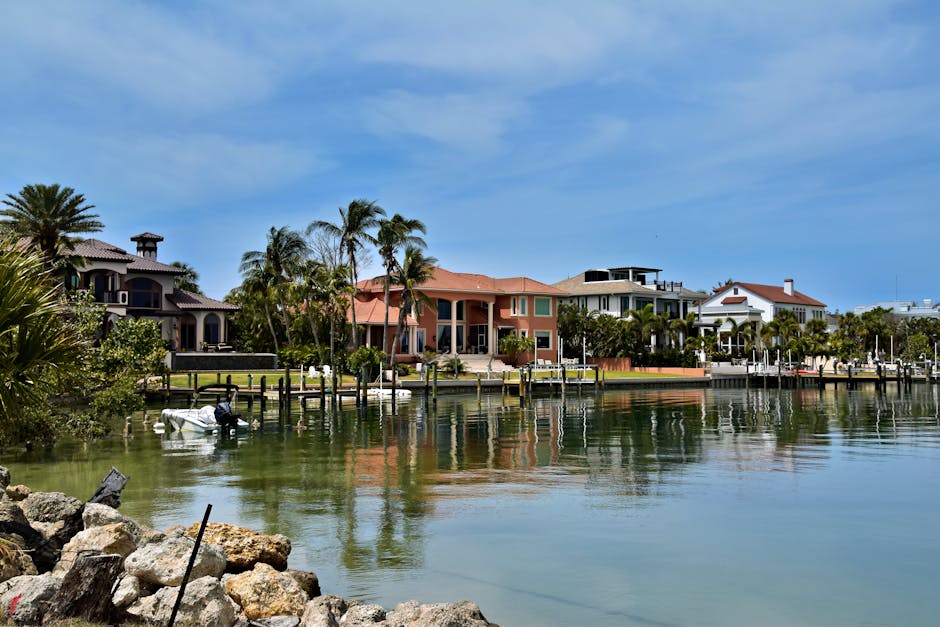
The definition of luxury in the region has fundamentally shifted from seasonal lifestyle choice to primary residence necessity. This is particularly visible in the waterfront sector, which has emerged as one of the most aggressive sub-markets in the state. Historically, waterfront properties in areas like Davis Islands and Snell Isle were often secondary or tertiary holdings. Today, these sites are being redeveloped into substantial estates designed for year-round habitation, complete with sophisticated home offices, integrated smart technology, and reinforced structural standards that exceed current code requirements.
Legal and architectural shifts have also influenced this movement. As noted in The National Law Review, Tampa’s waterfront is now recognized as a primary luxury market, attracting institutional-grade attention to residential developments. This recognition has led to increased investment in coastal infrastructure and a professionalization of the luxury brokerage space, where transactions are increasingly handled with the same due diligence as commercial acquisitions.
For the sophisticated buyer, the focus has moved beyond the view to the underlying land value and the long-term viability of the site. Buyers are prioritizing properties with newer seawalls, elevated finished floor elevations, and deep-water access for larger vessels. This emphasis on physical durability and maritime utility is a hallmark of the 2026 market, where the aesthetic appeal of a property is secondary to its structural integrity and geographic positioning.
Redefining the Pricing Ceiling in the Current Cycle
The pricing architecture of the region has been reset by a series of record-breaking transactions over the past eighteen months. We have moved past the era where a ten-million-dollar sale was an anomaly. Recent activity, including the listing of significant estates with nine-figure aspirations, has adjusted the psychological ceiling for local valuations. As reported by the Wall Street Journal, the entry of hyper-luxury inventory has forced a recalibration of what constitutes value in the $5,000,000 to $15,000,000 range. When the top of the market moves, it creates a vacuum that pulls up the valuations of well-located homes in the mid-luxury tier.
To understand the current momentum, one must look at the historical context of 2025. Data from the Tampa Bay Times highlights that the most expensive sales of the previous year were concentrated in South Tampa and the barrier islands, with buyers consistently paying premiums for lot size and privacy. This trend has accelerated into 2026, with the “trophy property” category now attracting global interest that was previously reserved for Miami or Palm Beach.
Despite these high-profile outliers, the bulk of the market movement remains concentrated in the $2,000,000 to $4,000,000 bracket. For buyers in this segment, the goal is identifying properties that offer a balance of modern amenities and historical charm. Transitioning into these neighborhoods requires an advisor who understands the specific nuances of each block, as values can vary significantly based on school district boundaries and proximity to the bay shore. For those ready to explore current inventory, you can browse listings for sale to gauge current market positioning.
Strategic Acquisition: Critical Evaluation Criteria
In a market where inventory is limited, the risk of overpaying for a sub-optimal asset is high. Successful acquisition in 2026 requires a disciplined approach to property evaluation that goes beyond a standard walkthrough. Buyers must analyze the micro-neighborhood dynamics, specifically looking at planned infrastructure improvements and the historical performance of neighboring assets. This analytical rigor is what separates a successful investment from a sentimental purchase.
We recommend a specific checklist for any high-end acquisition to ensure that the asset aligns with both lifestyle needs and long-term capital preservation goals. This process involves verifying not just the home’s condition, but its standing within the broader community framework and its susceptibility to future market shifts.
- Verify the age and elevation of all critical systems and the seawall, if applicable.
- Analyze the neighborhood’s development pipeline to identify potential construction noise or view obstructions.
- Evaluate the property’s historical tax assessments and current insurance portability options.
- Assess the proximity to major transit corridors and upcoming mixed-use developments like Water Street.
- Review the recent sales of comparable floor plans within a half-mile radius to determine the current price per square foot trend.
- Conduct a private consultation to understand off-market opportunities that may not be visible on the public MLS.
Navigating these variables requires a deep understanding of the local landscape. As the city continues to host major events and attract tens of thousands of visitors for high-profile concerts and festivals, the desirability of central, walkable neighborhoods like Hyde Park and Beach Park remains at an all-time high. These areas offer a level of connectivity that is increasingly rare in the luxury space.
The Evolution of Vertical Luxury and Condo Markets
While single-family estates remain the preference for many, the luxury condominium market is entering a new phase of maturity. We are no longer in an “early-stage” market; rather, we are seeing the delivery of world-class vertical communities that offer service levels comparable to major global cities. This shift is particularly evident in the downtown core, where high-rise living has become a legitimate alternative for the affluent buyer who prioritizes security and maintenance-free utility.
According to Tampa Bay Business & Wealth, the infrastructure supporting these vertical communities is finally catching up to the demand. The integration of high-end retail, concierge medical services, and private social clubs within these developments has changed the value proposition for those moving from larger suburban estates. This “lock-and-leave” lifestyle is especially attractive to the professional class who may split their time between multiple cities.
However, the condo market requires a different set of analytical tools. Buyers must look closely at association reserves, the reputation of the management firm, and the specific mix of unit owners. A building with a high percentage of short-term rentals or investor-owned units may not provide the same long-term stability as one comprised primarily of owner-occupants. We advise our clients to look for developments that prioritize exclusivity and resident-only amenities to ensure a consistent living experience.
Infrastructure, Lifestyle, and Long-Term Outlook
The long-term outlook for the region is inextricably linked to the massive infrastructure investments currently underway. From the expansion of the airport to the continued development of the waterfront districts, the city is being physically reshaped to support a higher density of high-net-worth residents. This is not a temporary boom; it is a structural transformation that is likely to define the local economy for the next decade. Real estate remains the primary vehicle for participating in this growth, provided the asset is chosen with precision.
Market observers should also pay attention to the broader real estate trends documented by Florida Trend, which highlight the statewide movement toward high-growth urban centers. The city’s ability to maintain its unique character while accommodating this growth is a delicate balance, but one that has so far been managed effectively by local leadership and private developers. This stability is a key component of the advisor-led strategy we provide to our clients.
Deciding when and where to enter the market is a complex calculation that involves more than just looking at a price tag. It requires an understanding of how you will use the property today and how its value will evolve as the surrounding neighborhood matures. Whether you are divesting a long-held family estate or looking to secure a primary residence in one of the city’s most prestigious enclaves, professional guidance is essential to achieving a favorable outcome.
The current market conditions offer a unique window for buyers and sellers who value data-driven decision-making over market hype. As inventory remains tight and demand for the highest quality assets continues to grow, the importance of having an experienced advisor cannot be overstated. We invite you to contact an advisor today for a confidential review of your real estate portfolio or to begin a tailored search for your next primary residence. Our focus is providing the analytical depth and neighborhood-level expertise necessary to navigate the complexities of the 2026 luxury landscape with confidence.
Your next move in Tampa luxury
Get current inventory, pricing guidance, and private-tour support from our brokerage team.
Source highlights
- Tampa’s Price Record Is $22.5 Million. This Huge Estate Is Asking $115 Million. – WSJ
- Tampa Bay’s most expensive luxury home sales of 2025 – Tampa Bay Times
- Tampa Bay luxury market grows stronger despite national declines – The Business Journals
- Why Tampa remains an early-stage luxury condo market – Tampa Bay Business & Wealth
- Tampa Bay’s Waterfront Emerges as a Primary Luxury Real Estate Market – The National Law Review
- Florida Trend Real Estate – Florida Trend
- Things to do with kids this weekend in Tampa, FL – That's So Tampa
- Tampa weekend events: Concerts, festivals and downtown family fun — What to know before you go – FOX 13 Tampa Bay



