


The Resiliency and Redefinition of Tampa’s Premium Real Estate
Tampa’s premium property sector is currently defined by a distinct decoupling from national real estate trends. While broader domestic markets navigate varying degrees of contraction, the local environment demonstrates sustained capitalization, driven largely by significant inbound wealth transfer. Current MLS data highlights this robust activity, reflecting an active luxury inventory with a median list price of $2.5 million and an average exceeding $3.29 million. Buyers are no longer acquiring properties purely on speculative appreciation; rather, they are making calculated investments in long-term generational assets within established neighborhoods such as Davis Islands, Hyde Park, and Culbreath Isles.

This stabilization is supported by demographic shifts that favor regions offering strong economic fundamentals alongside substantial infrastructure development. Affluent buyers recognize that the structural integrity of the local economy provides a protective hedge against macroeconomic volatility. As noted in recent regional economic coverage highlighting how the Tampa Bay luxury market grows stronger despite national declines, this decoupling is not accidental. It is the result of a deliberate municipal focus on attracting high-net-worth individuals through targeted corporate relocation incentives and the enhancement of civic amenities.
For the prospective purchaser, this means approaching the market with a rigorous analytical framework. Inventory constraints in the most desirable enclaves dictate that buyers must be prepared to act decisively. However, decisiveness should not be confused with hastiness. The current climate requires a sophisticated understanding of micro-neighborhood nuances, where the variance of a single block can fundamentally alter a property’s valuation, risk profile, and long-term liquidity. Careful analysis of recent comparable sales within these precise micro-markets is mandatory to validate pricing structures before drafting an initial letter of intent.

Decoding Waterfront Valuations and Topographical Constraints
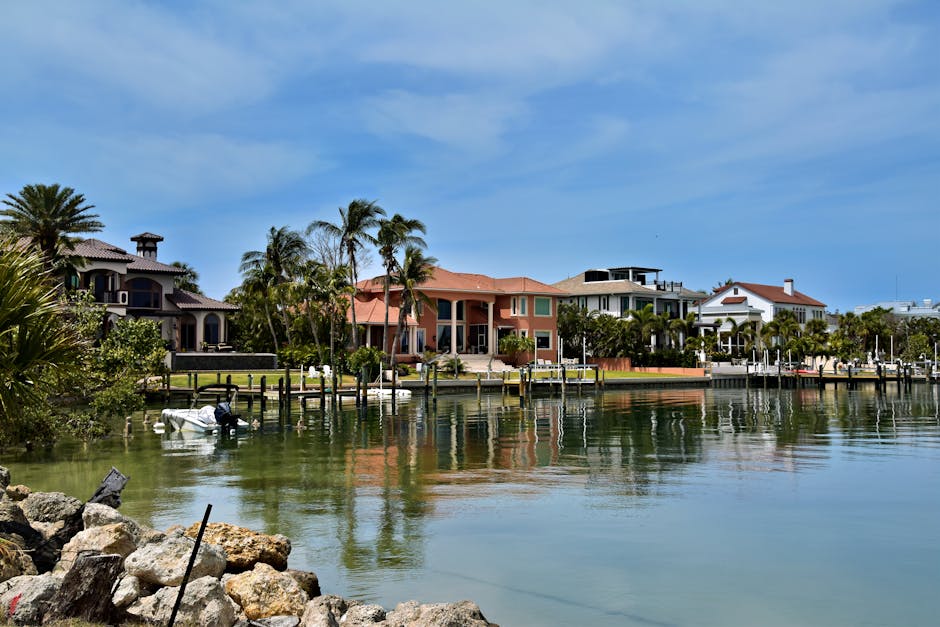
Waterfront acquisitions represent the pinnacle of Tampa real estate, yet they are structurally complex transactions that demand specialized scrutiny. Properties situated along the open bay command significant premiums compared to those located on deep-water canals, primarily due to unobstructed sightlines and immediate access to the Gulf of Mexico. However, the evaluation of these assets extends far beyond aesthetic appeal. It is fundamentally an exercise in risk management and infrastructural assessment. A significant portion of this segment’s value is intrinsic to the condition of its marine infrastructure, specifically the integrity of seawalls, dock pylons, and the precise navigational draft available at mean low tide.
Recent market analyses have underscored this reality, pointing out that Tampa Bay’s waterfront emerges as a primary luxury real estate market. This emergence has amplified the necessity for technical due diligence. Buyers must rigorously analyze riparian rights, submerged land leases, and current topographical elevations relative to updated federal flood maps. The coastal environment is unforgiving to deferred maintenance, making the structural audit of a waterfront estate a non-negotiable component of the acquisition strategy. An asset with failing marine infrastructure can require hundreds of thousands of dollars in immediate capital expenditures, significantly altering the effective purchase price.
Furthermore, regulatory compliance regarding waterfront modifications continues to tighten. Understanding local ordinances concerning the expansion of marine structures or the elevation requirements for new construction is paramount. Buyers acquiring waterfront assets for redevelopment must factor these regulatory timelines and costs into their initial capitalization models. A property that appears to be a prime redevelopment candidate may harbor restrictive covenants or environmental protections that severely limit its future utility. Navigating these regulatory frameworks requires experienced engineering consultation early in the due diligence phase.
The Maturation of Vertical Living and the Condominium Sector
Historically recognized for its expansive single-family estates, Tampa is currently experiencing a rapid maturation in its vertical living sector. The development of districts such as Water Street has introduced a new paradigm of residential offerings, characterized by high-density, amenity-rich condominiums that cater to buyers seeking turnkey urbanity. This shift is absorbing a significant portion of inbound capital, particularly from individuals relocating from major metropolitan areas where premium vertical living is the established norm. These modern developments command high price per square foot metrics, reflecting the premium placed on specialized services, heightened security, and immediate access to urban cores.
Evaluating a luxury condominium requires a different analytical toolkit than single-family acquisitions. The focus shifts toward the operational health of the condominium association, the structure of reserve funds, and the precise allocation of maintenance liabilities. As highlighted in discussions concerning why Tampa remains an early-stage luxury condo market, the current inventory presents both distinct opportunities and specific developmental risks. Buyers are essentially investing in the management efficacy of the building as much as the physical unit itself. Poor operational management by an association can severely impair an asset’s future liquidity and marketability.
Additionally, prospective buyers must critically analyze the building’s demographic composition, rental restrictions, and pending special assessments. A thorough review of the declaration of condominium and recent board meeting minutes is essential to uncover potential operational friction. In a nascent but rapidly growing vertical market, the long-term appreciation of these assets is heavily dependent on the association’s ability to maintain premium standards and adapt to evolving regulatory requirements. Thorough review of these governing documents is critical before finalizing any vertical acquisition.
Establishing a Rigorous Framework for Asset Verification
Acquiring high-value residential assets requires a systematic approach to due diligence that moves beyond standard residential inspections. Premium properties often feature complex, commercial-grade systems, integrated home automation, and specialized materials that require targeted expertise to properly evaluate. The objective is to construct a comprehensive risk profile before capital is fully deployed, isolating any deferred maintenance or structural deficiencies that could impact the asset’s underlying value.
To navigate this process effectively, sophisticated buyers utilize a standardized protocol for asset verification. This methodology ensures that all critical vulnerabilities are identified and quantified during the inspection period. The following criteria represent the foundation of a robust due diligence strategy for Tampa acquisitions:
- Verify baseline structural elevations against the most recent municipal and federal flood zone designations to model future insurance requirements.
- Audit the condition, age, and wind-mitigation compliance of the roofing system and all exterior fenestrations, including impact-rated glazing.
- Require a comprehensive diagnostic evaluation of all commercial-grade HVAC installations, whole-home generators, and sophisticated automation infrastructure.
- Conduct an exhaustive review of title history, specifically scanning for unrecorded municipal liens, restrictive covenants, and complex easement structures.
- For properties governed by associations, perform a deep review of reserve funding levels, pending capital expenditures, and historical fee escalation rates.
Executing this checklist requires coordinating a team of specialized inspectors, structural engineers, and environmental consultants. A standard home inspection is inherently insufficient for properties scaling beyond the two-million-dollar threshold. Buyers must mandate forensic-level scrutiny to ensure the asset’s physical reality aligns with its stated valuation. Any discrepancies uncovered during this process must be rigorously quantified and utilized to restructure the acquisition terms if necessary.
Navigating Civic Infrastructure and Cultural Proximity
The valuation of a premium residence is deeply intertwined with its proximity to cultural infrastructure, institutional amenities, and private educational facilities. In Tampa, specific corridors command substantial premiums due to their seamless integration with these civic assets. The walkability of Hyde Park, the exclusivity of Palma Ceia, and the immediate downtown access of Davis Islands all represent distinct lifestyle value propositions that are priced into the real estate. Properties situated within these established nodes consistently outpace peripheral neighborhoods in both value retention and appreciation velocity.
Beyond the static geography, the cultural cadence of the city plays a significant role in neighborhood desirability. Tampa’s evolving calendar of events, culinary developments, and civic programming contribute to the overall premium placed on central locations. Whether it involves evaluating access to corporate hubs, specialized healthcare facilities, or local cultural programming such as Tampa’s weekend music and culinary events, these external factors are critical drivers of long-term property demand. Buyers are increasingly weighting these lifestyle integrations heavily in their acquisition matrices.
Understanding these synergies allows buyers to align their real estate portfolio with their broader strategic objectives. It requires looking past the property lines to evaluate the trajectory of the surrounding neighborhood. Municipal zoning changes, upcoming commercial developments, and infrastructural improvements all serve as leading indicators of future valuation shifts. A strategic acquisition factors these civic dynamics into the investment thesis, ensuring the asset remains geographically relevant over the long term.
Structuring a Sophisticated and Defensible Acquisition Strategy
The mechanics of acquiring a premium property demand strategic precision. In a market characterized by limited top-tier inventory and well-capitalized competition, the structure of an offer is often as critical as the top-line price. High-net-worth transactions require a tailored approach to financing, contingencies, and escrow management. An improperly structured offer, regardless of its financial weight, can easily be discarded in favor of a cleaner, more professionally executed proposal.
Cash transactions inherently provide the most direct path to acquisition, eliminating appraisal contingencies and accelerating closing timelines. However, when leveraging capital, buyers must ensure their funding mechanisms are ironclad and explicitly communicated to the seller. The use of customized escalation clauses, strategic earnest money deposits, and abbreviated inspection windows can significantly enhance the competitiveness of a proposal without unnecessarily exposing the buyer to unmitigated risk. Buyers must balance aggressive terms with robust contractual protections.
Ultimately, the goal is to present a defensible, highly credible offer that addresses the seller’s primary motivations while rigorously protecting the buyer’s interests. This involves a delicate negotiation phase where empirical data, such as recent comparable sales and hyper-local market velocity, is utilized to justify valuation metrics. It requires removing emotion from the transaction and relying strictly on an analytical assessment of the asset’s current and future worth. Professional representation ensures that the emotional gravity of the acquisition does not override disciplined strategy.
Strategic Next Steps for Discerning Tampa Buyers
Acquiring premium real estate in Tampa necessitates moving beyond passive observation into deliberate, structured action. The current market environment rewards those who possess clear acquisition criteria, pre-allocated capital, and access to localized, proprietary market intelligence. Whether evaluating waterfront compounds, historical estates, or emerging luxury vertical developments, the initial step is establishing a rigorous analytical baseline. Entering the market without a defined strategy often results in missed opportunities or compromised negotiations.
We encourage prospective buyers to begin their preliminary market analysis by reviewing our curated portfolio of active assets. Take the time to meticulously browse our current luxury listings to understand the present inventory landscape, pricing thresholds, and neighborhood-specific architectural styles. This initial review will serve as the foundation for a more targeted and effective acquisition strategy. Monitoring the days-on-market metrics and pricing adjustments within specific asset classes provides invaluable context.
When you are prepared to transition from preliminary research to active market engagement, professional advisement is paramount. Our firm provides discreet, data-driven representation for high-net-worth individuals navigating this complex market. Contact our advisory team to schedule a private consultation. Together, we will refine your investment criteria, conduct targeted asset identification, and execute a flawless acquisition tailored to your specific objectives. Our priority is ensuring your capital is deployed efficiently and protected vigorously.
Your next move in Tampa luxury
Get current inventory, pricing guidance, and private-tour support from our brokerage team.
Source highlights
- Tampa Bay’s most expensive luxury home sales of 2025 – Tampa Bay Times
- Tampa Bay luxury market grows stronger despite national declines – The Business Journals
- Why Tampa remains an early-stage luxury condo market – Tampa Bay Business & Wealth
- Tampa Bay’s Waterfront Emerges as a Primary Luxury Real Estate Market – The National Law Review
- Florida Trend Real Estate – Florida Trend
- New Signature Real Estate Team Emerges Across Tampa Bay: The Nick Janovsky Group Launches with Premier Sotheby’s International Realty – citybiz
- Things To Do In Tampa This Weekend: Best Festivals & Events Going On – That's So Tampa
- Tampa weekend events: Concerts, festivals and downtown family fun — What to know before you go – FOX 13 Tampa Bay



