



The Transition of Tampa into a Primary Luxury Market
The landscape of Tampa’s high-end property sector has undergone a fundamental shift, moving from a secondary seasonal destination to a primary market for global capital. This evolution is underscored by a recent report highlighting how Tampa became Florida’s new luxury investment capital through a $675 million surge in high-value transactions. For the sophisticated buyer, this represents more than just a pricing uptick; it signals a change in the intrinsic value of the region’s most coveted neighborhoods.

Institutional-grade infrastructure and a burgeoning corporate sector have invited a new demographic of permanent residents who prioritize long-term asset stability over speculative gains. We are seeing a move away from the traditional “winter home” model toward significant principal residences. This shift is reflected in the current inventory, where the median list price has stabilized at $2,500,000, and the average has climbed toward the $3.3 million mark, driven by an influx of high-net-worth individuals seeking tax-friendly environments without compromising on urban sophistication.
Analyzing the 120 active luxury listings currently available reveals a market that is increasingly disciplined. Buyers are no longer competing in a frantic vacuum; instead, they are conducting rigorous due diligence on property longevity, technological integration, and architectural provenance. The transition to a primary market means that resale value is increasingly dictated by the quality of the build and the exclusivity of the location, particularly in established enclaves where land remains the scarcest commodity.
Waterfront Assets and the Premium on Riparian Rights
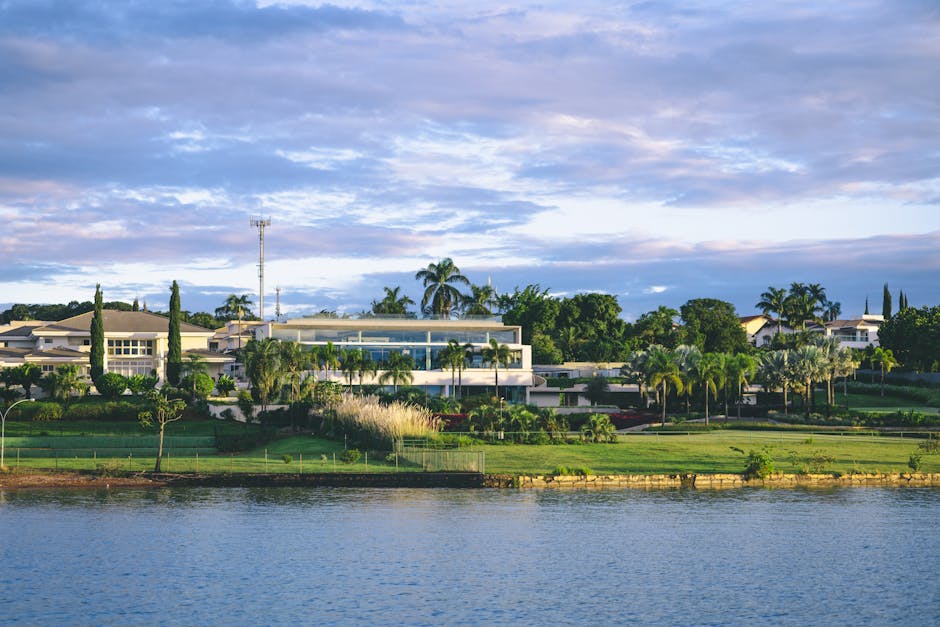
In the Tampa market, waterfront property remains the ultimate hedge against market volatility. The National Law Review recently noted that Tampa Bay’s waterfront has emerged as a primary luxury market, attracting buyers who view these parcels as unique, non-replicable assets. Whether it is the open bay views of Davis Islands or the deep-water canals of Culbreath Isles, the emphasis has shifted toward properties that offer both privacy and immediate nautical access.
Specific attention must be paid to the structural integrity of these assets. Modern luxury buyers are looking beyond the aesthetic of the seawall to the engineering beneath. Properties such as those found on Troutwater Lane exemplify the premium placed on privacy and water frontage, where a $2,650,000 valuation is supported by the rarity of the lot size and the direct access to the Bay’s primary channels. As environmental standards evolve, the value of newer, compliant construction continues to outpace older renovations that may face future mitigation costs.
Furthermore, the scarcity of waterfront land is driving significant redevelopment in areas like Beach Park and Sunset Park. Investors are increasingly looking at older structures as “land plays,” where the value lies in the dirt rather than the existing improvements. This trend has pushed the entry point for waterfront living significantly higher, making it essential for advisors to help buyers differentiate between a premium price and a premium value based on future utility and environmental resilience.
The Vertical Estate: Evaluating the High-Rise Shift
While single-family homes dominate the headlines, Tampa’s luxury condo market is maturing at an accelerated pace. Industry experts often discuss why Tampa remains an early-stage luxury condo market compared to Miami, which presents a unique window for acquisition before the next phase of price discovery. The shift is most visible in the Downtown and Water Street corridors, where vertical living is now equated with high-touch service and world-class amenities.
The definition of luxury in these vertical estates has moved from basic concierge services to comprehensive wellness and security systems. Buyers are looking for controlled environments that offer the same level of seclusion as a gated estate, but with the added benefit of being within walking distance to the city’s cultural centers. This urban density is a new variable in the Tampa luxury equation, one that appeals to the global executive who requires a frictionless transition between work, home, and travel.
We are also seeing a shift in the St. Petersburg market, where the definition of luxury condos continues to evolve as the cityscape densifies. For buyers who prefer the cross-bay lifestyle, the choice often comes down to the specific “lifestyle stack” offered by a building—whether it is the private elevator foyers, the caliber of the on-site culinary options, or the proximity to the city’s increasingly vibrant arts and events scene. This maturity in the condo segment is a clear indicator of a city that has arrived on the international stage.
Strategic Evaluation Checklist for High-Net-Worth Buyers
Navigating a primary market requires a more analytical approach than traditional real estate transactions. When evaluating a high-end acquisition in Tampa, we recommend focusing on the following variables to ensure long-term asset performance and personal satisfaction. This checklist is designed for the buyer who views their home as a key component of their overall wealth strategy.
- Verification of seawall engineering and recent topographic surveys for waterfront parcels.
- Assessment of privacy buffers and sightlines, particularly in high-density enclaves like South Tampa.
- Analysis of historic preservation restrictions in neighborhoods such as Hyde Park or parts of Seminole Heights.
- Evaluation of the property’s technological backbone, including smart home integration and redundant security systems.
- Mitigation strategies for neighborhood traffic during major events like the Gasparilla Pirate Fest or large-scale concerts.
- Projected impact of neighboring developments on future view corridors and noise levels.
Each of these factors contributes to the intrinsic value of the home. In a market where expensive luxury home sales are becoming the norm, the difference between an average acquisition and a superior one lies in the details that a standard market report might overlook. Due diligence is not merely a formality; it is the foundation of a successful luxury investment.
Neighborhood Nuance: From Bayshore to Westshore
Understanding the micro-markets within Tampa is essential for aligning a property with a specific lifestyle or investment goal. South Tampa remains the anchor of the market, where the proximity to elite private schools and the social epicenter of the city maintains high demand. Here, the focus is often on traditional architecture and the prestige associated with established addresses. However, as the city grows, new pockets of luxury are emerging that offer different value propositions.
The Westshore area is increasingly seen as a hub for the modern executive, offering seamless access to the airport and the business district while maintaining high-end residential pockets. Meanwhile, the Downtown core is capturing those who favor a more contemporary, walkable lifestyle. This geographic diversification is a sign of a healthy, multi-faceted economy that can support high valuations across different product types. It is no longer enough to simply “be in Tampa”; one must be in the right part of Tampa for their specific objectives.
Even within these neighborhoods, value can fluctuate significantly from one block to the next. For instance, properties near Gardner Road offer a different sense of seclusion and land value than those on Memorial Highway, even though both represent the upper echelon of the market. Identifying these nuances requires a local perspective that goes beyond basic listing data. It requires an understanding of how traffic patterns, local amenities, and neighborhood associations impact the daily lived experience of the resident.
Infrastructure and Events: The City’s Growing Pains and Gains
A city’s luxury market is only as strong as its infrastructure and its ability to host world-class experiences. Tampa has proven its capacity to handle massive influxes of visitors, as seen during recent high-traffic periods where concerts and downtown festivals draw tens of thousands. This cultural maturity makes the region more attractive to affluent residents who expect a certain caliber of entertainment and accessibility.
However, the rapid growth also necessitates a strategic look at how these events affect residential life. Sophisticated buyers often inquire about the logistical impact of a “packed K-Pop weekend” or a major food festival like the Blues and BBQ events. These are indicators of a city that is alive and economically diverse, but they also require homeowners to be strategic about their location. Understanding the ebb and flow of the city’s traffic and event calendar is part of being an informed resident in a thriving metropolis.
The investment in public spaces, from the expanded Riverwalk to the revitalization of the Channel District, continues to pay dividends for property owners. As the city invests in its own future, the private sector responds with increasingly ambitious residential projects. This symbiotic relationship between public infrastructure and private development is what sustains a primary luxury market over the long term. It ensures that the value of a home is supported by the value of the city surrounding it.
Portfolio Positioning: The 2026 Outlook
As we move through the second quarter of 2026, the Tampa luxury market is characterized by a high degree of professionalization. The days of speculative flipping have largely been replaced by strategic acquisitions and long-term holds. For those looking to deploy capital into this asset class, the focus should remain on properties that offer a combination of scarcity, quality, and location. Whether it is a waterfront estate or a high-service penthouse, the common denominator is a commitment to excellence that matches the city’s own trajectory.
The current climate, with its manageable inventory and sophisticated buyer pool, offers a unique opportunity for those who are prepared to act with precision. It is a market that rewards knowledge and penalizes hesitation. By focusing on the fundamentals—riparian rights, structural integrity, and neighborhood positioning—buyers can secure assets that will continue to appreciate as Tampa solidifies its position as a global luxury hub. The city is no longer waiting for its moment; it is currently living it.
To navigate this complex landscape effectively, you need more than a list of properties; you need an analytical partner who understands the nuances of the Bay Area’s evolving market. We invite you to browse our curated selection of listings to see the current standard of Tampa luxury firsthand. When you are ready to discuss your specific requirements and how to position your portfolio for the years ahead, please contact an advisor for a private consultation. Our team is dedicated to providing the data-backed guidance necessary for high-value decision-making in this dynamic environment.
Your next move in Tampa luxury
Get current inventory, pricing guidance, and private-tour support from our brokerage team.
Source highlights
- Tampa Bay’s most expensive luxury home sales of 2025 – Tampa Bay Times
- Downtown St. Pete's definition of luxury condos shifts as the city evolves – The Business Journals
- Why Tampa remains an early-stage luxury condo market – Tampa Bay Business & Wealth
- Tampa Bay’s Waterfront Emerges as a Primary Luxury Real Estate Market – The National Law Review
- New Signature Real Estate Team Emerges Across Tampa Bay: The Nick Janovsky Group Launches with Premier Sotheby’s International Realty – citybiz
- Inside Tampa’s $675 Million Surge: How the City Became Florida’s New Luxury Investment Capital – hauteresidence.com
- Tampa officials expect heavy traffic, tens of thousands of visitors over a packed K-Pop weekend – wtsp.com
- From Blues to BBQ: Tampa’s can’t-miss events this weekend – WMNF 88.5 FM



