


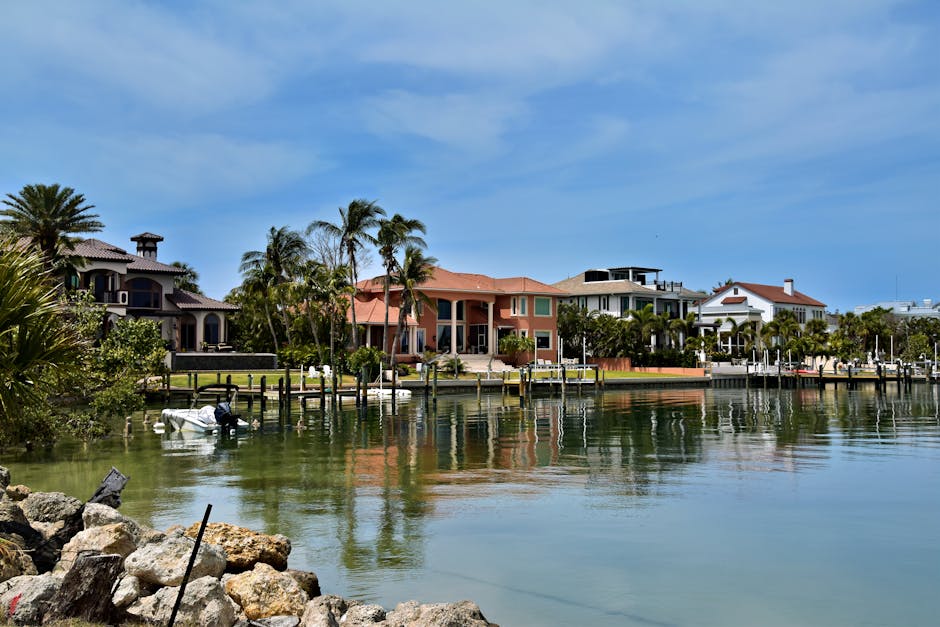
Transitioning to a Primary Luxury Hub
As of April 2026, the Tampa luxury real estate landscape has completed a significant structural transformation. Historically viewed by many national investors as a secondary or seasonal market, current transaction data and infrastructure developments confirm that Tampa has solidified its status as a primary luxury market. This shift is driven by a sophisticated demographic of permanent residents who prioritize long-term utility, high-quality private education, and robust professional integration over temporary vacation use. The local market is no longer defined by seasonal fluctuations but by a consistent, year-round demand for high-specification properties that serve as primary family estates.
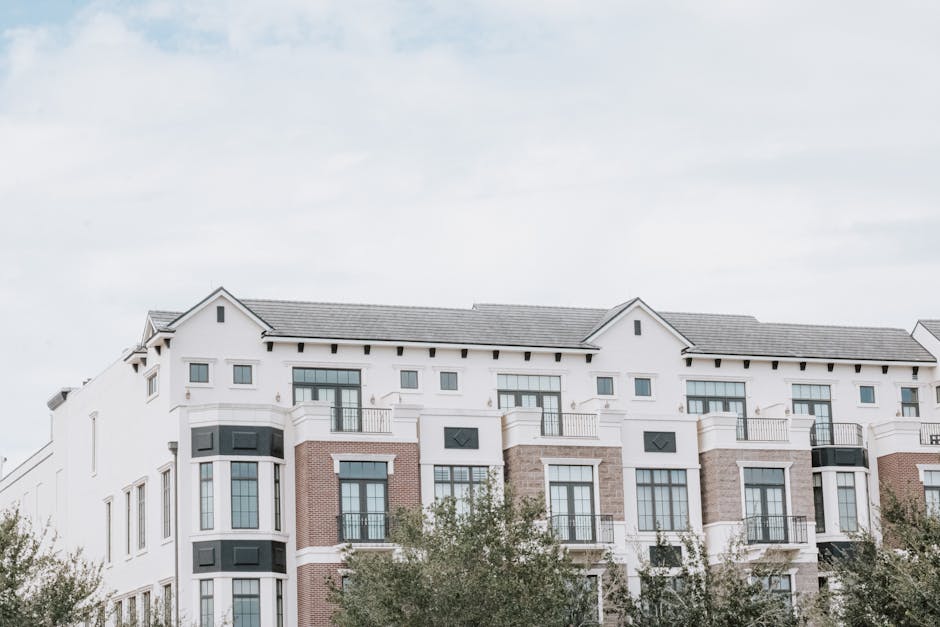
According to recent analysis from The National Law Review, Tampa Bay’s waterfront is emerging as a critical focus for luxury real estate, reflecting a broader trend where waterfront density and private access dictate long-term value. This transition is visible in neighborhoods like Davis Islands and Bayshore Boulevard, where architectural standards have elevated significantly to meet the expectations of global buyers. For the analytical buyer, this means evaluating properties not just for their immediate aesthetic appeal, but for their ability to function as a primary asset in a market that is increasingly insulated from the volatility seen in other Florida metros.
The stabilization of the local economy, supported by diverse industry growth in technology and finance, has provided a floor for luxury valuations. Buyers are now looking for properties that offer ‘generational durability’—homes with advanced smart-home integration, elevated flood mitigation infrastructure, and flexible floor plans that accommodate professional-grade home offices. This sophistication in buyer behavior has led to a more disciplined market where pricing is grounded in comparable primary-residence sales rather than speculative seasonal peaks. Understanding this fundamental shift is the first step in identifying properties that will retain value as the region continues its upward trajectory.

Analyzing Current Inventory and Valuation Benchmarks
Navigating the current inventory requires a granular understanding of the ‘luxury median.’ At present, there are approximately 120 active luxury listings across the key high-end districts of Tampa. The median list price has stabilized around $2,500,000, while the average list price sits significantly higher at approximately $3,281,447. This gap indicates a high concentration of ultra-luxury assets—properties priced above $10,000,000—which often skew average figures but provide a clear ceiling for the market. Buyers should look at these figures as benchmarks for entry into established neighborhoods like Beach Park or the more secluded areas of Culbreath Isles.
Comparing active inventory to recent high-profile sales provides a clearer picture of value. For instance, properties such as the estate on Troutwater Lane, listed at $2,650,000, or the Gardner Road residence at $3,000,000, represent the current standard for high-end single-family homes. These properties offer a baseline of five-plus bedrooms, professional kitchens, and custom outdoor living spaces that are now considered standard requirements for the Tampa executive. When analyzing these benchmarks, the sophisticated advisor looks at the cost-per-square-foot in relation to the specific sub-neighborhood, as variations can be substantial even within a few blocks of the waterfront.
Market movement in the first half of 2026 suggests that while inventory remains lean compared to historical norms, the quality of available listings has improved. Sellers are increasingly investing in pre-listing architectural refinements to ensure their properties meet the rigorous standards of a primary-residence buyer. This ‘flight to quality’ means that properties at the $3,000,000 to $5,000,000 level are often more complete and move-in ready than in previous cycles. For those tracking broader regional trends, Florida Trend provides deep insights into how real estate developments across the state are being shaped by these new quality standards, specifically within the Tampa corridor.
The Evolution of Waterfront Privacy and Infrastructure
Waterfront living in Tampa has evolved beyond the simple benefit of a view. In 2026, the emphasis has shifted toward technical infrastructure and privacy. Buyers are scrutinizing seawall integrity, dockage depth for larger vessels, and the height of the first living floor. The ‘premium’ in today’s market is often found in the unseen elements of the property. A waterfront lot on Memorial Highway, for example, may be valued at $3,800,000 not just for its location, but for its expansive lot size and the potential for a secured, gated entrance that provides the level of anonymity required by modern high-net-worth individuals.
Privacy is no longer just about landscaping; it is about architectural orientation and technological security. Homes are being designed with ‘inward-facing’ luxury, where courtyards and private pool decks are shielded from neighboring views while still maintaining panoramic vistas of Old Tampa Bay. This requirement for seclusion is a direct result of Tampa’s growth; as the city becomes more active, the value of a private sanctuary increases. Advisors often suggest that buyers prioritize lots with deep setbacks or those located on quiet cul-de-sacs to ensure long-term lifestyle stability as the surrounding areas continue to develop.
Furthermore, the environmental considerations of waterfront property are now a central part of the valuation process. Sophisticated buyers are requesting detailed elevation certificates and historical data on drainage and wind resistance. This level of due diligence is standard for primary residence acquisitions. The goal is to ensure that the asset is as resilient as it is beautiful. Comparing waterfront opportunities across different Tampa neighborhoods requires a nuanced understanding of these technical factors, as they directly impact insurance premiums and future resale liquidity in a more climate-conscious market.
Strategic Verification Checklist for Luxury Acquisitions
- Confirm the elevation and age of the seawall to estimate future maintenance or replacement costs.
- Verify the depth of navigable water at low tide if the property includes private dockage.
- Assess the age and efficiency of HVAC systems, ensuring they are sized correctly for expansive luxury floor plans.
- Review the architectural history and any existing warranties on high-end custom finishes or smart-home systems.
- Analyze the neighborhood’s zoning history to predict potential nearby developments that could impact privacy or views.
- Evaluate the property’s connectivity to major hubs like the Westshore District or Downtown for professional accessibility.
Market Resilience Amid National Economic Shifts
One of the most compelling aspects of the 2026 Tampa market is its resilience in the face of national economic cooling. While other luxury hubs have seen a significant pullback in pricing and volume, Tampa continues to show strength. Reports from The Business Journals highlight how the Tampa Bay luxury market has grown stronger despite national declines. This divergence is largely attributed to the sustained influx of high-earning professionals relocating from high-tax states who view Tampa as a value proposition even at the $3,000,000 price point.
The local market is also buoyed by a robust social and cultural calendar that appeals to the affluent lifestyle without being overbearing. For example, major regional events such as those highlighted by FOX 13 Tampa Bay—including concerts, festivals, and family-oriented activities in the downtown core—contribute to the overall desirability of the region. This quality of life factor acts as an anchor for property values, as it ensures that Tampa remains a place where people want to live full-time, rather than just visit. The social infrastructure is as much a part of the valuation as the physical real estate.
Investor confidence remains high because the local government continues to prioritize infrastructure and revitalization projects that enhance property values. From the expansion of the Riverwalk to the continuous improvement of the Westshore business district, the physical landscape of Tampa is being curated to support a high-end lifestyle. This proactive approach to urban planning provides a level of certainty that is often missing in other rapidly growing cities. For the luxury buyer, this means that the surrounding environment is likely to appreciate or maintain its quality over a ten-to-fifteen-year horizon.
Vertical Luxury: The Early-Stage Condo Opportunity
While single-family estates dominate the headlines, the luxury condominium market in Tampa is currently in a fascinating ‘early-stage’ phase. This segment offers a different value proposition: lock-and-leave convenience combined with five-star amenities that rival the world’s top destination cities. Analysis from Tampa Bay Business & Wealth explains why Tampa remains an early-stage luxury condo market, suggesting that there is still significant room for growth as more high-profile towers reach completion. For those looking to diversify their portfolio or transition from a larger estate, these vertical options provide a strategic alternative.
Condominium living in neighborhoods like the Water Street district or the Bayshore corridor offers a lifestyle of integrated luxury. Residents benefit from 24-hour concierge services, private spas, and proximity to the city’s best dining and professional services. However, the advisory perspective on condos involves a careful look at the HOA structures and the developer’s track record. Unlike a single-family home where the owner has total control over maintenance, condo owners are part of a larger ecosystem. Verifying the financial health of the association and the long-term management plan is critical to protecting the investment.
The current phase of the condo market is ideal for buyers who want to participate in the ‘new Tampa’ aesthetic. These buildings are being designed by world-renowned architects who are bringing a modern, sleek sensibility to the skyline. This architectural diversity is healthy for the market as it broadens the appeal of the city to international buyers. Whether it is a penthouse overlooking the harbor or a more intimate low-rise unit in a historic district, the vertical luxury segment is an essential component of the 2026 market that warrants serious consideration by any well-positioned buyer.
Navigation and Advisory for the Q2 Buyer
Entering the Tampa luxury market in the second quarter of 2026 requires a balanced approach of speed and precision. While the market is stable, high-quality properties move quickly, often receiving multiple offers within the first few weeks of listing. Buyers must be prepared with verified financing or proof of funds and a clear list of non-negotiable requirements. Working with an advisor who understands the nuances of specific neighborhoods—someone who knows the difference between a South Tampa lot and one in Westchase—is the most effective way to navigate the competition and secure a property that fits your strategic goals.
Decision-useful guidance in this market often comes down to timing and local context. For example, understanding the impact of upcoming infrastructure projects or school district adjustments can save a buyer from overpaying for a property that may lose some of its appeal in the near future. Conversely, identifying an undervalued estate in an area that is poised for a major revitalization can lead to significant equity growth. The goal is to move beyond the surface-level marketing and analyze the data that actually moves the needle on property value and lifestyle quality.
Successful acquisitions in the current climate are those where the buyer is well-informed and decisively positioned. By focusing on primary market indicators, technical infrastructure, and long-term regional growth, you can identify opportunities that offer both personal satisfaction and financial security. As the Tampa market continues to mature, those who understand the shift toward high-quality, permanent residency will be the ones who benefit most from the city’s evolution. To begin your search or to receive a personalized analysis of the current high-end inventory, we invite you to take the next step in your acquisition journey.
Refining your strategy in the Tampa luxury space requires access to real-time data and a deep understanding of neighborhood-level movements. We recommend that you browse our current luxury listings to understand the available inventory or contact a private advisor to discuss your specific requirements for a primary residence or investment asset in the Tampa region.
Your next move in Tampa luxury
Get current inventory, pricing guidance, and private-tour support from our brokerage team.
Source highlights
- Tampa Bay’s most expensive luxury home sales of 2025 – Tampa Bay Times
- Tampa Bay luxury market grows stronger despite national declines – The Business Journals
- Tampa Bay’s Waterfront Emerges as a Primary Luxury Real Estate Market – The National Law Review
- Florida Trend Real Estate – Florida Trend
- Why Tampa remains an early-stage luxury condo market – Tampa Bay Business & Wealth
- New Signature Real Estate Team Emerges Across Tampa Bay: The Nick Janovsky Group Launches with Premier Sotheby’s International Realty – citybiz
- Things to do with kids this weekend in Tampa, FL – That's So Tampa
- From Blues to BBQ: Tampa’s can’t-miss events this weekend – WMNF 88.5 FM



