


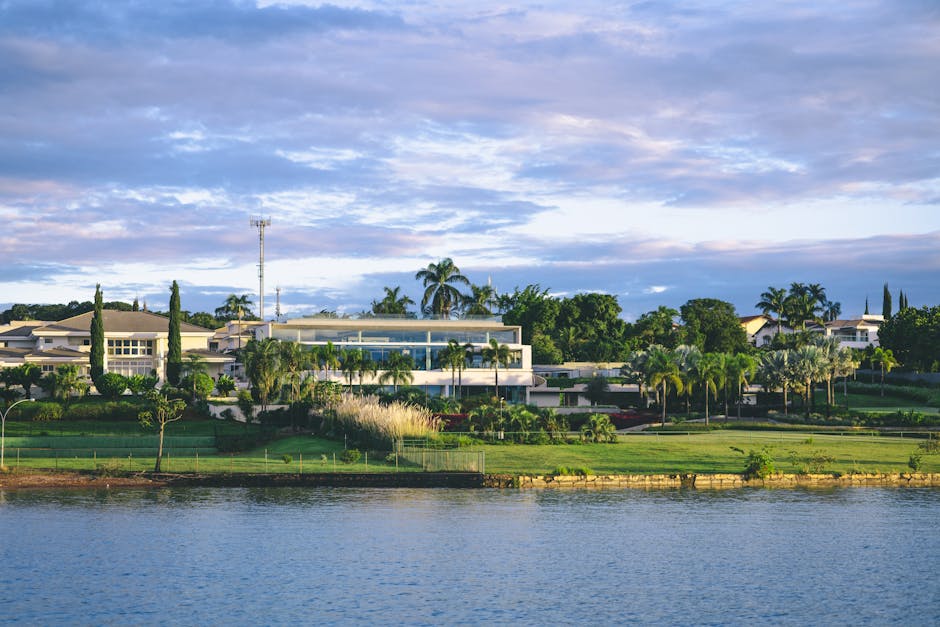
What serious buyers should compare before they compare prices
Tampa’s luxury market rewards buyers who compare the right things in the right order. Price matters, but in this segment the bigger mistake is treating two expensive homes as if they carry the same long-term value simply because the list prices look close. A waterfront address on Davis Islands, a newer build in Sunset Park, and a branded residence at Pendry can all sit in the same broad luxury conversation while offering very different ownership experiences, resale paths, insurance profiles, and day-to-day lifestyles.
This page is built for the buyer who wants to compare intelligently, not just browse beautifully photographed listings. Before you decide whether one property is “worth it,” compare the neighborhood fit, the lot and location quality, the level of renovation or deferred maintenance, the insurance and flood implications, the ownership structure, and the seller’s likely negotiating posture. In Tampa luxury, that framework usually tells you more than a headline price ever will.
Start with neighborhood fit, not the finish package
Many luxury buyers begin by looking at kitchens, pools, docks, and primary suites. Those features matter, but neighborhood fit should come first because it is the one thing you cannot renovate away. A buyer moving toward South Tampa for school access, airport convenience, or a more residential feel is solving a different problem than a buyer who wants lock-and-leave urban ownership near dining, hotel-level service, and a more vertical lifestyle downtown.
If you are comparing homes across neighborhoods, ask what each location is designed to do for you. Davis Islands often appeals to buyers who want a classic South Tampa luxury setting with island identity, water influence, and a mix of established homes and meaningful redevelopment. Sunset Park tends to attract buyers focused on lot quality, privacy, larger residential footprints, and a quieter luxury rhythm. Pendry is a different decision entirely because you are comparing a branded building experience, shared amenities, association structure, and unit-specific characteristics rather than a stand-alone lot and house.
That is why buyers should compare categories before they compare addresses. If the properties do not solve the same lifestyle problem, the price comparison is incomplete from the start.
Compare the land, the water, and the risk profile
In Tampa luxury, the lot is often the hidden story. Two homes can offer similar interior square footage while having very different land value, privacy, orientation, and future flexibility. Waterfront frontage, seawall condition, elevation, setback realities, corner exposure, tree canopy, and the shape of the lot all affect use and resale. Those details matter even more when a buyer is considering major renovation, expansion, or a long hold.
Waterfront comparisons need extra discipline. Buyers naturally focus on view and dock potential, but the more durable comparison includes flood exposure, access quality, bridge limitations where relevant, wind and water insurance considerations, and the true cost of maintaining the waterfront lifestyle. A property that looks like a better value on day one can become the more expensive ownership decision if the lot needs significant site work, the seawall is nearing a major capital event, or the insurance profile is materially heavier.
Even non-waterfront homes should be compared through a risk lens. In luxury neighborhoods, buyers pay premiums for street position, block quality, lot width, rear-yard usability, and how insulated the home feels from traffic or awkward adjacency. Those variables are not glamorous, but they are often what separates the property that holds value from the one that keeps explaining itself every time it returns to market.
Do not compare a renovated product to a redevelopment opportunity as if they are the same asset
One of the easiest ways to misread Tampa luxury is to compare a turnkey home against a property whose value is tied more to land, location, or future repositioning than current finish level. A newly updated home with polished interiors may justify a stronger convenience premium for the buyer who wants speed and certainty. A dated property on a superior lot may offer better long-term upside for a buyer willing to absorb design time, carrying costs, and construction uncertainty.
That distinction matters in neighborhoods where older homes, substantial remodels, and new construction all coexist. Buyers should compare not only what the property is today, but also what kind of ownership project it will become after closing. If one house is effectively purchase-plus-improvement and the other is purchase-and-enjoy, they should not be evaluated by the same mental model.
Ask a practical question: are you paying for someone else’s finished vision, or are you paying for a better starting point? In Tampa luxury, both can be smart choices, but they are not interchangeable choices.
Condo, branded residence, or single-family home: know the ownership tradeoff
High-end Tampa buyers often compare single-family homes against luxury condos or branded residences when they are not yet sure how they want to live. The decision is bigger than architecture. It is a choice about control, maintenance, service, carrying costs, privacy, and how your time is allocated.
A single-family home can offer more autonomy, more land value, and more room for personalization, but it also brings more direct maintenance exposure. A luxury condo or branded building may offer convenience, amenities, and a strong lock-and-leave setup, but buyers need to understand the association budget, reserves, rules, assessment risk, lease restrictions, service structure, and the specific value gap between one stack or exposure and another. Buyers considering a branded option should think in building-specific terms, not generic “luxury condo” terms. Our Pendry guide is a good example of how a building can create its own submarket inside the broader Tampa luxury conversation.
The right comparison is not “house versus condo.” It is “which ownership structure best matches how I will actually use this property over the next three to seven years?”
Look past list price to the quality of the ask
Not every ambitious list price deserves the same reaction. In upper-tier markets, some sellers are pricing from conviction backed by scarce characteristics. Others are pricing from aspiration, testing whether a buyer will pay for presentation, story, or a once-modern renovation that no longer feels fully current. Buyers need to assess whether the ask is supported by the location, land, finish quality, and true competition in that immediate submarket.
That means comparing the subject property against the right alternatives. A larger house is not always the stronger comp if the lot is weaker, the block is less desirable, or the floor plan lives smaller than the square footage suggests. Likewise, a highly polished listing may still be vulnerable if the neighborhood offers better underlying value one or two streets away.
When we help buyers compare listings, we usually strip the decision down to a few fundamentals: what cannot be changed, what can be improved, what will cost meaningful money, and what future buyers are most likely to care about. That framework keeps emotion from overpowering judgment.
Questions buyers should answer before they choose their comparison set
- Do you want a land-driven purchase, a lifestyle-driven purchase, or a convenience-driven purchase?
- Are you comfortable underwriting flood, wind, or waterfront maintenance exposure if the location justifies it?
- Would you rather inherit a finished product or shape the property after closing?
- Are schools, commute, airport access, walkability, or water access the non-negotiable driver?
- Is this a primary residence, a second home, or a portfolio purchase with different hold expectations?
- Would a building with managed amenities serve you better than a stand-alone home with more moving parts?
Once those answers are clear, the comparison process gets much cleaner. Buyers stop chasing every attractive listing and start focusing on the few properties that actually fit the brief.
Natural comparison paths inside the Tampa luxury market
Some comparisons come up over and over because buyers are deciding between adjacent but different versions of luxury living. A few common examples:
- Davis Islands vs. Sunset Park: both are prestigious, but the value conversation often turns on waterfront profile, lot shape, neighborhood feel, and how much old-versus-new housing stock a buyer is comfortable evaluating. Our Davis Islands guide and Sunset Park guide help frame that choice.
- Branded residence vs. South Tampa house: buyers are really comparing service and convenience against lot control and residential texture.
- Turnkey newer build vs. older prime-lot opportunity: this is often a time-risk decision as much as a price decision.
- Interior-lot prestige address vs. compromised waterfront: not all waterfront value is created equally, and not every water-adjacent premium is justified.
These are the kinds of comparison tracks that create better decisions than broad “best neighborhood” conversations.
How to use this framework when a property feels expensive
If a listing feels expensive, do not ask only whether it is priced above your comfort level. Ask why it feels expensive. Sometimes the discomfort comes from a real mismatch between value and ask. Other times it comes from the fact that Tampa luxury buyers are paying for scarce characteristics that do not translate neatly into a spreadsheet: lot quality, block quality, privacy, water orientation, architecture, or the convenience of having no project ahead.
The solution is not to ignore the feeling. It is to diagnose it. When buyers understand exactly which characteristics are carrying the premium, they can decide whether those characteristics matter enough for their own use case. That is the point where disciplined comparison becomes an advantage.
FAQ: comparing Tampa luxury properties more intelligently
Should I compare price per square foot first?
No. In Tampa luxury, price per square foot can be useful as a secondary check, but it breaks down quickly when the lot quality, waterfront profile, renovation level, or ownership structure changes. Start with category fit, location quality, and asset type, then use price-per-foot as a supporting metric.
What matters more in South Tampa luxury, the house or the lot?
It depends on the buyer, but long-term value often follows the lot and location quality more closely than the décor. A beautifully finished house on a compromised lot may impress in photos while underperforming against a less polished home with stronger fundamentals.
How should I compare a luxury condo to a single-family home?
Compare the ownership experience, not just the finishes. Condos and branded residences can offer convenience and services, while single-family homes offer more control and land value. The better choice depends on how often you will use the property, how much maintenance you want to manage, and whether location or service is your priority.
Is waterfront always worth the premium in Tampa?
Not automatically. Waterfront can be a major value driver, but buyers should compare the quality of the frontage, flood and insurance realities, maintenance demands, and future resale audience. Some waterfront premiums are durable; others are more fragile than they look.
What is the smartest next step if I am comparing three or four neighborhoods at once?
Narrow the search by ownership goal first. Decide whether you want urban convenience, classic South Tampa residential prestige, true waterfront orientation, or a lower-maintenance luxury setup. Then compare only the neighborhoods and product types that solve that same goal.
If you want to compare active opportunities side by side, start with our current Tampa luxury listings or connect with our team for a more tailored short list.
Your next move in Tampa luxury
Get current inventory, pricing guidance, and private-tour support from our brokerage team.



