


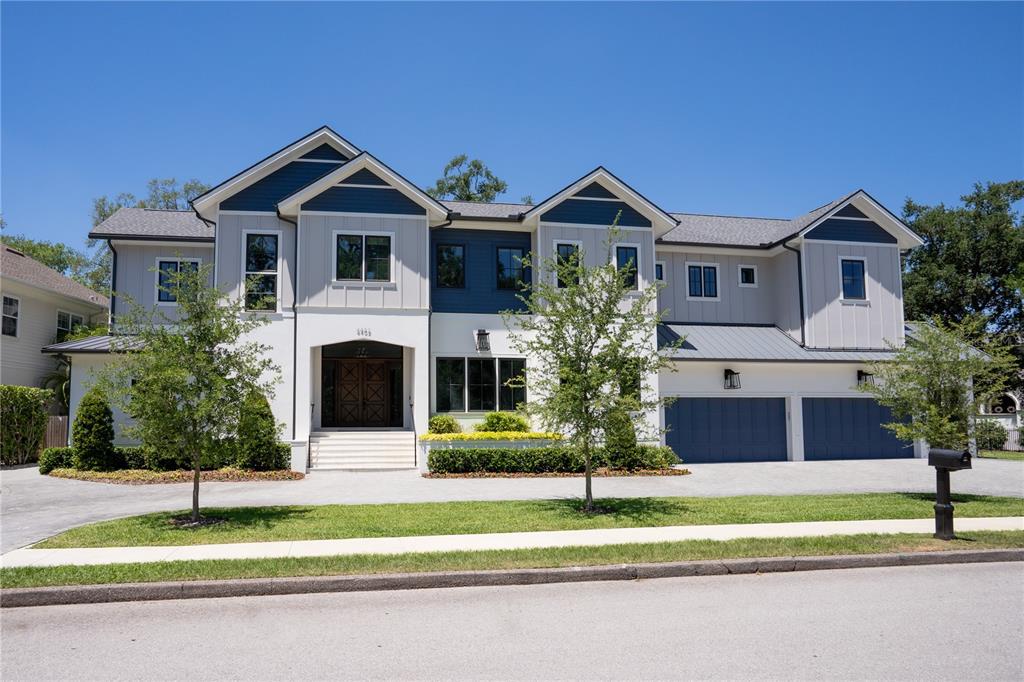
Tampa’s luxury market has matured into something more selective than a simple waterfront rush. Buyers are still willing to pay decisively for the right residence, but they are asking harder questions about location quality, flood exposure, build standard, privacy, walkability, and resale depth.
The current MLS snapshot supports that view. With 120 active luxury listings, a median list price of $2.69 million, and an average list price just under $3.89 million, there is meaningful choice on paper, but not all inventory belongs in the same comparison set. Residential homes, land opportunities, and commercial offerings can distort what looks like supply, which is why disciplined buyers separate lifestyle purchases from redevelopment plays before they start negotiating.
Why Tampa Still Commands Premium Attention
Tampa continues to attract high-income households because it offers several different versions of luxury within one market. South Tampa provides established neighborhood prestige, Bayshore access, country club proximity, and a familiar single-family rhythm. Downtown and Water Street appeal to buyers who want a more walkable, service-driven pattern with newer product and immediate access to restaurants, events, and the riverfront.
Recent Bay News 9 reporting on Redfin data noted that Tampa led the nation in luxury price growth this summer. That matters less as a headline than as a behavioral signal: affluent buyers are still stepping forward when a property offers real scarcity, whether that means protected water access, a walkable urban address, or a finished home on a street where teardown pressure continues to tighten supply.
The practical takeaway is simple. Tampa is no longer a market where every upper-end home rises together. Premium pricing is getting more precise, and buyers who understand that precision make better decisions than buyers who simply chase the newest listing or the largest square footage number.
Choose the Submarket Before You Choose the House
Most mistakes in the luxury segment start with a house-first search. In Tampa, neighborhood fit should come first. Davis Islands, Beach Park, Palma Ceia, Sunset Park, Hyde Park, Harbour Island, Avila, and the Water Street orbit each attract different buyers for different reasons. One offers boating and long-term land value. Another offers walkability and service access. Another wins on privacy, gates, or golf.
If you are relocating, use the City of Tampa’s neighborhood guide as a starting point, then pressure-test it against how you actually live. A waterfront buyer who travels often may care more about airport ease and lock-and-leave simplicity than about lot depth. A family moving from a larger suburban estate may accept a longer drive if it delivers mature trees, quieter streets, and a more established residential cadence.
For urban buyers, it is also worth observing Tampa when it is active, not just when it is polished for a private tour. Coverage like WUSF’s weekend events roundup is a useful reminder that downtown, Channelside, and adjacent districts now behave like real neighborhoods with recurring foot traffic, event patterns, and nightlife spillover. That can be a major advantage for one buyer and a clear mismatch for another.
The right question is not Which area is hottest. It is Which area still fits on an ordinary Tuesday, a stormy Saturday in August, and a busy week when guests are in town. Buyers who answer that early usually narrow the field faster and negotiate with more confidence.
Compare Assets, Not Just Asking Prices
At the upper end of the market, two homes priced within a few hundred thousand dollars of each other can deliver completely different long-term value. One may sit on a stronger street with better lot orientation and a cleaner elevation story. Another may look sharper online but require more compromise on privacy, flood risk, road noise, marina access, or future redevelopment pressure nearby.
Before you react to a list price, run through the same filters on every serious contender:
- Street quality: not just the area name, but the specific block, traffic pattern, and neighboring structures.
- Water or view utility: whether the outlook, dock, and exposure improve daily use or simply photograph well.
- Build integrity: age, renovation depth, window package, roof timing, and how the home handles Tampa weather.
- Land position: lot shape, rear setback feel, tree canopy, and whether the parcel has replacement value.
- Exit clarity: who the next likely buyer will be and what that future buyer may question.
This is where many buyers save or lose real money. A home with a slightly higher entry price can be the smarter purchase if it has cleaner fundamentals and broader resale appeal. In Tampa, the most expensive mistake is often overpaying for cosmetic confidence on a weaker asset.
New Construction, Legacy Streets, and the Land Question
New construction remains attractive because it removes renovation drag and usually delivers better ceiling heights, newer mechanical systems, cleaner flood-mitigation planning, and a more current indoor-outdoor layout. In areas like Water Street, Harbour Island, and parts of South Tampa, newer product also appeals to buyers who want predictable ownership with fewer immediate projects.
That said, legacy streets still carry a premium that cannot be replicated with finishes alone. A graceful block in Palma Ceia, a protected stretch of Davis Islands, or a quiet pocket near Bayshore often holds value because the underlying setting is difficult to reproduce. Mature landscaping, deeper setbacks, and a calmer street scene are not line items in a brochure, but they are exactly what sophisticated buyers remember after ten showings.
Land deserves special attention in this cycle because part of Tampa’s upper-end inventory is really a land story wearing a house around it. If a property is priced more like a site than a turnkey residence, your analysis has to change. The key question becomes whether you want immediate use, a future build path, or a hybrid plan where the lot matters more than the current improvements.
Verify the Details That Actually Change a Decision
Luxury buyers do not need more information. They need the right information earlier. In Tampa, that usually means confirming title history, prior transfers, tax posture, lot dimensions, build dates, and visible improvement records before emotion hardens into commitment. The Hillsborough County Property Appraiser search is one of the simplest ways to ground a listing story in public record.
Flood exposure also deserves direct review, even when a home presents well and the block feels elevated. The FEMA Flood Map Service Center should be part of every serious buyer’s process, especially for waterfront and near-water homes. The goal is not to overreact; it is to understand insurability, elevation context, and whether a property’s risk profile matches your comfort level.
Beyond records, verify the daily-use details that shape ownership. How quickly can you get to a club, school, office, or airport at the hours you actually travel? Does the garage work for your vehicle mix? Is there enough privacy around the pool? Can the dock handle how you boat, not how the listing copy imagines you might? High-end buying gets clearer when lifestyle assumptions are tested in concrete terms.
Serious sellers respect serious diligence. Clean questions tend to improve negotiation because they signal that you understand the asset and are not drifting through the process based on staging, sunset photos, or vague urgency.
How to Move Decisively Without Buying the Wrong Premium
The strongest buyers in Tampa right now are not always the most aggressive. They are the most prepared. They know which submarkets fit, which compromises they will accept, and which features truly justify paying above the pack. That preparation lets them move quickly when a well-positioned residence appears and step back just as quickly when the price is asking for more than the property delivers.
If you are deciding between waterfront prestige, urban convenience, or long-term land value, the answer is usually not found in a spreadsheet alone. It comes from comparing each option against how you plan to use Tampa over the next five to ten years, who may buy from you later, and which location will still feel correct after the novelty fades.
When you are ready to narrow the search, review our current luxury listings and contact an advisor for a direct, neighborhood-level conversation about fit, verification, and timing. The right Tampa property is rarely the one making the most noise. It is the one that holds up under scrutiny and still feels right when the market moves on to the next headline.
Market snapshot date: .
Your next move in Tampa luxury
Get current inventory, pricing guidance, and private-tour support from our brokerage team.
Source highlights
- Nick Janovsky joins SERHANT. as Tampa luxury sales director – HousingWire
- Redfin: Tampa leads nation in luxury home price growth as affluent buyers fuel demand – Spectrum Bay News 9
- PLACE names new EVP; SERHANT adds luxury sales exec – RealEstateNews.com
- Veteran Florida Realtor Erik Leitzes Expands Real Estate Services Into Tampa Bay – PR Underground
- Plans unveiled for new 400-foot luxury tower coming to Water Street Tampa – That's So Tampa
- South Florida has nation’s biggest price gap between luxury and non-luxury homes. How about Tampa? – Tampa Bay Times
- Things to do with kids this weekend in Tampa, FL – That's So Tampa
- Weekend events across Tampa Bay: Bolts Brew Fest, Christmas in July and more – WUSF



