


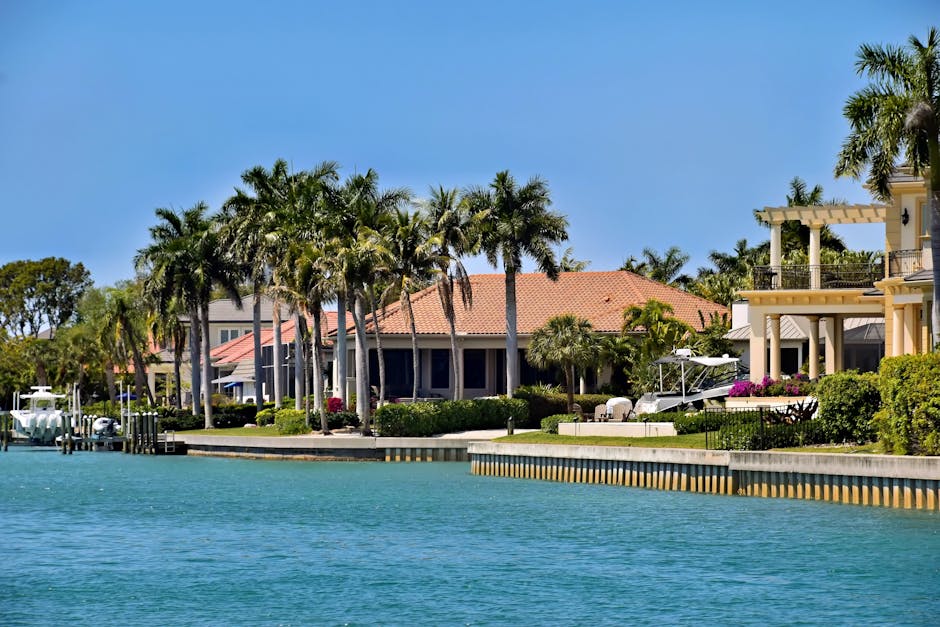
The Maturation of the Tampa Luxury Asset Class
Tampa has undergone a fundamental structural shift. No longer viewed merely as a high-growth regional hub, the city has solidified its status as a primary destination for global capital allocation. Recent data highlights a $675 million surge in luxury investment, signaling a transition from speculative interest to long-term institutional stability. For the sophisticated buyer, this means the market now offers a level of liquidity and architectural diversity that rivals more established coastal enclaves.

The current landscape is defined by a flight to quality. While previous cycles focused on rapid appreciation, the 2026 market prioritizes resilience and infrastructure. The integration of high-end retail, private health clubs, and Michelin-recognized dining within walking distance of primary residences has redefined the value proposition of neighborhoods like Water Street and the historic corridors of South Tampa. Buyers are no longer just purchasing square footage; they are acquiring a position in a city that has successfully scaled its luxury infrastructure to meet the demands of a global elite.
Understanding this evolution requires a move away from generic market reports. The maturity of the market is evidenced by the increasing complexity of transactions. We are seeing a rise in off-market acquisitions and bespoke builds that reflect a more nuanced understanding of Tampa’s geography. As capital continues to flow into the region, the distinction between ‘premium’ and ‘ultra-luxury’ has become more pronounced, requiring buyers to exercise greater diligence in their site selection and asset valuation.

The Early-Stage Luxury Condo Market Opportunity
Vertical living in Tampa is currently in a unique phase of development. Analysts categorize the region as an early-stage luxury condo market, which presents a specific window of opportunity for those looking to diversify their portfolios. Unlike the saturated high-rise markets of Southern Florida, Tampa’s urban core is still actively being shaped. The demolition of older structures to make way for glass-and-steel landmarks is a visual testament to the city’s upward trajectory, providing a first-mover advantage for those entering new-construction projects.
The shift toward vertical luxury is driven by a desire for a low-maintenance, high-security environment that doesn’t sacrifice connectivity. These developments are not isolated towers but integrated components of a larger urban master plan. Sophisticated purchasers are scrutinizing the long-term viability of these projects, focusing on developer track records, association reserve funds, and the quality of common-area management. In this stage of the market, the quality of the ‘amenity stack’—ranging from private car services to high-altitude wellness centers—is a primary differentiator in resale value.
Strategic buyers are also monitoring the impact of these new developments on the surrounding residential fabric. The introduction of ultra-luxury towers often acts as a catalyst for value appreciation in nearby single-family estates. By observing where the most significant vertical investments are being made, advisors can better predict which traditional neighborhoods will see the next wave of infrastructure improvement. This interplay between high-rise density and low-rise exclusivity is a hallmark of the current Tampa investment strategy.
Inventory Realities and Pricing Benchmarks
As of May 2026, the luxury inventory in Tampa remains tightly contested, despite a broader increase in listings across the state. With approximately 120 active luxury listings, the market is characterized by a high turnover rate for properties that are priced accurately and finished to a modern standard. The median list price currently sits at $2,272,925, while the average list price has climbed to $3,085,233. These figures underscore the widening gap between the entry-level luxury market and the upper echelon of the residential sector.
Specific property examples illustrate the current diversity of the market. From commercial-conversion potential on West Dr. Martin Luther King Jr. Boulevard listed at $2,900,000 to modern residential builds on North Grady Avenue at $1,550,000, the entry points vary significantly based on utility and location. For those seeking larger footprints, properties like those on West Waters Avenue, priced near $2.3 million, represent the mid-range of the luxury segment. Navigating these options requires a data-backed approach to ensure that the acquisition price aligns with both current appraisals and future market movements.
The surge in record listings and tax shifts across Florida has brought a renewed focus on value-driven acquisitions. While inventory has increased, the quality of that inventory is not uniform. Sophisticated buyers are filtering out properties that lack modern hurricane mitigation or those situated in areas with lagging infrastructure. In a market where the average sale price exceeds $3 million, the cost of ‘getting it wrong’ is high. This necessitates a move toward browsing curated listings that have been pre-vetted for structural and financial integrity.
Strategic Considerations for High-Net-Worth Acquisitions
When evaluating a property in the multi-million dollar range, the checklist for success extends far beyond aesthetic appeal. The physical and fiscal health of the asset must be the primary focus of the due diligence period. In Tampa’s coastal environment, this includes a rigorous assessment of elevation, construction materials, and the long-term outlook for property insurance. A successful acquisition is one that balances the immediate utility of the home with its long-term viability as a liquid asset.
- Verification of current flood mitigation systems and elevation certificates.
- Analysis of recent comparable sales within a three-mile radius, excluding outliers.
- Assessment of the local power grid and fiber-optic infrastructure for remote work capability.
- Review of the five-year neighborhood development plan and zoning changes.
- Evaluation of the homeowners association’s financial health and capital improvement schedule.
- Inspection of specialized luxury features, such as custom climate-controlled wine cellars or smart-home automation.
Each of these points represents a layer of risk mitigation. For example, understanding the zoning changes in South Tampa can prevent a buyer from purchasing a home today that will have its views obstructed by new construction tomorrow. Similarly, the health of an HOA’s reserves is a direct indicator of potential special assessments that could affect the total cost of ownership. These are the details that separate a lifestyle purchase from a sound financial investment.
The Intersection of Tax Migration and Market Resilience
Florida’s favorable tax environment continues to be a primary driver for the Tampa luxury sector, but the motivations of the modern buyer have become more complex. We are seeing a shift from ‘tax refugees’ to ‘lifestyle investors.’ These are individuals who are moving capital not just to avoid state income tax, but to participate in a growing economy with a high quality of life. This movement is reflected in the most expensive home sales recently recorded, where buyers are increasingly coming from other high-wealth hubs like New York, Chicago, and California.
The resilience of the Tampa market is rooted in its economic diversification. The city is no longer dependent on any single industry, with strong growth in healthcare, financial services, and technology. This economic stability provides a safety net for real estate values. When a buyer enters the Tampa market, they are investing in a region that is consistently ranked among the top for business growth and talent retention. This macro-economic backdrop is essential for maintaining the long-term demand for high-end residential assets.
Furthermore, the arrival of new residents from higher-priced markets has reset local expectations for what constitutes a ‘luxury’ experience. This has forced developers and sellers to elevate their offerings, resulting in a higher standard of finish and service across the board. The competitive nature of the current market favors those who are prepared to act quickly on high-quality assets, as the demand for top-tier properties consistently outpaces the supply of truly exceptional homes.
Cultural Maturation and the Human Element
Beyond the spreadsheets and tax tables, the appeal of Tampa is increasingly tied to its cultural maturation. The city’s social calendar has evolved to reflect the tastes of its new residents, with high-profile events that go beyond the typical festival circuit. For instance, the region now hosts sophisticated live music events, such as Bob Dylan birthday celebrations and exclusive backyard performances, which demonstrate a deepening appreciation for the arts. These cultural markers are important indicators for buyers who want to ensure their community offers more than just real estate value.
The quality of life in neighborhoods like Davis Islands or Bayshore Boulevard is enhanced by this increasing cultural density. The ability to attend a world-class performance or a bespoke culinary event without leaving the city limits is a significant draw for the affluent demographic. This ‘soft infrastructure’—the presence of arts, culture, and community—is what turns a house into a permanent residence. It fosters the long-term community commitment that stabilizes property values over decades rather than years.
Ultimately, the decision to acquire luxury real estate in Tampa is a decision to participate in the city’s next chapter. The combination of strong financial fundamentals, a maturing urban core, and a rich cultural landscape makes the region one of the most compelling markets in the country. For those who prioritize analytical depth and neighborhood-level implications, the path forward involves a blend of rigorous data analysis and a refined understanding of the local lifestyle nuances that define the Tampa experience.
Navigating a market of this complexity requires more than a simple search; it demands a strategic partnership with advisors who understand the intersection of capital and community. Whether you are assessing the long-term investment potential of a downtown condo or seeking a private estate in South Tampa, the current inventory offers a range of assets suited for the sophisticated portfolio. We invite you to view our exclusive listings to identify your next acquisition or contact an advisor today to discuss a tailored strategy for the Tampa market.
Your next move in Tampa luxury
Get current inventory, pricing guidance, and private-tour support from our brokerage team.
Source highlights
- Florida luxury real estate surges amid record listings, tax shifts – MSN
- Tampa Bay’s most expensive luxury home sales of 2025 – Tampa Bay Times
- Demolition begins to make way for luxury condos in downtown Tampa – The Business Journals
- Why Tampa remains an early-stage luxury condo market – Tampa Bay Business & Wealth
- New Signature Real Estate Team Emerges Across Tampa Bay: The Nick Janovsky Group Launches with Premier Sotheby’s International Realty – citybiz
- Inside Tampa’s $675 Million Surge: How the City Became Florida’s New Luxury Investment Capital – hauteresidence.com
- Tampa Bay area music events this weekend: Bob Dylan's birthday celebrations – WUSF
- Things to do with kids this weekend in Tampa, FL – That's So Tampa



