The Emergence of the Waterfront Primary Market
Tampa is currently undergoing a structural transition that few coastal cities successfully navigate: the shift from a seasonal, secondary market to a year-round primary residence hub for the ultra-high-net-worth segment. This evolution is most visible along the coastal fringes where legacy estates are being replaced by modern fortresses designed for longevity and permanent residency. Buyers are no longer looking for weekend retreats; they are seeking high-specification properties that can support professional lives and long-term asset preservation.
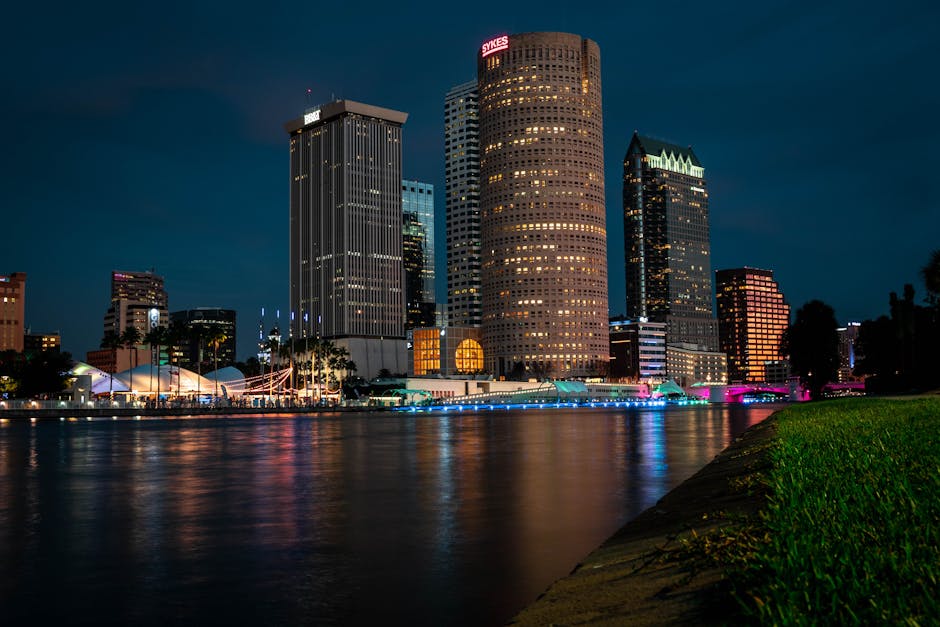
According to research from The National Law Review, the region’s waterfront has emerged as a primary market, driven by significant infrastructure investments and a shift in corporate headquarters toward Florida’s west coast. This movement has altered the supply-demand equilibrium, as inventory that once cycled through the market every five to seven years is now being held for decades. For the prospective buyer, this necessitates a more aggressive stance when high-quality waterfront assets become available.
The data-backed reality of this shift is reflected in the current inventory levels. With only 120 active luxury units across the greater metropolitan area, the competition for prime acreage is intense. We are observing a trend where off-market transactions are becoming the standard for properties valued above the $5,000,000 mark. Buyers who wait for a public listing often find themselves in a multi-offer situation before they can even schedule a site visit, underscoring the importance of having an advisor with deep local ties to unlisted opportunities.

Structural Shifts in Luxury Condo Availability
While single-family estates remain the cornerstone of the market, the vertical luxury segment is experiencing its own maturation. Historically, Tampa was considered an underdeveloped market for high-end multi-family living compared to Miami or Naples. However, a new wave of developments has introduced a level of finish and service previously unavailable in the region. These buildings are attracting a demographic that prioritizes security, proximity to the urban core, and a lock-and-leave capability that older neighborhoods cannot provide.
As noted in Tampa Bay Business & Wealth, the city remains in the early stages of its luxury condo lifecycle. This suggests that while prices have risen, there is still significant headroom for appreciation as the skyline continues to densify. For the strategic buyer, entering this segment now offers the potential for long-term equity growth as Tampa catches up to the valuation multiples seen in more mature Florida markets. The focus is shifting toward buildings that offer exclusive floor-plans and private elevators, catering to those who want the convenience of a condo with the privacy of a detached home.
Current market movements indicate that the median list price of $2,300,000 is increasingly being driven by these high-specification units in areas like Water Street and the Westshore district. As we move through May 2026, the demand for these units remains resilient despite broader national economic fluctuations. The focus for investors should be on buildings with robust reserve funds and high owner-occupancy rates, as these factors contribute most significantly to resale stability in the luxury tier.
The Hyde Park and Davis Islands Distinction
When evaluating the Tampa core, two neighborhoods consistently dominate the conversation: Hyde Park and Davis Islands. Each offers a distinct value proposition that appeals to different buyer profiles. Hyde Park is characterized by its historical integrity and walkability to high-end retail and dining. The architectural restrictions here ensure that the neighborhood maintains its character, which provides a natural floor for property values. Buyers in this area are typically paying a premium for the social proximity and the prestige of owning a piece of the city’s history.
Davis Islands, conversely, offers a more secluded environment with the added benefit of a private airport and deep-water access. The islands are seeing a surge in contemporary architecture, with new builds often exceeding $10,000,000. The lack of through-traffic creates a level of privacy that is difficult to replicate in other parts of the city. This area is particularly attractive to professional athletes and executives who require a secure perimeter without sacrificing proximity to downtown. Understanding the nuanced differences in lot sizes and zoning between these two areas is critical for accurate valuation.
Recent sales data shows that properties like 6304 N Florida Avenue, listed at $2,200,000, represent the entry point for quality renovations in the broader area, while waterfront tracts on the islands command significantly higher multiples. The average list price of $3,085,999 reflects this wide variance between inland luxury and bay-front estates. Strategic buyers should look at the price-per-square-foot metrics in these sub-markets to identify where value is being underpriced relative to recent comparable sales.
Critical Due Diligence for High-Value Acquisitions
Acquiring a luxury asset in Florida requires a specific set of verification steps that differ from other national markets. The climate and regulatory environment dictate that buyers must look beyond the aesthetic finishes to the structural integrity and long-term viability of the property. This is especially true as we enter the rainy season in mid-May, where drainage and roof integrity are put to the test. A sophisticated buyer advisor will ensure that every contingency is addressed during the inspection period to prevent future liability.
- Verification of latest flood elevation certificates and mitigation credits.
- Detailed review of the 50-year milestone inspections for high-rise assets.
- Analysis of permit history for all recent major renovations or structural changes.
- Evaluation of seawall integrity and riparian rights for waterfront parcels.
- Review of HOA or Master Association financial health and capital expenditure plans.
- Assessment of privacy barriers and sound mitigation in high-density corridors.
As highlighted in Florida Trend, the state’s real estate market is increasingly defined by these technical details. Buyers who overlook the insurance implications of older construction may find themselves facing significant annual premiums that impact the overall carry cost of the asset. We recommend a proactive approach to due diligence, involving specialized engineers and insurance brokers early in the process to ensure a smooth closing and long-term satisfaction with the purchase.
Performance Metrics: Inventory and Valuation Trends
The current state of the Tampa luxury market can be summarized by one word: scarcity. With only 120 properties available for a growing pool of international and domestic buyers, the leverage remains firmly with the sellers. However, this does not mean that every property is a sound investment. We are seeing a divergence where perfectly executed homes sell for record prices, while those with design flaws or deferred maintenance linger on the market. This creates a bifurcated landscape where the “average” price can be misleading.
According to reports from The Business Journals, the luxury market here continues to grow stronger even as national trends show signs of cooling. This local strength is attributed to the continued influx of capital from high-tax states and the diversification of the local economy. The median list price of $2,300,000 is a useful benchmark, but it is important to analyze the specific property type. For instance, commercial-sale properties and large land tracts are seeing different appreciation cycles than traditional residential estates.
In the current window, we are seeing transactions such as 718-722 W Dr Martin Luther King Jr Boulevard at $2,900,000, which demonstrates the value found in commercial-residential hybrid opportunities. These assets offer a hedge against pure residential volatility and are becoming increasingly popular among sophisticated portfolios. Analyzing these outliers provides a clearer picture of where the market is moving and where the next pocket of value may be hidden before it reaches the broader public awareness.
Future Growth Corridors: Beyond the Traditional Core
As the traditional luxury hubs reach saturation, savvy buyers are turning their attention to emerging corridors that offer larger lot sizes and more creative freedom. Areas like Seminole Heights and the Westshore Marina District are seeing a massive influx of private capital. These neighborhoods are transitioning from speculative bets to established luxury enclaves, driven by their proximity to the city’s major employment centers and recreational amenities. The move toward these areas is often motivated by a desire for more space than what is typically available in the historic core.
The development of the waterfront in these fringe areas is particularly noteworthy. As the primary core becomes built out, the next wave of luxury development is moving north and west. This is creating a ripple effect where property values in adjacent neighborhoods are being pulled upward. For a buyer with a five-to-ten-year horizon, these emerging markets offer some of the best potential for significant equity growth. The key is identifying properties that are situated near planned infrastructure improvements or upcoming commercial hubs.
Examples like the $1,550,000 listing at 5010 N Grady Avenue illustrate the shift toward high-quality, new-construction homes in neighborhoods that were previously overlooked. This price point allows for a level of modern amenity and energy efficiency that is often more difficult to achieve in a historic renovation. As the city continues to expand, these properties will likely be reclassified from “emerging” to “established,” providing a substantial return for those who recognized the trend early in its cycle.
Strategic Entry and Acquisition Timing
Timing a luxury acquisition in Tampa requires an understanding of both the seasonal weather patterns and the fiscal calendar. As we move into the middle of May 2026, the market typically sees a slight shift in pace as the summer heat begins to settle in. This can be an opportune time for buyers who are willing to navigate the 35-degree Celsius temperatures and occasional afternoon rain to secure a property before the autumn rush. Sellers who have been on the market since the spring may be more inclined to negotiate as they look to close before the end of the second quarter.
The current weather forecast, with rain probabilities hovering around 25% to 44% over the next several days, often leads to fewer showings and less foot traffic. For a focused buyer, this reduced competition can be a tactical advantage. It allows for a more thorough walkthrough and a calmer negotiation environment. Successful acquisition in this climate is about persistence and the ability to act decisively when a property meets the pre-defined criteria of the portfolio.
Ultimately, the Tampa luxury market is no longer a speculative playground; it is a mature environment that rewards data-driven decisions and long-term thinking. Whether you are looking for a historic estate in Hyde Park or a modern high-rise on the waterfront, the fundamentals of scarcity and demand remain in your favor. We invite you to explore our curated selection of luxury homes for sale and consult with our team to refine your acquisition strategy. To discuss your specific requirements and gain access to our private inventory, please contact our senior advisor team today for a confidential consultation.
Your next move in Tampa luxury
Get current inventory, pricing guidance, and private-tour support from our brokerage team.
Source highlights
- Tampa Bay’s most expensive luxury home sales of 2025 – Tampa Bay Times
- Tampa Bay luxury market grows stronger despite national declines – The Business Journals
- Why Tampa remains an early-stage luxury condo market – Tampa Bay Business & Wealth
- Tampa Bay’s Waterfront Emerges as a Primary Luxury Real Estate Market – The National Law Review
- Florida Trend Real Estate – Florida Trend
- Jennifer Zales Unveils Venetian Isles Waterfront Luxury Now Offered At A New Price – Haute Living
- Things To Do In Tampa This Weekend: Fun Festivals & Events In Tampa This Weekend – That's So Tampa
- Tampa Bay-area events this weekend: Sharkapalooza and St. Pete Italian Fest – WUSF