


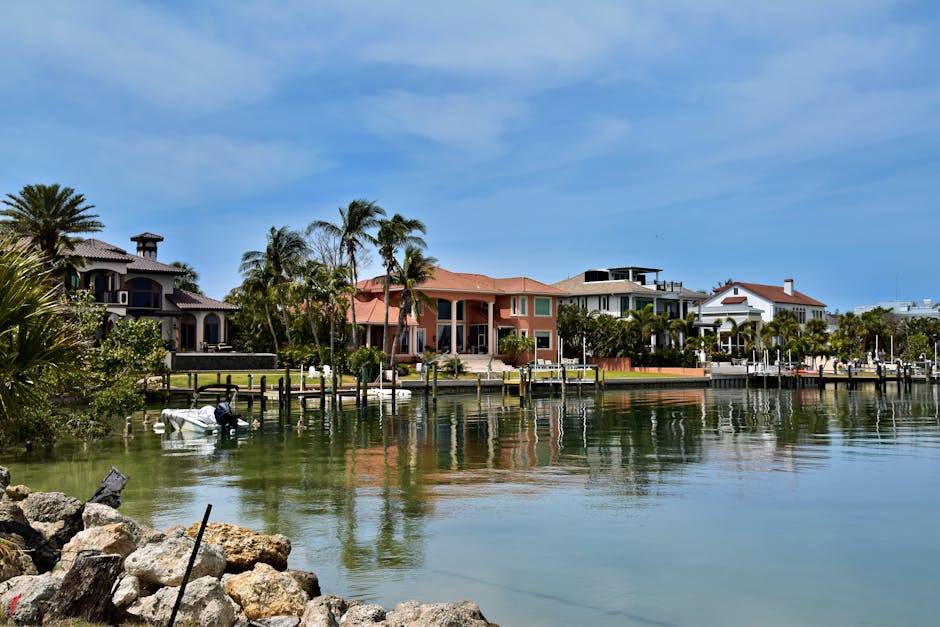
Executive Migration and the Evolving Tampa-St. Pete Corridor
The movement of C-suite professionals into the Tampa Bay region continues to reshape local market dynamics. As high-level executives from financial hubs and technology sectors relocate, their preferences are driving a shift toward turnkey estates that offer both privacy and proximity to emerging business districts. This migration is not merely a residential shift but a structural alignment of wealth as St. Petersburg and Tampa increasingly function as a unified economic engine. The synergy between these two cities has created a unique micro-market where luxury inventory is often absorbed before reaching broad public exposure.

Research indicates that executives keep choosing the St. Pete-Tampa area due to the combination of tax advantages and the rapid expansion of professional infrastructure. For the luxury buyer, this means competition remains high for properties that balance logistical convenience with architectural distinction. Understanding the flow of capital between these metropolitan areas is essential for identifying which neighborhoods will maintain long-term valuation stability versus those experiencing transient speculative growth.
In the current environment, decision-makers are prioritizing assets that mitigate the friction of relocation. This includes a preference for smart-home integration, high-velocity internet connectivity, and flexible floor plans that accommodate remote advisory work. As the regional executive count rises, the demand for exclusive enclaves in South Tampa and the waterfront districts of St. Petersburg is expected to outpace current supply projections for the remainder of the 2026 fiscal year.
Analyzing Inventory: New Construction vs. Legacy Resale Estates
The luxury inventory in Tampa currently reflects a median list price of $2,300,000, with approximately 120 active high-end listings available. This volume represents a calculated balance between traditional Mediterranean-style estates and the surge of modern new construction. Prospective buyers must weigh the immediate availability of established homes against the bespoke advantages of the new developments currently lifting the region’s supply. While legacy estates offer mature landscaping and historical provenance, new builds often provide superior energy efficiency and structural compliance with the latest coastal building codes.
Data from mortgage rates falling to 6.09% has catalyzed a renewed interest in financing high-value acquisitions, even among liquid buyers who may prefer to leverage capital. This rate adjustment, combined with the influx of new inventory, has moved the market toward a state of equilibrium. Buyers now have a broader range of options, from modern architectural statements on North Florida Avenue to expansive commercial-residential hybrids on Dr Martin Luther King Jr Boulevard, which are increasingly sought after by investors looking for mixed-use potential.
When comparing these segments, the primary consideration is the ‘cost to modernize’ versus the ‘premium for new.’ Older estates in Culbreath Isles or Beach Park often require significant mechanical and aesthetic updates to meet current buyer standards. Conversely, new construction on lots like those found on North Grady Avenue commands a price premium that must be justified by long-term appreciation forecasts. An analytical approach to these valuations, rather than an emotional one, remains the hallmark of a successful Tampa acquisition strategy.
Valuation Drivers in Established South Tampa Neighborhoods
South Tampa remains the epicenter of the region’s high-end market, largely due to the density of private schools, the concentration of professional services, and the aesthetic continuity of neighborhoods like Hyde Park and Davis Islands. The valuation of properties in these areas is driven less by square footage and more by specific block-level nuances. Proximity to Bayshore Boulevard and the walkable urban core provides a floor for property values that is rarely seen in more suburban luxury developments. Buyers should look for properties that offer deep-lot configurations or unique architectural pedigrees that cannot be replicated in the modern building cycle.
The market movement in early 2026 has shown that buyers are willing to pay a significant premium for privacy. Gated estates and properties with advanced security perimeters are seeing shorter days-on-market than their more exposed counterparts. This trend is particularly evident in the record-breaking transactions noted in the most expensive luxury home sales report, which highlights the value placed on seclusion within the urban framework. For those seeking the highest echelon of local living, reviewing the current LISTINGS URL provides a clear picture of how these valuation drivers manifest in specific property features.
Investors and primary residents alike must also monitor the impact of local infrastructure improvements. The expansion of high-end retail and dining options in the Water Street district has created a ripple effect, increasing the desirability of nearby residential pockets. As these commercial nodes mature, the peripheral residential assets typically experience a secondary wave of appreciation. Advisors recommend a focused analysis of permit history and neighborhood association strength before finalizing any offer in these high-demand sectors.
The Strategic Due Diligence Checklist for High-Value Acquisitions
Navigating a multi-million dollar transaction requires a structured approach to verification and risk assessment. Use the following framework to evaluate potential acquisitions during your search:
- Verify the elevation grade and current flood insurance certification to ensure long-term cost predictability.
- Conduct a comprehensive audit of all HVAC and mechanical systems, specifically looking for smart-home compatibility and warranty status.
- Review neighborhood-specific zoning restrictions to understand future development potential or limitations on neighboring parcels.
- Analyze the historical appreciation rate of the specific street versus the broader neighborhood average.
- Assess the maturity and maintenance requirements of the estate’s landscaping and irrigation infrastructure.
- Confirm the presence of impact-rated windows and reinforced structural elements required for contemporary coastal resilience.
Interest Rate Stabilization and High-Net-Worth Portfolio Strategy
The recent stabilization of mortgage rates at approximately 6.09% has introduced a strategic window for buyers who utilize financing as part of a broader wealth management strategy. While the luxury market is less sensitive to rate fluctuations than the broader residential sector, the psychological impact of a downward trend often triggers a release of pent-up demand. For many affluent buyers, the decision to purchase is less about the monthly payment and more about the opportunity cost of capital. When rates settle, it becomes more attractive to finance a portion of the acquisition rather than liquidating high-performing investment portfolios.
According to Florida Trend Real Estate analysis, the state continues to see a net inflow of capital that sustains high pricing levels even when national markets fluctuate. This macro-economic buffer is a critical component of the Tampa investment thesis. Buyers are encouraged to consult with their financial advisors to determine if the current rate environment favors a larger down payment or a more aggressive financing structure, particularly for properties with price points exceeding the $3,000,000 mark.
Furthermore, the availability of land for custom builds has become increasingly scarce, leading to a rise in ‘teardown’ acquisitions where the value lies almost entirely in the dirt. This trend requires a different financial approach, often involving construction-to-permanent loans. Navigating these complexities is where the guidance of a seasoned advisor becomes invaluable. The objective is to secure an asset that serves as both a primary residence and a stable pillar of a diversified financial portfolio.
Coastal Resilience and the Waterfront Premium
Waterfront properties in Tampa, particularly in areas like Venetian Isles and along the various bayous, command a unique premium that is increasingly tied to structural resilience. Modern buyers are no longer just looking for a view; they are looking for evidence of engineering that can withstand the specific demands of the Florida coastline. This includes elevated base flood elevations and advanced drainage systems. Properties that have already been updated to these standards are commanding significant premiums and seeing faster closing times as buyers seek to avoid the complexities of retrofitting older seawalls or foundations.
Recent market updates, such as Venetian Isles waterfront luxury offerings, show a recalibration of pricing that reflects the current inventory levels. For the sophisticated buyer, this represents an opportunity to acquire prime shoreline assets at a more realistic valuation than the peak speculative periods of previous years. Waterfront living in Tampa is a lifestyle choice, but it must be backed by a rigorous assessment of the physical asset to ensure it remains a viable long-term holding.
Beyond the physical structure, the ‘waterfront lifestyle’ involves considerations of boat lift capacity, deep-water access, and proximity to open bay waters. Buyers should verify these details early in the discovery phase, as nautical constraints can significantly impact the future resale value of the property. Analyzing current inventory for these specific features will help narrow the search to properties that truly meet the requirements of a maritime-focused lifestyle.
Strategic Market Timing for the 2026 Second Quarter
The second quarter of 2026 presents a distinct opportunity for those prepared to act with precision. As new construction continues to enter the market and interest rates stabilize, the window for negotiation is wider than it has been in recent cycles. However, the highest-quality assets—those with prime location, modern construction, and architectural integrity—still move quickly. Success in this market requires being positioned to move from inquiry to offer with confidence, backed by a thorough understanding of current comparable sales and local development trends.
Prospective buyers are encouraged to evaluate the current landscape with an eye toward long-term utility. The Tampa market is no longer a seasonal play; it is a year-round destination for global capital. Whether you are looking for a primary residence in the heart of South Tampa or a waterfront retreat, the keys to a successful acquisition are data-backed decision-making and a deep understanding of neighborhood-level implications. To begin a more detailed analysis of the current inventory or to discuss a specific acquisition strategy, please browse our curated LISTINGS URL and CONTACT URL to speak with a senior advisor today.
Your next move in Tampa luxury
Get current inventory, pricing guidance, and private-tour support from our brokerage team.
Source highlights
- Column: Why executives keep choosing St. Pete – The Business Journals
- Tampa Bay’s most expensive luxury home sales of 2025 – Tampa Bay Times
- Mortgage rates fall to 6.09% as new construction lifts Tampa supply – Tampa Bay Business & Wealth
- Jennifer Zales Unveils Venetian Isles Waterfront Luxury Now Offered At A New Price – Haute Living
- Florida Trend Real Estate – Florida Trend
- New Signature Real Estate Team Emerges Across Tampa Bay: The Nick Janovsky Group Launches with Premier Sotheby’s International Realty – citybiz
- Things To Do In Tampa This Weekend: Fun Festivals & Events In Tampa This Weekend – That's So Tampa
- Tampa Bay-area events this weekend: Sharkapalooza and St. Pete Italian Fest – WUSF
