



The 2026 Valuation Landscape: Beyond Traditional Benchmarks
The Tampa luxury real estate sector has transitioned into a phase of significant price displacement, moving away from historical ceilings. Currently, the market holds approximately 120 active luxury listings with a median list price of $2,388,780. This figure, while substantial, only tells part of the story. The recent entry of a record-breaking estate onto the market—priced at $115 million—illustrates the widening gap between standard luxury and the ultra-high-net-worth segment. This surge in top-tier pricing, as noted by the Wall Street Journal, signals a fundamental shift in how global capital perceives the Tampa Bay region.
For the sophisticated buyer, these figures represent a call for precision. The average list price of $3,147,389 suggests that while entry-level luxury remains accessible, the ‘true’ premium market is consolidating around specific corridors. Areas like South Tampa and the Downtown core are no longer just regional favorites; they are competing on a national scale for primary residence status. This evolution requires an analytical approach to acquisition, prioritizing long-term asset stability over temporary aesthetic trends. Understanding the delta between list price and final settlement in these high-stakes environments is the first step toward a successful transaction.
As we navigate this climate, the importance of neighborhood-level implications cannot be overstated. We are seeing a divergence in buyer behavior: one group is focused on the traditional established enclaves of South Tampa, while another is aggressively pursuing emerging opportunities in areas like West Tampa and Seminole Heights. Listings such as the $2.2 million property on N Florida Avenue or the $1.55 million offering on N Grady Avenue reflect a broadening of the luxury footprint. These are not just homes; they are strategic entries into parts of the city seeing rapid infrastructure improvements and commercial revitalization.

Inventory Dynamics and the Impact of 6.09% Capital Costs
Market liquidity in mid-2026 is being heavily influenced by the stabilization of capital costs. With mortgage rates settling near 6.09%, a significant portion of the ‘wait-and-see’ buyer pool has re-entered the market. This movement, coupled with a surge in new construction supply, has provided a necessary release valve for inventory pressures. According to reports from Tampa Bay Business & Wealth, the influx of new builds is finally meeting the demand that remained pent-up during the preceding cycles. This supply is particularly visible in the luxury townhouse and high-rise sectors, offering modern alternatives to the aging inventory of legacy neighborhoods.
For investors and primary residents alike, this means more leverage than has been available in recent years. The current inventory of 120 units provides a healthy ratio of selection versus competition, though the most desirable waterfront parcels remain highly contested. Strategic buyers are looking at the velocity of sales in neighborhoods like Beach Park and Bayshore Beautiful to gauge the market’s true temperature. When supply rises in these specific pockets, it often signals a window of opportunity before the next seasonal influx of out-of-state capital.
The analytical takeaway is clear: the cost of capital is now a known variable, allowing for more aggressive long-term planning. Sophisticated advisors are encouraging clients to look at the total cost of ownership in new constructions versus the renovation costs of older estates. In a market where the average price exceeds $3 million, the efficiency of modern systems and the reduced maintenance of new builds often offset a higher initial purchase price. This is particularly relevant for those eyeing large-scale developments that incorporate professional-grade amenities and integrated technology.
Waterfront Dominance: Transitioning to Primary Markets
Tampa’s waterfront has traditionally been viewed through the lens of seasonal or secondary residency. However, 2026 has solidified its status as a primary luxury market. As explored by The National Law Review, the legal and economic infrastructure surrounding Florida’s coastal properties has matured, attracting permanent relocation from northern financial hubs. This shift is driven by the desire for tangible assets that offer both lifestyle utility and defensive value against inflation. The demand for deep-water access and unobstructed views continues to drive the highest price-per-square-foot metrics in the region.
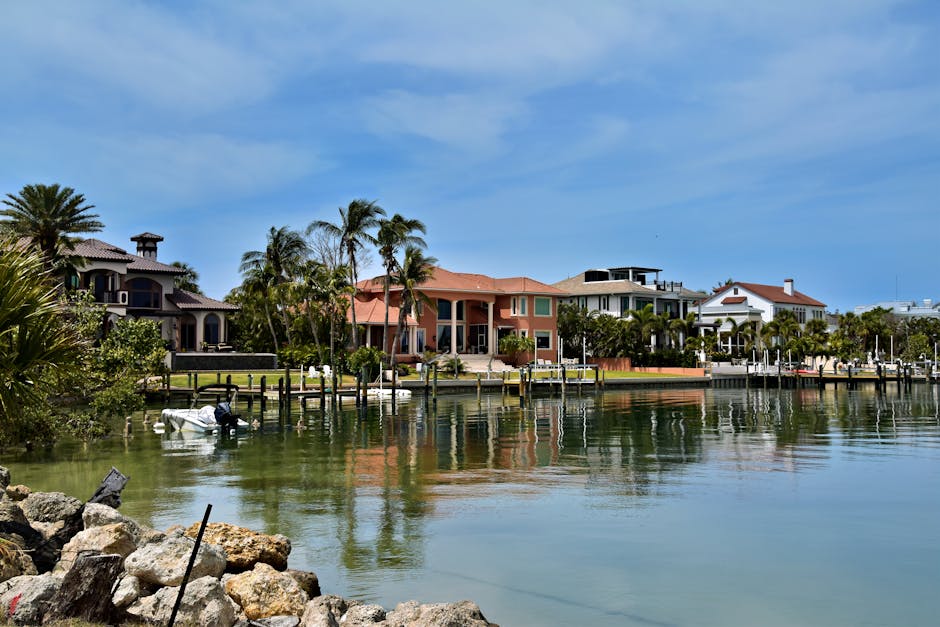
Specific attention is being paid to Venetian Isles and the surrounding coastal stretches. Recent pricing adjustments in these areas, as highlighted by Haute Living, have created entry points for buyers who were previously priced out of the South Tampa waterfront. These enclaves offer a distinct proposition: the privacy and space of a suburban estate with the immediate proximity to the cultural and commercial centers of both Tampa and St. Petersburg. It is a dual-market advantage that few other coastal regions can replicate.
When evaluating waterfront assets, buyers must move beyond the view. Considerations such as seawall integrity, FEMA elevation requirements, and proximity to open water are the actual drivers of value. A property like the $2.9 million commercial-adjacent sale on W Dr Martin Luther King Jr Boulevard might offer different utility, but the core principle remains the same: location is the only variable that cannot be modified. Sophisticated buyers are increasingly prioritizing parcels with larger lot widths and newer marine construction, recognizing that these elements represent the true ‘land value’ in a high-demand coastal market.
Strategic Acquisition Checklist: Vetting High-Value Assets
The process of acquiring a luxury asset in the current Tampa climate requires a disciplined approach to due diligence. It is no longer sufficient to rely on basic inspections. To ensure a sound investment, buyers should employ a multi-layered verification protocol that looks at both the physical structure and the surrounding economic environment. The following checklist represents the minimum standard for vetting a premium property in 2026:
- Review the last five years of neighborhood-specific appraisal data to identify volatility patterns.
- Verify seawall and dock age, including recent engineering certifications for any waterfront infrastructure.
- Assess the proximity to upcoming commercial developments or city-planned infrastructure projects that could impact noise or privacy.
- Evaluate the property’s current tax assessment against the proposed purchase price to forecast future carrying costs.
- Confirm the availability and cost of comprehensive property insurance, specifically for wind and flood coverage.
- Investigate the HOA or neighborhood association’s financial health and any pending capital assessments.
This checklist ensures that the acquisition is treated as a business decision rather than an emotional one. By focusing on these objective metrics, buyers can avoid the pitfalls of overpayment or unforeseen capital expenditures. In a market where the median price is $2.38 million, the cost of an oversight can be significant. Rigorous vetting is the hallmark of the senior advisor’s approach, ensuring that every asset in the portfolio is as functional as it is beautiful.
The Executive Migration: Why St. Petersburg Crossover Matters
While Tampa remains the primary focus for many, the ‘Executive Migration’ to St. Petersburg is a trend that luxury buyers cannot ignore. As noted in The Business Journals, an increasing number of C-suite professionals are choosing the Pinellas side of the bay for its distinct lifestyle and professional proximity. This movement has created a symbiotic relationship between the two markets, where a rising tide in one city directly influences values in the other. For those looking for long-term appreciation, the ability to pivot between these two distinct but connected luxury markets is a significant advantage.
The St. Pete side offers a different aesthetic—often characterized by historic charm or sleek, modern high-rises—that complements the more traditional luxury of South Tampa. For buyers, this means more options for diversification. You might hold a primary waterfront estate in South Tampa while maintaining a secondary luxury condominium in Downtown St. Pete to capture the urban growth. This ‘dual-city’ strategy is becoming the standard for affluent families who want to fully experience the cultural and economic breadth of the region.
This migration is also supported by the region’s robust calendar of events and cultural offerings. Local resources like That’s So Tampa and Axios Tampa Bay frequently report on the festivals and corporate expansions that make the region attractive to high-income earners. Whether it is a weekend vintage market or a major corporate headquarters relocation, these events signal a healthy, growing economy. For a real estate investor, this continuous influx of lifestyle and professional interest is the ultimate indicator of long-term property value.
Decision-Useful Guidance: Comparison and Selection
Choosing between high-end neighborhoods in Tampa requires a nuanced understanding of lifestyle trade-offs. Beach Park offers wider lots and more privacy, but Davis Islands provides a tighter-knit community feel with immediate boat access. Bayshore Boulevard offers the prestige of a world-class address, but it comes with the trade-off of higher traffic and more public visibility. When comparing these areas, look at the historical resale velocity. Some neighborhoods hold their value exceptionally well during market corrections, while others see more volatility. A senior buyer advisor looks for the ‘sticky’ neighborhoods where residents tend to stay for decades.
Verification is the final pillar of the selection process. This means looking at more than just the home’s layout. It means examining the drainage patterns of the street during heavy May rain, checking the quality of the surrounding schools even if they aren’t a current requirement, and understanding the future of the vacant lot three doors down. In the luxury sector, the details that are often overlooked—like the quality of the windows or the thickness of the insulation—are the details that determine the daily experience of the home. Do not be swayed by staging; look at the bones of the asset.
Finally, decide based on utility and future liquidity. A home is a place to live, but a luxury acquisition is always an investment. Consider how easy the property will be to sell in five or ten years. Is it a unique architectural statement that requires a specific buyer, or is it a classic design with broad appeal? In 2026, the market favors properties that offer flexibility: spaces that can function as offices, gyms, or guest suites without extensive renovation. Properties that cater to the modern, multi-functional lifestyle of the high-end buyer are those that will maintain their value in the years to come.
Navigating the complexities of the current market requires more than just access to data; it requires a partner who can interpret that data through the lens of experience. With 120 active luxury listings and a median price point that continues to evolve, the window for strategic acquisition is open. Whether you are looking for a waterfront estate in Venetian Isles or a modern architectural masterpiece in South Tampa, the time to act is when the data aligns with your personal objectives. We invite you to explore our curated LISTINGS URL to view current opportunities and then CONTACT URL an advisor to begin your strategic search.
Your next move in Tampa luxury
Get current inventory, pricing guidance, and private-tour support from our brokerage team.
Source highlights
- Tampa’s Price Record Is $22.5 Million. This Huge Estate Is Asking $115 Million. – WSJ
- Column: Why executives keep choosing St. Pete – The Business Journals
- Tampa Bay’s most expensive luxury home sales of 2025 – Tampa Bay Times
- Mortgage rates fall to 6.09% as new construction lifts Tampa supply – Tampa Bay Business & Wealth
- Tampa Bay’s Waterfront Emerges as a Primary Luxury Real Estate Market – The National Law Review
- Jennifer Zales Unveils Venetian Isles Waterfront Luxury Now Offered At A New Price – Haute Living
- Things To Do In Tampa This Weekend: Fun Festivals & Events In Tampa This Weekend – That's So Tampa
- Tampa weekend events: Vintage market, murder mystery dinner and more – Axios
