



The Evolution of Tampa as a Primary Waterfront Market
Tampa is no longer viewed merely as a secondary or seasonal destination for luxury capital. The region has undergone a structural shift, evolving into what institutional analysts now classify as a primary waterfront market. This transition is driven by a combination of infrastructure maturation, professional sports investment, and a growing density of high-net-worth individuals who reside in the area year-round rather than seasonally. The sustained demand for waterfront assets in neighborhoods like Davis Islands and South Tampa reflects a broader national trend where buyers prioritize privacy and deep-water access over proximity to traditional financial hubs.
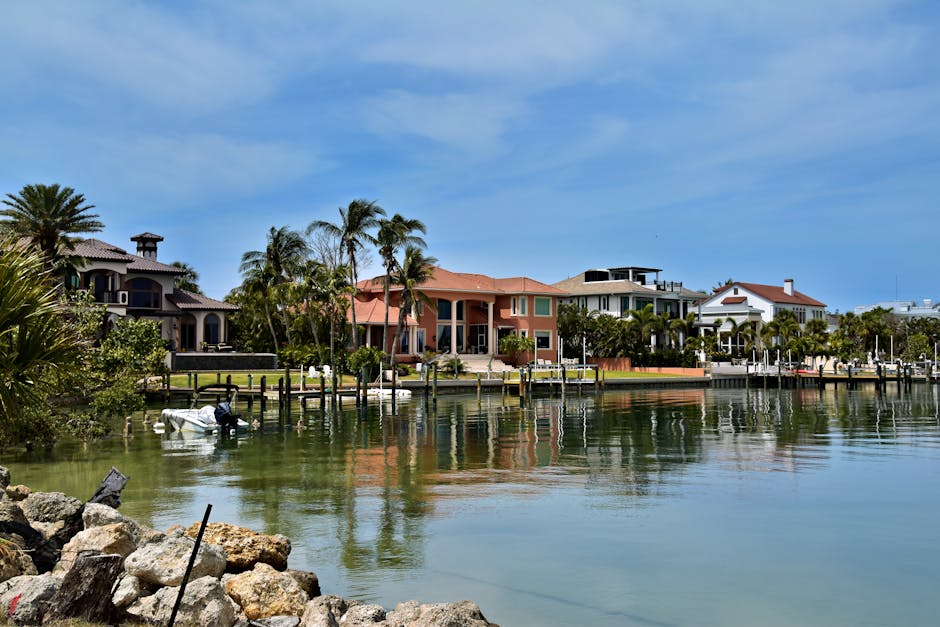
According to The National Law Review, the Tampa waterfront has emerged as a focal point for complex real estate transactions that mirror those found in Miami or Palm Beach. This maturation of the market brings a higher level of sophistication to contract negotiations and due diligence requirements. For the serious buyer, this means that entering the market now requires an analytical perspective on long-term appreciation rather than the speculative approach common in previous cycles. The current stability is a direct result of diverse economic drivers, including the healthcare and technology sectors, which provide a solid foundation for property values.
As we navigate the second quarter of 2026, the landscape for waterfront properties remains competitive but accessible for those with the right advisory team. Identifying off-market opportunities or properties with latent value—such as those requiring specialized architectural updates—has become the standard practice for local advisors. Investors are increasingly focusing on the scarcity of buildable lots on the open bay, recognizing that while the surrounding infrastructure continues to expand, the coastline remains a finite asset. This scarcity is a primary driver of the aggressive pricing seen in the most recent quarterly reports.

Analyzing Current Inventory and Pricing Benchmarks
The current luxury inventory in Tampa consists of approximately 120 active listings, a figure that suggests a balanced market for buyers at the upper tier. With a median list price holding steady at $2,490,000 and an average price exceeding $3,163,000, the entry point for true luxury assets has recalibrated significantly over the last 24 months. These figures represent a market that has moved past the volatile spikes of the early 2020s into a phase of measured growth. Buyers today are more likely to encounter properties such as the estate at 6304 N Florida Avenue, listed at $2,200,000, or larger commercial-residential hybrids like the MLK Boulevard site at $2,900,000.
To understand the current benchmarks, one must look at the recent high-end sales data. Reports from the Tampa Bay Times highlight that the top tier of the market is increasingly dominated by custom-built estates and renovated historic properties. For instance, the acquisition of a $1,550,000 property on Grady Avenue illustrates the demand for updated luxury in established residential pockets. These mid-seven-figure transactions form the core of the market, providing a baseline of liquidity that supports higher-end aspirations. When evaluating these benchmarks, it is critical to compare square footage, lot depth, and the quality of interior finishes against the most recent three-month sales trailing average.
Strategic buyers are currently prioritizing South Tampa and the Westshore district, where proximity to the international airport and premium retail corridors adds a layer of convenience that is highly valued by modern executives. The inventory in these areas tends to move faster than the regional average, often requiring buyers to be prepared with proof of funds and a clear understanding of their non-negotiable requirements. While the number of active listings is sufficient to provide choice, the highest quality assets still command multiple-offer scenarios if they are priced correctly from the outset. This environment rewards the decisive buyer who has conducted thorough market research beforehand.
The Psychology of Record-Breaking Listings
The Tampa real estate market made national headlines recently with a dramatic shift in its pricing ceiling. While the current record sale stands at $22.5 million, a new estate has entered the market with an asking price of $115 million, as detailed by the Wall Street Journal. This massive disparity between the standing record and the new ask creates a unique psychological environment for other high-end sellers. It signals a belief that Tampa is ready to compete with global luxury hubs like Malibu or the Hamptons. For most buyers, however, these outlier listings serve more as an indicator of market ambition than as a practical guide for valuation.
Understanding how to value a property in the wake of such outliers requires a disciplined analytical approach. An advisor must look past the headline-grabbing numbers to the underlying land value and the replacement cost of the structures. In Tampa, the premium for large, contiguous parcels of land has escalated, but it rarely justifies a five-fold increase over the previous record without extraordinary circumstances. Buyers should focus on the comparable sales within their specific sub-market rather than being swayed by the gravity of a single trophy asset. The goal is to ensure that your acquisition remains a liquid asset, even in a changing economic climate.
Furthermore, these high-profile listings often bring increased scrutiny to the regional market, attracting international investors who may not have previously considered Florida’s west coast. This influx of outside interest can lead to a ‘halo effect,’ where secondary luxury tiers see a bump in activity. As more capital flows into the region, the infrastructure and services available to affluent residents continue to improve, further justifying the upward pressure on prices. However, the sophisticated buyer knows that a price tag is only one component of value; the true worth lies in the long-term utility and the specific lifestyle advantages of the property location.
Strategic Due Diligence Checklist for Luxury Buyers
To navigate the complexities of a seven-figure acquisition in the current market, a structured approach is mandatory. The following checklist identifies the critical pillars of a successful luxury transaction in the Tampa region:
- Verification of riparian rights and coastal construction control lines for all bayfront properties.
- Assessment of recent municipal zoning changes in high-density areas like Westshore and Hyde Park.
- Analysis of elevation certificates and long-term flood mitigation strategies for the specific neighborhood.
- Review of private school enrollment availability and proximity to top-tier medical facilities.
- Audit of historical preservation status for properties located in designated landmark districts.
- Evaluation of seawall integrity and deep-water dockage permits for marine-focused estates.
Beyond the physical inspection of the home, due diligence must extend into the future development plans of the surrounding area. Tampa is currently undergoing several major multi-use redevelopment projects that could impact views, traffic patterns, and property taxes. A professional advisor will coordinate with urban planners and local officials to understand what is scheduled for construction over the next five to ten years. This proactive approach prevents the common mistake of purchasing a home for its current view, only to have it obstructed by a new luxury high-rise shortly after closing.
Commercial Synergy and the St. Petersburg Connection
The growth of the Tampa residential market is inextricably linked to the commercial expansion of the entire bay area. A significant trend involves corporate executives and business owners choosing to relocate their operations to St. Petersburg while maintaining primary residences in Tampa. As noted by The Business Journals, the allure of the region for high-level decision-makers is at an all-time high. This regional synergy creates a robust demand for luxury housing on both sides of the bridge, as professionals look for efficient commutes and a high quality of life for their families.
The cross-bay dynamic also influences the type of amenities that are now standard in luxury homes. Integrated home offices, secure high-speed data connectivity, and private meeting spaces have transitioned from optional features to essential requirements. As more firms adopt hybrid or remote-first models for their executive teams, the home has become a central hub for business activity. This shift is reflected in the design of new constructions in areas like Palma Ceia and Beach Park, where floor plans are increasingly tailored to accommodate the needs of a modern professional who manages global interests from a Florida base.
Broader market insights from Florida Trend indicate that the investment into regional transportation and port facilities is further cementing the bay area’s status as a top-tier economic engine. For the luxury homeowner, this means that their property is not just a residence, but an asset in one of the fastest-growing economic corridors in the United States. The stability of the local job market and the continuous influx of capital ensure that luxury real estate remains a preferred vehicle for wealth preservation. When evaluating a purchase, consider how the regional economic health will support your exit strategy in the future.
Understanding the Maturation of the Luxury Condo Sector
While single-family estates remain the preference for many, Tampa’s luxury condominium market is entering a new phase of maturity. Historically seen as an early-stage market for high-rise living, the city now offers several world-class developments that provide the amenities and security required by affluent buyers. According to Tampa Bay Business & Wealth, the shift toward condo living is driven by a desire for a ‘lock-and-leave’ lifestyle among individuals who travel frequently. These buyers value the 24-hour concierge services, private elevators, and state-of-the-art wellness centers that are now standard in new downtown and Bayshore Boulevard developments.
Choosing between a detached estate and a high-rise residence involves a trade-off between total privacy and serviced convenience. In Tampa, the luxury condo sector has been bolstered by the success of the Water Street district, which has redefined urban living for the region. Buyers in this segment are often looking for properties that offer panoramic views of the bay while remaining within walking distance of high-end dining and cultural venues. For the analytical buyer, the condo market offers a more predictable maintenance schedule and a defined set of association rules, which can be an advantage for those who do not wish to manage the upkeep of a large private lot.
It is important to note that the valuation of luxury condos follows a slightly different trajectory than single-family homes. Factors such as the reputation of the developer, the monthly HOA dues, and the exclusivity of the common areas play a larger role in determining price appreciation. As the market matures, we are seeing a greater distinction between standard luxury units and ‘trophy’ penthouses that command a significant premium. For those considering this path, we recommend a thorough review of the association’s financial health and a comparison of the price-per-square-foot against comparable high-rise assets in similar coastal cities.
Seasonal Market Dynamics and Tactical Acquisition
The timing of an acquisition can be as critical as the location. As we move through May 2026, the local climate remains a significant draw, with temperatures reaching 32°C (90°F) and clear skies providing the ideal backdrop for property viewings. However, the seasonal influx of visitors can also complicate the logistical aspects of a search. High-traffic periods, such as those announced by the City of Tampa during major weekend events, require careful scheduling for neighborhood tours and site inspections. Navigating these patterns is part of the local expertise required to execute a smooth transaction.
Market activity typically follows the academic calendar and the shift in seasonal weather, but the luxury segment is increasingly immune to these traditional ebbs and flows. High-net-worth buyers are motivated more by the availability of a specific asset than by the time of year. Nevertheless, there are tactical advantages to viewing properties during the late spring and early summer months when the full impact of Florida’s sun and landscaping is most evident. This allows for a more accurate assessment of a property’s outdoor living potential and its resilience to the region’s climate patterns.
Ultimately, the Tampa luxury market in 2026 offers a compelling mix of stability and growth potential. Whether you are focused on the historic charm of Hyde Park or the modern grandeur of a custom bayfront estate, the key is to approach the market with a long-term perspective. The data suggests that while the pace of appreciation has normalized, the fundamental drivers of demand remain exceptionally strong. By aligning yourself with a knowledgeable advisor and utilizing a disciplined due diligence process, you can secure a residence that serves as both a private sanctuary and a sound financial investment.
The current market conditions present a unique window for acquisitions before the next phase of regional growth further constrains inventory. To explore the most exclusive opportunities currently available, we invite you to browse our curated luxury listings. For a private consultation regarding your specific acquisition criteria or to receive a bespoke market analysis, please contact an advisor today. Our team is dedicated to providing the technical expertise and local discretion required to navigate the Tampa high-end real estate landscape with confidence.
Your next move in Tampa luxury
Get current inventory, pricing guidance, and private-tour support from our brokerage team.
Source highlights
- Tampa’s Price Record Is $22.5 Million. This Huge Estate Is Asking $115 Million. – WSJ
- Tampa Bay’s most expensive luxury home sales of 2025 – Tampa Bay Times
- Column: Why executives keep choosing St. Pete – The Business Journals
- Why Tampa remains an early-stage luxury condo market – Tampa Bay Business & Wealth
- Florida Trend Real Estate – Florida Trend
- Tampa Bay’s Waterfront Emerges as a Primary Luxury Real Estate Market – The National Law Review
- Things To Do In Tampa This Weekend: Best Festivals & Events Going On – That's So Tampa
- Things To Do In St Pete This Weekend: Best Festivals & Events Going On In St Petersburg – I Love the Burg
