


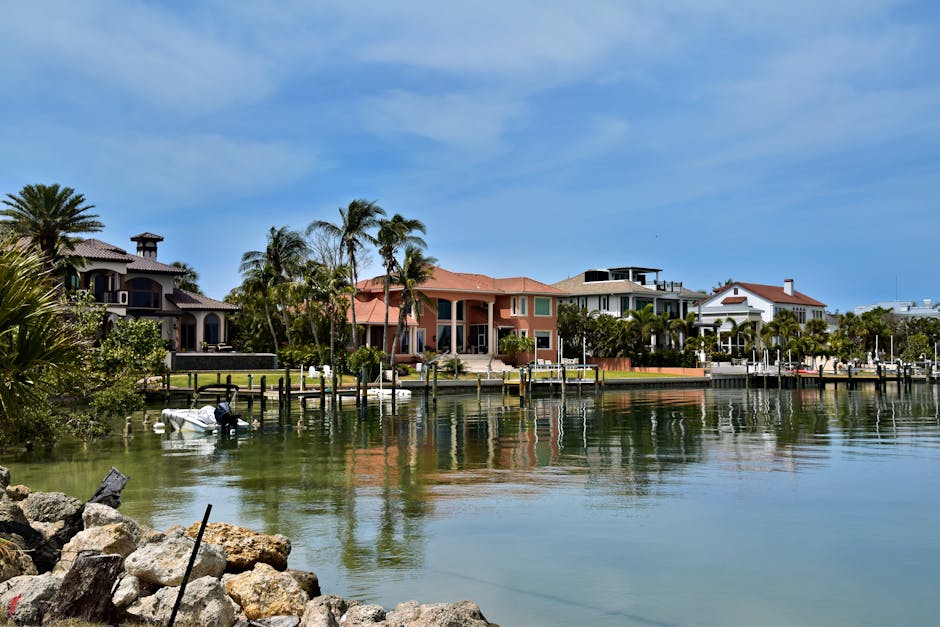
The Structural Shift in Tampa High-End Real Estate
The Tampa luxury sector has undergone a fundamental transformation over the last twenty-four months, moving from a secondary vacation destination to a primary hub for high-net-worth individuals. Current data indicates a stabilized inventory with 120 active luxury listings, reflecting a market that has matured beyond its post-pandemic volatility. This stability provides a more predictable environment for buyers who are increasingly viewing Tampa as their permanent base of operations rather than a seasonal retreat. The average list price now sits at approximately $3,163,639, signaling a significant commitment to quality and architectural integrity across the region.
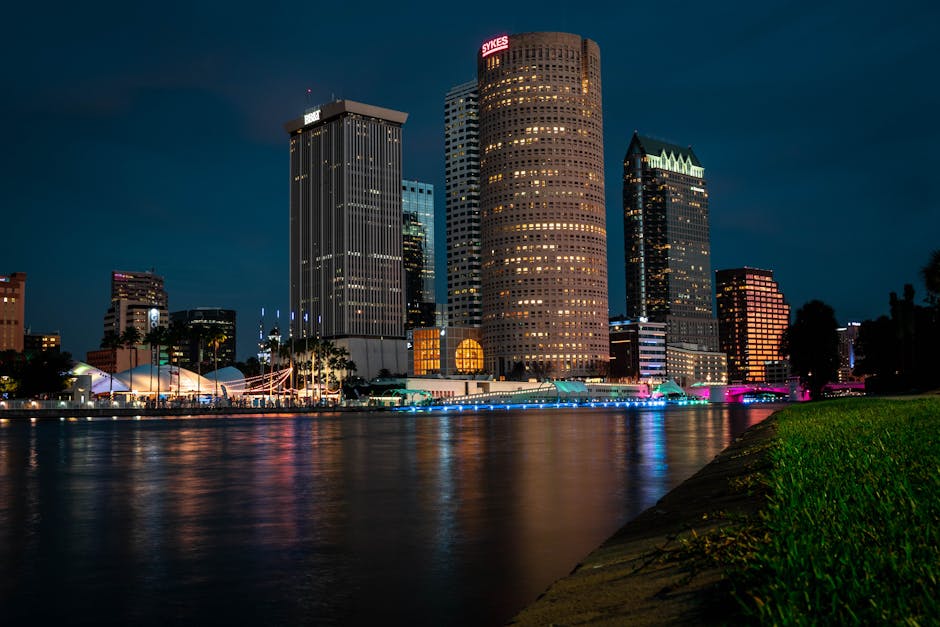
Strategic buyers are shifting their focus toward assets that offer long-term utility and capital preservation. As noted in recent analysis of Tampa’s early-stage luxury condo market, the vertical living sector is reaching a new level of sophistication. This maturation is driven by demand for full-service amenities and the security of lock-and-leave properties, particularly in districts like Water Street and the Channel District. For the sophisticated investor, this represents an opportunity to acquire assets in a market that is still establishing its long-term price ceilings compared to traditional coastal hubs.
The move toward primary residency is also reflected in the demand for larger square footage and dedicated home office suites that rival commercial executive spaces. We are seeing a decrease in the appetite for speculative flips and an increase in the valuation of homes with verified provenance and high-grade construction. Properties like the $2.2 million listing on North Florida Avenue exemplify the diverse architectural styles currently available, ranging from historic restorations to contemporary custom builds. This diversity ensures that the market remains resilient against broader economic fluctuations, as the buyer pool remains diversified across multiple industries.

As of May 7, 2026, the local climate remains a significant factor in property management and architectural design. With temperatures reaching 31.6 degrees Celsius (approximately 89 degrees Fahrenheit) today, energy efficiency and climate-controlled outdoor living spaces have moved from luxury add-ons to essential requirements. High-end buyers are now prioritizing advanced HVAC systems and smart-glass technology that can handle the Florida humidity while maintaining internal aesthetic standards. This technical shift highlights the necessity of working with advisors who understand the specific environmental demands of the Gulf Coast region.
Neighborhood Dynamics: From South Tampa to Davis Islands
Selecting the right neighborhood in Tampa requires an understanding of micro-market movements that generic reports often overlook. Hyde Park continues to command a premium due to its walkability and historic preservation standards, which provide a sense of scarcity that modern developments cannot replicate. Conversely, areas like Beach Park and Palma Ceia offer larger lot sizes that allow for more extensive private compounds. Buyers must decide between the social connectivity of the urban core and the seclusion of traditional South Tampa enclaves, as each carries different long-term appreciation profiles.
Davis Islands remains one of the most sought-after locations for those requiring both privacy and maritime access. The island’s unique geography creates a natural barrier that high-profile residents value, while its proximity to downtown ensures that professional commitments are never far away. Current market movement shows that waterfront lots on the islands are being consolidated for larger estates, a trend that is driving the median list price toward the $2,490,000 mark. Analyzing these micro-segments is critical for identifying value before it is fully priced into the public market listings.
Further north, neighborhoods like Seminole Heights and parts of West Tampa are seeing an influx of luxury residential development, such as the $1.55 million estate on North Grady Avenue. These areas provide a different value proposition, often offering larger modern homes on historic streets. Buyers who are priced out of the immediate waterfront are finding significant opportunities here, benefiting from the same city-wide infrastructure improvements that are boosting values in the more established coastal corridors. Understanding the boundary lines of these emerging luxury pockets is essential for forward-looking portfolio management.
The inventory landscape in Tampa is currently characterized by a specific concentration of properties in the $2 million to $5 million range, which accounts for the majority of the 120 active listings. While the most expensive sales of 2025 set high benchmarks, the 2026 market is showing a return to rational pricing based on replacement cost and localized demand. This environment rewards buyers who perform deep due diligence on neighborhood trends and zoning changes, as these factors often dictate the lifestyle experience more than the four walls of the home itself.
The Technical Realities of Waterfront Asset Analysis
Waterfront property in Tampa is no longer viewed merely through the lens of recreation; it is now considered a primary luxury asset class with specific technical requirements. As detailed by the National Law Review, Tampa’s waterfront has emerged as a primary market, necessitating a higher level of scrutiny regarding seawall integrity and flood mitigation strategies. Buyers should investigate the age and construction material of existing sea barriers, as these can represent significant future capital expenditures if not properly maintained.
The elevation of a property and its compliance with the latest FEMA standards are now non-negotiable points of discussion during the contract phase. Modern luxury builds on the water are frequently utilizing pier-and-beam foundations or elevated slabs that exceed local requirements, providing an extra layer of security for the asset. Beyond the structural aspects, buyers should also verify riparian rights and any existing easements that might limit the installation of private docks or boat lifts. These legal and technical nuances can significantly impact the long-term liquidity of a waterfront estate.
Proximity to the open bay versus a canal also plays a role in property valuation and maintenance. Open-bay properties offer expansive views but are subject to higher salt-air exposure, requiring more frequent maintenance of exterior finishes and mechanical systems. Canal-front homes often provide more sheltered mooring for vessels and a quieter residential atmosphere. Deciding between these two options requires an honest assessment of how the waterfront will be utilized—whether it is for the visual aesthetic or for active maritime pursuits like deep-sea fishing or sailing.
When reviewing LISTINGS URL, it is important to correlate the asking price with the technical specifications of the lot. A premium lot with a newly reinforced seawall and upgraded drainage systems may justify a higher price point than a similar-sized lot with deferred maintenance. For the senior buyer advisor, the goal is to ensure that the client is not just buying a view, but a sustainable asset that can withstand the unique environmental conditions of the Florida Gulf Coast over the coming decades.
Due Diligence Checklist for High-Net-Worth Acquisitions
Before moving from interest to a formal offer, several critical verification steps must be completed to ensure the integrity of the investment. These points of comparison help distinguish a well-maintained estate from a property that may harbor hidden complexities. Use the following checklist as a framework for your preliminary site visits and technical reviews.
- Verify the age and warranty status of the HVAC systems, ensuring they are optimized for the high humidity of the Tampa summer.
- Request a comprehensive seawall inspection and a current elevation certificate for all waterfront assets.
- Examine the property’s history regarding insurance premiums and any claims filed over the previous five-year period.
- Audit the smart-home integration system to ensure it is compatible with modern security and automation standards.
- Confirm the status of any historic preservation easements that may restrict exterior modifications in areas like Hyde Park.
- Review the association bylaws for any high-end condominium or gated community to understand guest policies and capital reserves.
- Evaluate the property’s solar readiness or existing backup power solutions, such as whole-home generator systems.
Corporate Influence and the St. Petersburg Connection
The synergy between Tampa and St. Petersburg has reached a critical mass, with executive movement between the two cities driving residential demand. As explored in recent columns regarding why executives choose St. Pete, the entire region is benefiting from a cluster effect of finance, tech, and legal firms. This cross-bay connectivity means that luxury property values in South Tampa are increasingly tied to the commercial health of the entire Tampa Bay area, not just the local city center.
Executives often find themselves comparing the vertical luxury of downtown St. Petersburg with the sprawling estates of South Tampa. This choice often comes down to lifestyle preferences—urban walkability versus suburban seclusion—but the investment logic remains consistent across the bridge. Both markets are seeing a trend where buyers are willing to pay a premium for properties that reduce their commute time to the region’s growing commercial hubs. This regional growth is providing a floor for luxury valuations that is independent of national real estate trends.
Furthermore, the development of regional infrastructure, including high-speed ferry services and bridge expansions, is making the entire Tampa Bay area more accessible. This allows buyers to live in a quiet enclave like Culbreath Isles while maintaining an office in the Gateway district or downtown St. Petersburg. For the affluent buyer, time is the ultimate luxury, and property location is now being analyzed through the lens of total travel time rather than simple mileage. This shift in perspective is redefining what constitutes a “prime” location in the 2026 market.
The cultural exchange between the two cities also adds value to the real estate market. Events ranging from festivals to professional sports draws residents across the bay, creating a cohesive luxury lifestyle that spans both shorelines. This integrated economy ensures that even if one sector faces a temporary slowdown, the broader regional demand for high-end housing remains robust. Buyers who view the market through a regional lens are often better positioned to capture long-term appreciation as the Tampa-St. Pete corridor continues its ascent as a major American metropolitan center.
Valuation Trends: Navigating the New Price Ceiling
As the Tampa market continues to set new records, most notably with the $115 million asking price for a significant estate, buyers must distinguish between outlier listings and the broader market reality. While these ultra-high-end listings grab headlines, the bulk of the market operates with more conservative metrics. The median list price of $2,490,000 serves as a more accurate barometer for the majority of luxury transactions, providing a benchmark for those entering the market at the primary residence level.
Inventory management is key in the current environment. With 120 active luxury listings, there is enough choice to allow for selective purchasing without the frantic pressure seen in previous years. This allows buyers to negotiate on technical improvements and cosmetic updates rather than simply competing on price alone. We are seeing a shift where the “average” list price of $3.16 million is often justified by significant interior upgrades and high-performance building envelopes that provide tangible value beyond the address itself.
Commercial sales and land acquisitions are also influencing residential values, particularly as large parcels are subdivided for new custom homes. Properties like the $2.9 million commercial sale listing on Dr. Martin Luther King Jr. Boulevard indicate that the path of progress is moving into areas that were previously overlooked. For residential buyers, this means that the surrounding commercial infrastructure is improving, which typically correlates with increased home values over a five-to-ten-year horizon. Monitoring these commercial movements provides a strategic advantage in identifying the next high-value residential corridor.
Ultimately, the 2026 market rewards the analytical buyer who prioritizes data over hype. By comparing recent sales data with current inventory and regional economic indicators, investors can make decisions that are grounded in fiscal reality. Whether you are considering a modern condo in the city center or a waterfront estate on Davis Islands, the fundamentals of site selection, construction quality, and regional growth remain the primary drivers of long-term success. The current stability of the Tampa market offers a unique window for those looking to secure a primary residence in one of the nation’s most resilient luxury corridors.
Strategic property acquisition in the current Tampa climate requires more than just an eye for aesthetics; it demands a deep understanding of local market mechanics and technical due diligence. Our team provides the analytical brief and neighborhood-level implications necessary to navigate the 120 active luxury listings with confidence. Whether you are seeking a primary residence with maritime access or a refined urban estate, our advisors are prepared to assist you in evaluating every technical and logistical detail. Please browse our current LISTINGS URL to view available opportunities and CONTACT URL a senior advisor to schedule a private consultation and market analysis.
Your next move in Tampa luxury
Get current inventory, pricing guidance, and private-tour support from our brokerage team.
Source highlights
- Tampa’s Price Record Is $22.5 Million. This Huge Estate Is Asking $115 Million. – WSJ
- Tampa Bay’s most expensive luxury home sales of 2025 – Tampa Bay Times
- Column: Why executives keep choosing St. Pete – The Business Journals
- Why Tampa remains an early-stage luxury condo market – Tampa Bay Business & Wealth
- Florida Trend Real Estate – Florida Trend
- Tampa Bay’s Waterfront Emerges as a Primary Luxury Real Estate Market – The National Law Review
- Things To Do In Tampa This Weekend: Best Festivals & Events Going On – That's So Tampa
- Things To Do In St Pete This Weekend: Best Festivals & Events Going On In St Petersburg – I Love the Burg
