


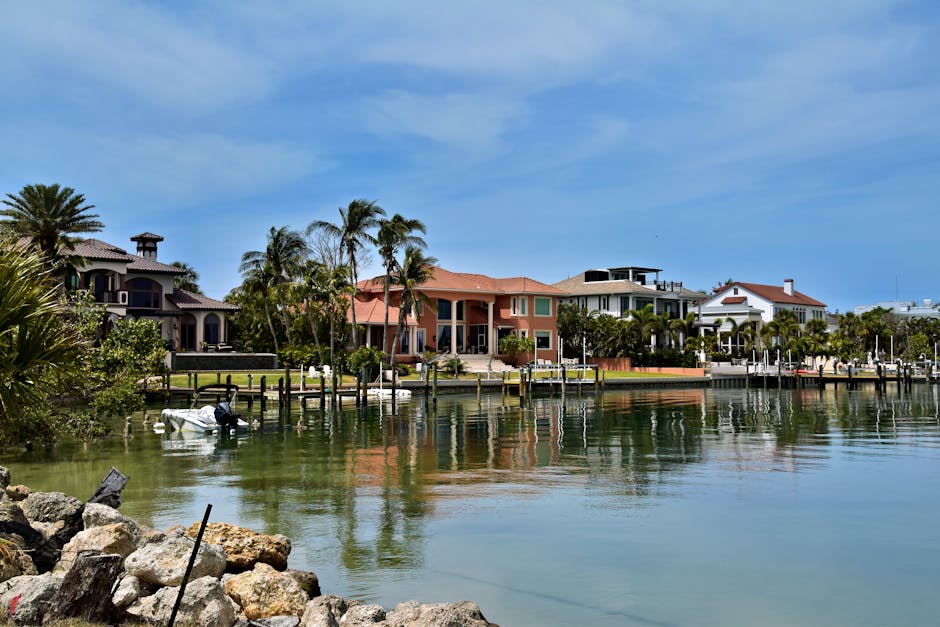
The Emergence of a Primary Luxury Destination
The Tampa luxury real estate sector has undergone a fundamental transformation, moving from a secondary vacation-home market to a primary destination for global capital and permanent residence. Current inventory reflects this shift, with 120 active high-end listings and an average list price now exceeding $3,165,369. This movement is not merely a localized trend but part of a broader institutional recognition of the region’s infrastructure and lifestyle stability. Institutional analysis now frequently categorizes the Tampa waterfront as a primary luxury market, a designation previously reserved for Tier-1 coastal cities.
Sophisticated buyers are no longer looking for temporary seasonal retreats; they are seeking long-term value preservation in specific corridors such as Bayshore Boulevard and the secluded enclaves of Davis Islands. The median list price of $2,490,000 serves as a baseline for entry-level luxury, yet the upper echelon of the market continues to see aggressive price discovery. This is evidenced by the growing presence of ultra-high-net-worth individuals who prioritize privacy and lot size over traditional suburban density. The current market climate suggests that while inventory remains lean, the quality of available assets has improved significantly, with newer builds offering hardened construction and advanced smart-home integrations.
Neighborhood Specificity and Capital Allocation
Investment patterns within the Tampa city limits demonstrate a clear preference for the South Tampa peninsula, where proximity to elite private schools and the social hubs of Hyde Park remains a primary driver. However, we are observing a notable expansion of interest into the Heights and the Florida Avenue corridor. Assets like the property at 6304 N Florida Avenue, priced at $2,200,000, represent a growing segment of the market where architectural significance meets urban accessibility. Similarly, commercial-to-residential transitions near Dr. Martin Luther King Jr. Boulevard, such as the holdings at 718-722 W MLK Jr. Blvd, indicate that sophisticated investors are looking at the broader development of the urban core as a signal for future residential appreciation.
Davis Islands continues to command a premium due to its limited topographical footprint and the rarity of deep-water dockage. Buyers in this micro-market often compete for legacy properties that rarely reach the public eye, emphasizing the importance of working with an advisor who understands off-market dynamics. In neighborhoods like Beach Park and Palma Ceia, the focus has shifted toward ‘new-traditional’ architecture—homes that respect the historic aesthetic of the area while providing the open-concept floor plans required by modern lifestyles. The decision between these neighborhoods often hinges on a buyer’s specific requirement for lot width and the necessity of direct water access versus neighborhood walkability.
Analytical Due Diligence for High-Value Acquisitions
Acquiring an asset in the multi-million dollar range requires more than a cursory walkthrough. In the current 2026 climate, buyers must evaluate the environmental resilience of a property alongside its aesthetic appeal. This includes a technical review of elevation certificates, recent updates to building codes, and the long-term viability of shoreline protections. For those considering the early-stage luxury condo market in Tampa, understanding the developer’s track record and the association’s reserve studies is paramount. Vertical living in the city is still evolving, and early adopters must verify the exclusivity of amenities and the long-term obstruction risks of neighboring parcels.
Strategic buyers often utilize a rigorous framework to compare potential residences, focusing on metrics that go beyond price-per-square-foot. This involves assessing the ‘scarcity value’ of the lot, the replacement cost of the finishes, and the neighborhood’s historical resilience during market cycles. The following checklist provides a framework for evaluating these premium assets:
- Verification of shoreline stabilization and seawall integrity for all waterfront parcels.
- Assessment of non-ad valorem assessments and long-term property tax implications.
- Review of architectural restrictions in deed-restricted communities like Westchase or Culbreath Isles.
- Evaluation of private security infrastructure and neighborhood-level surveillance integration.
- Analysis of proximity to private aviation facilities, specifically Tampa International and Peter O. Knight.
- Confirmation of high-bandwidth connectivity and backup power systems for remote executive functions.
The St. Petersburg Executive Influence
A significant portion of the region’s luxury movement is driven by the expansion of the St. Petersburg business district. Regional data indicates that executives are increasingly choosing St. Pete for both its corporate environment and its high-end residential offerings. This cross-bay synergy has created a more unified luxury market where buyers often weigh the merits of a downtown St. Pete penthouse against a South Tampa estate. The cultural maturation of both cities has reduced the historical divide, making the entire Tampa Bay area a cohesive playground for affluent residents.
As the business environment matures, the demand for properties that can serve as both a private sanctuary and a venue for professional entertaining has risen. Large estates in areas like Grady Avenue, exemplified by the $1,550,000 listing at 5010 N Grady Avenue, offer the space required for these dual-purpose residences. The shift toward a ‘live-work-play’ lifestyle for the executive class means that properties must offer more than just bedrooms; they must offer dedicated media rooms, expansive outdoor kitchens, and quiet, sound-dampened office wings that provide professional-grade functionality without sacrificing the comfort of home.
Inventory Dynamics and Price Discovery
With only 120 luxury homes currently on the market, the environment is characterized by disciplined pricing and low turnover. Sellers at this level are often well-capitalized and under no pressure to liquidate, leading to a market where ‘intrinsic value’ often trumps temporary market fluctuations. The WSJ reports of a $115 million asking price for a single estate highlight the extreme ceiling that has been established in the region. While such listings are outliers, they serve to recalibrate the expectations of what is possible in the Tampa market, often making seven-figure acquisitions feel conservative by comparison.
For the senior advisor, the task is to filter through the noise of record-breaking headlines and focus on the core data. The current average list price of $3.16M is a more reliable indicator of the market’s heartbeat than the occasional ultra-luxury headline. Buyers must be prepared for a competitive environment when well-priced inventory appears in Tier-1 locations. This requires a proactive stance and the ability to move quickly once an asset meets the established criteria. The market is no longer waiting for the ‘next big thing’—it is currently experiencing it, with demand consistently outpacing the delivery of truly exceptional residential products.
Future Outlook: Scarcity and Long-Term Value
The long-term trajectory for Tampa luxury real estate is defined by scarcity. The geographic constraints of the peninsula and the limited number of buildable waterfront lots ensure that supply will always struggle to meet the demand of a growing population of affluent migrants. Furthermore, Florida real estate trends suggest that the influx of wealth into the Sunshine State shows no signs of abating, with Tampa serving as a primary beneficiary of this migration. This creates a compelling case for the acquisition of high-end residential assets as both a lifestyle choice and a strategic capital allocation.
Deciding between a turn-key modern residence and a legacy estate requires a deep understanding of one’s own priorities regarding maintenance and customization. As we look toward the remainder of 2026, the market will likely continue to reward those who prioritize location and land value over fleeting design trends. The stability of the Tampa market, bolstered by a diverse economy and a high standard of living, makes it one of the most attractive regions for residential investment in the United States. Navigating this landscape requires a partner who can provide neighborhood-level insights and a data-backed perspective on value.
To secure a position in this evolving market, one must act with precision and local expertise. Whether you are looking for a secluded waterfront estate or a modern architectural masterpiece in the heart of South Tampa, our team provides the analytical brief and private guidance necessary to make an informed decision. We invite you to browse our curated luxury homes for sale to understand the current inventory landscape or contact an advisor directly to discuss your specific requirements for a high-value acquisition in the Tampa market.
Your next move in Tampa luxury
Get current inventory, pricing guidance, and private-tour support from our brokerage team.
Source highlights
- Tampa’s Price Record Is $22.5 Million. This Huge Estate Is Asking $115 Million. – WSJ
- Tampa Bay’s most expensive luxury home sales of 2025 – Tampa Bay Times
- Column: Why executives keep choosing St. Pete – The Business Journals
- Why Tampa remains an early-stage luxury condo market – Tampa Bay Business & Wealth
- Florida Trend Real Estate – Florida Trend
- Tampa Bay’s Waterfront Emerges as a Primary Luxury Real Estate Market – The National Law Review
- Things To Do In Tampa This Weekend: Best Festivals & Events Going On – That's So Tampa
- Things To Do In St Pete This Weekend: Best Festivals & Events Going On In St Petersburg – I Love the Burg
