


The Maturation of Tampa Waterfront as a Primary Market
Tampa is no longer viewed through the lens of a secondary vacation destination. Over the last three years, the city has solidified its status as a primary luxury market, driven by a fundamental shift in how affluent buyers view Gulf Coast residency. This transition is most evident in the waterfront sectors, where legacy estates are being replaced by high-specification primary residences designed for year-round occupancy. Buyers are increasingly prioritizing sophisticated infrastructure, proximity to private aviation, and robust local commerce over simple seasonal appeal.
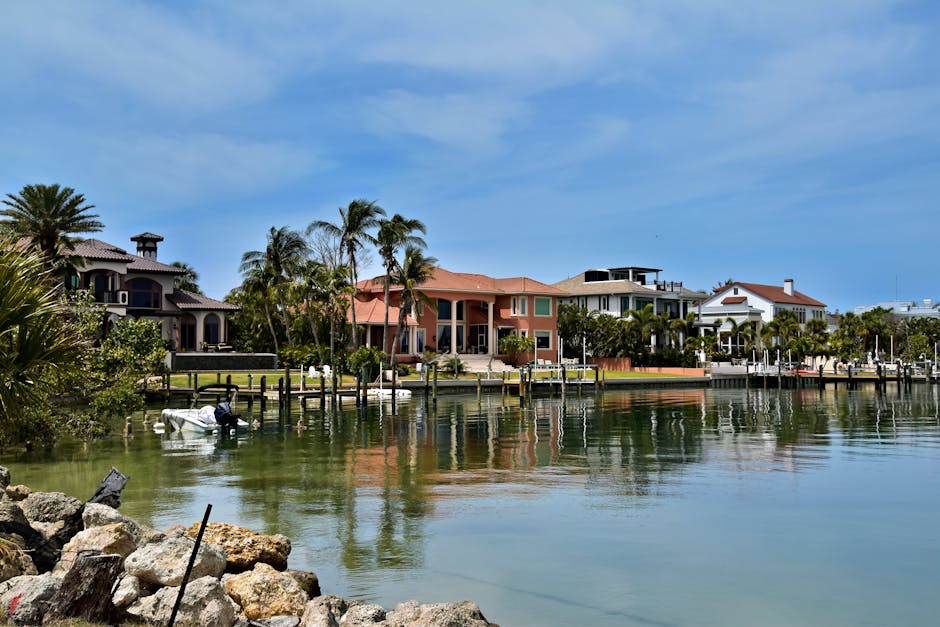
This structural change is supported by data indicating that Tampa’s waterfront has emerged as a primary luxury real estate market, moving away from its historical reputation for transient ownership. For the sophisticated investor, this means the risk profile of high-end acquisitions has changed. Valuation is now tied more closely to the permanence of the resident base and the scarcity of developable land in established neighborhoods like Davis Islands and Beach Park. The focus has moved from speculative growth to long-term capital preservation in a market that remains undersupplied at the highest tiers.
When evaluating these assets, buyers must distinguish between generic high-end finishes and the architectural integrity required for coastal longevity. The current inventory shows a median list price of approximately $2,490,000, but the upper echelon of the market—properties exceeding $10 million—is where the real architectural innovation is occurring. These properties are setting new standards for resilience and design, reflecting a buyer profile that is younger, more tech-fluent, and significantly more demanding of their physical environment than previous generations.
Executive Relocation and Regional Housing Strategy
The influx of executive talent into the Tampa Bay area continues to redefine neighborhood dynamics. Many leaders are choosing the region not just for the tax environment, but for the lifestyle integration that allows for a seamless transition between professional requirements and private life. This trend is particularly visible in the corridor between downtown Tampa and St. Petersburg, where the demand for high-tier housing has outpaced supply for several quarters. The decision-making process for these buyers often hinges on the quality of local schools and the ease of access to corporate headquarters.
Understanding why executives keep choosing the region involves looking at the broader economic ecosystem. Tampa offers a unique combination of maritime access and a growing financial services sector, creating a stable foundation for real estate values. Unlike other Florida markets that rely heavily on tourism, Tampa’s luxury sector is anchored by healthcare, technology, and defense industries. This industrial diversity provides a buffer against broader economic volatility, making local real estate a more defensive asset class for those diversifying their portfolios.
For those navigating this landscape, the strategy should involve a deep analysis of micro-neighborhoods. While the broader market shows an average list price of over $3.1 million, the reality for an executive buyer is often found in the nuances of specific streets in Hyde Park or the quiet enclaves of Culbreath Isles. These areas offer the privacy and security required by high-profile individuals while maintaining a connection to the city’s cultural core. Analyzing current listings reveals a concentration of quality that rewards the patient, well-advised buyer who understands the value of a specific lot over a generic renovation.
The $115 Million Ceiling and Market Benchmarking
The recent introduction of a nine-figure listing has fundamentally altered the benchmarking process for Tampa luxury assets. When a single estate asks $115 million, it recalibrates the perception of value across the entire region. This move suggests that the local market is ready to compete with traditional high-stakes environments like Palm Beach or Miami. While the $22.5 million record currently stands for a closed sale, the presence of such an ambitious listing signals a new era of confidence in the region’s long-term appreciation potential.
The implications of this massive estate asking $115 million are felt most strongly in the $5 million to $15 million segment. Buyers in this range now see their acquisitions as relatively conservative, providing a psychological floor for prices in the most desirable areas. It is no longer uncommon to see properties in the $2 million to $3 million range being purchased for land value alone, particularly when they offer rare water frontage or unique historical significance. This aggressive pricing at the top of the stack trickles down, compressing cap rates for investors and increasing the entry cost for new residents.
Strategic buyers must look past the headline numbers to understand the utility of these estates. A property at this level is more than a residence; it is a private compound with capabilities for hosting, security, and wellness that rival high-end commercial facilities. In a market with only 120 active luxury listings, the competition for truly unique assets is fierce. Investors should focus on properties that possess ‘un-replicable’ characteristics—such as wide-water views or expansive acreage in urban centers—as these will always command a premium regardless of broader market fluctuations.
The Evolution of the Luxury Condo Sector
While traditional estates remain the preference for many, the vertical luxury market in Tampa is entering a critical phase of development. The city has historically been dominated by single-family residences, but a new wave of high-specification towers is changing the skyline and the buyer profile. These developments are targeting the lock-and-leave lifestyle that many global citizens require, offering amenities that were previously unavailable in the Tampa market, such as 24-hour concierge services and integrated wellness centers.
Insights into why Tampa remains an early-stage luxury condo market suggest there is significant room for growth. Current developments are just starting to scratch the surface of the demand for high-density, high-service living. For the buyer, this represents an opportunity to enter a maturing market before it reaches the saturation levels seen in other major Florida cities. The value proposition here is one of convenience and security, particularly for those who maintain multiple residences across the globe.
Evaluating a condo acquisition in Tampa requires a different set of metrics than a single-family home. One must consider the long-term viability of the homeowners association, the quality of the developer’s track record, and the specific views that will remain unobstructed by future development. As the city continues to densify, the premium for permanent views of Hillsborough Bay or the downtown skyline will only increase. This is a segment where analytical buyers can find value by identifying buildings that offer a higher ratio of service to square footage.
- Verification of riparian rights and dockage permitting for waterfront assets.
- Analysis of recent comparable sales within a two-mile radius from the last six months.
- Assessment of elevation and modern flood mitigation infrastructure.
- Review of historical architectural significance and local preservation constraints.
- Evaluation of proximity to private transit hubs and elite social clubs.
- Due diligence on surrounding land-use zoning to protect future privacy.
Analyzing Recent High-Value Closings
The data from the previous year provides a clear roadmap for current valuations. In 2025, the region saw several record-breaking transactions that highlight the specific features buyers are willing to pay for. Privacy, custom craftsmanship, and integrated technology are no longer optional extras; they are the baseline for any property listed above the $5 million mark. These sales also demonstrate a shift toward modern aesthetics, with clean lines and floor-to-ceiling glass becoming more prevalent in a market once dominated by Mediterranean Revival styles.
A review of Tampa Bay’s most expensive luxury home sales of 2025 reveals a high concentration of activity in South Tampa. Buyers are prioritizing location above almost all else, specifically seeking out lots that allow for the construction of significant square footage without sacrificing outdoor living space. The pool and lanai areas of these homes are now being treated as secondary living rooms, equipped with full kitchens and climate control systems. This emphasis on the outdoor-indoor transition is a hallmark of the modern Tampa luxury residence.
For those looking to sell in this environment, the takeaway is clear: the market rewards properties that are truly turnkey. The affluent buyer today has little appetite for extensive renovations and is willing to pay a significant premium for a home that is ready for immediate occupancy. This has led to a rise in ‘speculative luxury’ builds, where developers create high-end homes without a pre-committed buyer, confident that the quality of the product and the scarcity of the location will drive a swift and profitable sale.
Stability and Capital Preservation in 2026
Looking ahead, the Tampa luxury market appears positioned for continued stability. While the broader national real estate landscape may face headwinds, the local dynamics in Florida—and specifically in the Tampa-St. Petersburg corridor—remain favorable for high-net-worth individuals. The combination of a pro-business environment, significant infrastructure investment, and a high quality of life makes the region an attractive place for both capital and families. The market is maturing into its role as a primary hub, and the volatility often associated with resort towns is notably absent here.
Investors should also monitor the development of the Florida real estate trends which suggest a long-term commitment to infrastructure and coastal management. These macro factors provide the necessary backdrop for making large-scale residential investments. When a buyer acquires a property in Tampa today, they are not just buying a home; they are buying into an evolving city that is successfully managing its growth while maintaining the character of its historic neighborhoods. This balance is difficult to achieve and even harder to sustain, yet Tampa continues to execute on this front.
The decision to acquire a luxury asset in this market should be driven by a combination of empirical data and local insight. Understanding the subtle differences between a property in Bayshore Beautiful and one in Golfview can mean the difference between a sound investment and a missed opportunity. As inventory remain tight, with only 120 properties currently available in the luxury segment, the advantage goes to the buyer who is prepared to act decisively based on a clear understanding of the market’s underlying mechanics and future trajectory.
Navigating the complexities of the Tampa luxury market requires more than just a search for aesthetics; it requires a strategic partner who understands the nuances of local valuation and the requirements of the high-net-worth individual. Whether you are looking to relocate an executive team or acquire a legacy waterfront estate, the current environment offers unique opportunities for those who move with precision. We invite you to explore our curated selection of private listings and contact a senior advisor today to discuss your specific acquisition or disposition strategy in this evolving primary market.
Your next move in Tampa luxury
Get current inventory, pricing guidance, and private-tour support from our brokerage team.
Source highlights
- Column: Why executives keep choosing St. Pete – The Business Journals
- Tampa’s Price Record Is $22.5 Million. This Huge Estate Is Asking $115 Million. – WSJ
- Tampa Bay’s most expensive luxury home sales of 2025 – Tampa Bay Times
- Why Tampa remains an early-stage luxury condo market – Tampa Bay Business & Wealth
- Florida Trend Real Estate – Florida Trend
- Tampa Bay’s Waterfront Emerges as a Primary Luxury Real Estate Market – The National Law Review
- Things to do with kids this weekend in Tampa, FL – That's So Tampa
- Tampa weekend events: Riverfest, Plant Bingo and more – Axios
