


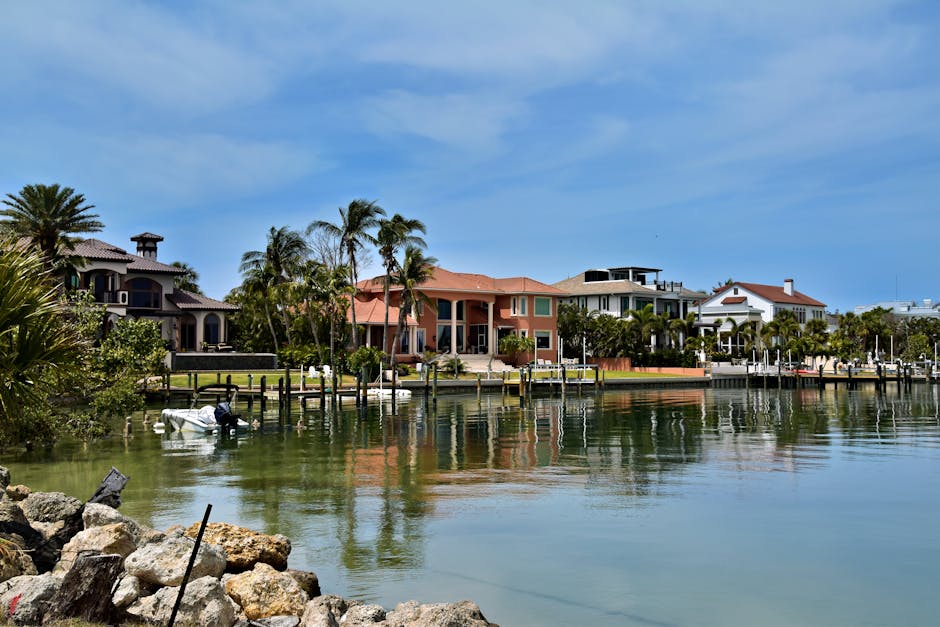
The Evolution of Tampa Bay Waterfront Real Estate
The landscape of the Gulf Coast has shifted significantly over the last decade, evolving from a secondary vacation market into a robust primary residency hub for high-net-worth individuals. This maturation is most visible in the sustained demand for deep-water assets and the rapid development of the urban core. For the sophisticated buyer, the value proposition has moved beyond recreational appeal to include structural permanence and capital preservation. Recent data suggests that Tampa’s waterfront is emerging as a primary luxury market, competing directly with established global enclaves.

Investors are increasingly focusing on neighborhoods like Davis Islands and Culbreath Isles, where lot sizes and privacy thresholds meet the requirements of modern executive living. The shift is driven by a desire for year-round utility rather than seasonal occupancy. This fundamental change in buyer behavior has created a pricing floor that remains resilient even during broader economic fluctuations. We are seeing a marked preference for properties that offer both immediate lifestyle returns and long-term architectural relevance, moving away from transient trends toward timeless, high-specification builds.
Understanding this evolution requires a look at the infrastructure improvements accompanying private investment. The expansion of private aviation facilities and the enhancement of the downtown waterfront district have provided the necessary amenities to support a permanent affluent population. When evaluating current opportunities, buyers must distinguish between generic high-end properties and those with the unique site characteristics—such as wide open bay views or rare riparian rights—that define the upper echelon of the local market.

Analyzing Executive Migration and Corporate Relocation Pull
The influx of executive talent into the region is not a temporary phenomenon but a structural realignment of the American corporate map. High-level leadership from the financial and technology sectors is increasingly prioritizing the quality of life and business-friendly environment found in the Tampa Bay basin. This migration is particularly evident in the St. Petersburg corridor, where executives continue to choose the area for its balance of urban amenity and professional connectivity. The relocation of key personnel often precedes a broader corporate footprint, further stabilizing the residential luxury sector.
For these buyers, the decision-making process is data-driven. They are comparing the tax implications and operating costs of a Florida-based primary residence against traditional hubs like New York or Chicago. The efficiency of the local market, combined with the lack of state income tax, creates a compelling financial narrative. However, the true draw remains the ability to secure expansive, modern estates within minutes of major commercial centers. This proximity allows for a seamless transition between professional obligations and private life, a luxury that is becoming increasingly scarce in older metropolitan areas.
Local advisory services have noted that these incoming executives are not just looking for square footage; they are looking for specific neighborhood cultures that align with their personal values. Whether it is the historic prestige of Hyde Park or the gated exclusivity of Beach Park, the choice of location is often a reflection of a long-term commitment to the community. This commitment manifests in philanthropic involvement and local investment, which in turn reinforces the desirability and value of the surrounding real estate.
Structural Shifts in Inventory and the New Pricing Floor
The current inventory levels in the luxury segment reflect a market that is tightly held by those who recognize the scarcity of prime land. With approximately 120 active luxury listings and a median list price hovering near $2.5 million, the competition for trophy assets remains high. We are no longer operating in a market defined by oversupply or speculative flipping. Instead, we see a disciplined environment where sellers are sophisticated and buyers are highly selective. The presence of record-breaking listings, such as an estate asking significantly above previous benchmarks, underscores the newfound confidence in the region’s ceiling.
Inventory movement is particularly concentrated in the residential and land categories. High-value land acquisitions in areas like South Tampa are frequently driven by the intent to build custom residences that meet current environmental and technological standards. This focus on new construction is a response to the aging stock of existing luxury homes, which may not always offer the open floor plans or smart-home integration desired by today’s discerning buyer. Consequently, modern, turn-key properties often command a significant premium and sell with fewer days on the market.
To navigate this environment, buyers must have a clear understanding of the pricing floor. Average list prices exceeding $3.1 million are now common for waterfront estates, and the market shows little sign of retreating. When evaluating a potential acquisition, it is essential to look past the superficial finishes and assess the intrinsic value of the location and the quality of the building envelope. Assets that possess rare combinations of acreage and water frontage are increasingly viewed as generational holdings rather than short-term investments.
Comparative Value and Supply Dynamics
When contrasted with other Florida metropolitan areas, the Tampa Bay market offers a unique combination of value and scalability. While Miami and Palm Beach have seen astronomical price increases that often decouple from local utility, Tampa’s growth has been more closely aligned with its economic expansion. As mortgage rates stabilize and new construction lifts supply, we are seeing a healthier equilibrium that benefits the serious buyer. This influx of supply is particularly important in maintaining a competitive environment that rewards quality over mere availability.
Strategic buyers are also looking at the commercial sale and land opportunities as indicators of future residential growth. The development of mixed-use projects and luxury condominiums in the urban core has introduced a new tier of vertical living that appeals to those seeking a low-maintenance, high-amenity lifestyle. These developments often serve as the first entry point for those relocating to the area, providing a base from which they can explore more permanent estate options in the surrounding neighborhoods.
Understanding the supply chain of luxury homes is critical. With many high-end sales occurring off-market or through private networks, having a connected advisor is paramount. The nuances of current inventory—ranging from historical estates on cobblestone streets to sleek modern builds in Venetian Isles—require a nuanced approach to valuation. Buyers should prioritize properties that offer a hedge against inflation through durable materials and prime positioning within their respective sub-markets.
Checklist: Core Criteria for Evaluating Tampa Luxury Assets
- Verify the elevation and flood zone status to ensure long-term structural viability and insurance predictability.
- Assess the dockage and water depth capabilities for deep-water access, especially for vessels with significant drafts.
- Evaluate the proximity to high-performing educational institutions and private academies, which consistently anchor neighborhood values.
- Inspect the quality of the smart-home infrastructure and the integration of sustainable energy systems.
- Analyze the historical appreciation of the specific neighborhood block rather than relying on broader municipal averages.
- Confirm the existence of any restrictive covenants or architectural review boards that may impact future modifications.
Geographic Diversification within the Tampa Bay Basin
Diversification within the local market is a key strategy for risk mitigation. While South Tampa remains the traditional center of gravity for luxury, areas like St. Petersburg and the northern coastal enclaves offer different lifestyle profiles and price points. The waterfront in St. Petersburg, for instance, has seen a surge in primary residency demand as the city’s cultural and culinary scenes have matured. This geographic spread allows buyers to find assets that match their specific requirements for density, privacy, and architectural style.
For those focused on waterfront exclusivity, the recent activity in Venetian Isles highlights the ongoing appetite for premium coastal living. Listings in these areas are often offered at adjusted price points that reflect current market conditions, providing opportunities for those ready to act. These sub-markets often behave independently of one another, making it essential to have a localized understanding of the micro-trends affecting each neighborhood.
Prospective residents should also consider the impact of local events and festivals on the desirability of a location. High-profile gatherings like Riverfest and other downtown events contribute to the area’s social fabric and reinforce the appeal of urban-adjacent living. The ability to access these cultural markers while maintaining a private sanctuary is a hallmark of the Tampa Bay luxury experience.
Strategic Entry Points for the Current Market Cycle
Success in the current market requires a departure from the “wait and see” approach. With interest rates finding a new equilibrium and the pricing floor established by significant cash-heavy transactions, the window for securing prime assets is defined by availability rather than market timing. Buyers who focus on the intrinsic qualities of a property—location, lot size, and build quality—are better positioned to withstand short-term volatility. The most successful acquisitions in recent months have been characterized by decisive action on properties that rarely enter the public market.
As the region continues to attract global attention, the distinction between standard and exceptional real estate will only grow. The entry of high-profile properties, such as the mansion at 2 Troutwater Lane or the modern builds on Florida Avenue, provides a benchmark for what is possible in this market. For the discerning investor, these listings represent more than just a residence; they are a stake in the future of a city that is rapidly becoming a primary destination for the world’s elite. The focus remains on identifying value where others see only price, and securing assets that will remain desirable for decades to come.
To navigate this landscape effectively, you need more than just data; you need the insight of an advisor who understands the nuances of the local market and the behavior of affluent buyers. Whether you are looking for a secluded waterfront estate or a sophisticated urban residence, the opportunities in Tampa Bay have never been more compelling. We invite you to browse our current luxury listings and contact an advisor to discuss your specific requirements and strategic objectives in the current market cycle.
Your next move in Tampa luxury
Get current inventory, pricing guidance, and private-tour support from our brokerage team.
Source highlights
- Column: Why executives keep choosing St. Pete – The Business Journals
- Tampa’s Price Record Is $22.5 Million. This Huge Estate Is Asking $115 Million. – WSJ
- Tampa Bay’s most expensive luxury home sales of 2025 – Tampa Bay Times
- Mortgage rates fall to 6.09% as new construction lifts Tampa supply – Tampa Bay Business & Wealth
- Jennifer Zales Unveils Venetian Isles Waterfront Luxury Now Offered At A New Price – Haute Living
- Tampa Bay’s Waterfront Emerges as a Primary Luxury Real Estate Market – The National Law Review
- Things To Do In Tampa This Weekend: Best Festivals & Events Going On – That's So Tampa
- Riverfest and other events take over Tampa this weekend | What to know before you go – wtsp.com



