


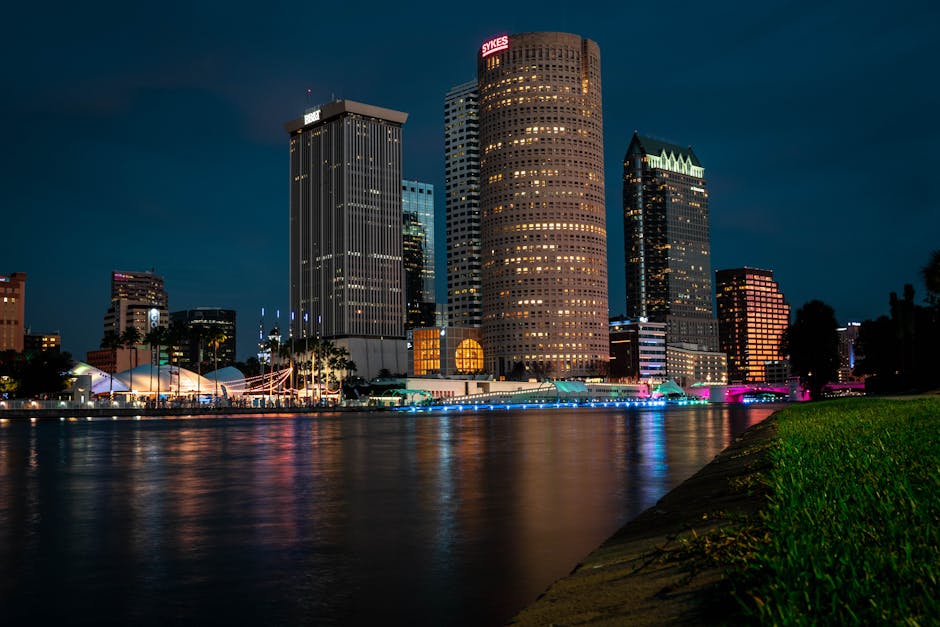
The New Benchmark of Value in South Tampa
As of early May 2026, the Tampa luxury sector is navigating a period of sophisticated recalibration. While the city’s historical price record stands at $22.5 million, the entry of hyper-luxury estates onto the market—including one notable property asking $115 million—has shifted the goalposts for high-net-worth buyers. This expansion of the upper limit is not merely a headline-grabbing anomaly but a signal that national capital increasingly views Tampa as a tier-one luxury destination. For the local buyer, however, the day-to-day reality is found in the stabilized inventory of Davis Islands and Beach Park, where precision in valuation has replaced the rapid escalation seen in previous cycles.
Decision-making in this climate requires a move away from emotional bidding and toward a rigorous analysis of price-per-square-foot utility. The median list price for luxury inventory currently sits at $2,498,800, yet the average is pulled upward to over $3.1 million by a small cluster of trophy assets. This divergence suggests that the “middle” of the luxury market—homes between $2 million and $5 million—is where the most significant opportunities for negotiation reside. Buyers should focus on properties like those in the Troutwater Lane corridor, where recent offerings near $2.65 million reflect a more grounded approach to waterfront pricing.
The current weather, characterized by consistent daytime temperatures in the high eighties and minimal precipitation, provides an ideal window for thorough property inspections. In areas like Culbreath Isles and Palma Ceia, evaluating the integrity of seawalls and the efficiency of older HVAC systems is paramount before the onset of the summer humidity. A senior advisor would suggest that buyers prioritize structural resilience over cosmetic updates, as the cost of specialized labor for high-end renovations continues to track above the national average.
Market Equilibrium and Inventory Realities
With 120 active luxury listings presently available across the region, the market has reached a state of relative equilibrium. This is a significant departure from the inventory scarcity of 2024, granting buyers the luxury of time. However, this time should be used to scrutinize the “days on market” metrics. Properties that have lingered beyond 90 days often carry underlying valuation friction or deferred maintenance issues that require a disciplined eye to uncover. Analyzing the $2,200,000 to $2,900,000 segment reveals a mix of residential and land-value plays, particularly along North Florida Avenue and Martin Luther King Jr Boulevard, where commercial-to-residential transitions are reshaping neighborhood boundaries.
Sophisticated buyers are increasingly looking at the specific composition of the active inventory. Currently, the market is dominated by single-family residential assets, but there is a growing interest in land acquisitions for custom builds. This shift is driven by a desire for architectural specificity that existing inventory often fails to meet. When evaluating luxury homes for sale, it is essential to compare the replacement cost of a new build against the acquisition cost of a legacy property. In many cases, the premium for a ready-to-move-in residence is justified by the avoidance of a two-year construction timeline.
Understanding buyer behavior in the second quarter of 2026 reveals a trend toward cash-heavy transactions, even as traditional financing remains an option for liquidity management. This trend is particularly visible in the higher-priced tiers, where the average list price of $3.17 million often acts as a filter for all but the most liquid participants. The ability to close quickly and without contingencies remains the most potent tool in a buyer’s arsenal, often securing a discount that far outweighs the cost of capital.
Condominium Evolution: Assessing Vertical Living
Tampa remains an early-stage luxury condo market compared to coastal counterparts like Miami or West Palm Beach. This stage of development offers a unique entry point for those seeking a lock-and-leave lifestyle on Bayshore Boulevard. While the volume of vertical luxury is increasing, the diversity of amenities and service levels is still catching up to the demands of international buyers. Investors should look for developments that prioritize long-term HOA stability and robust reserve funds, as these factors will dictate resale value as the market matures.
The transition to vertical living often involves a trade-off between privacy and proximity. In the Water Street district, the proximity to cultural events and professional hubs is the primary driver of value. For instance, the seasonal Riverfest events and the concentration of new fine-dining establishments have made the downtown core more than just a business center. This maturation of the urban fabric is a critical metric for luxury buyers who prioritize walkability and social connectivity over suburban seclusion.
Strategic Checklist for High-End Acquisitions
Navigating a multi-million dollar transaction requires a disciplined process that goes beyond a standard home tour. The following checklist outlines the essential verification steps for the 2026 Tampa market environment:
- Verify the elevation certificate and current flood zone designation to calculate long-term insurance overhead.
- Analyze the last 24 months of comparable sales within a two-mile radius, specifically focusing on “off-market” transfers.
- Conduct an independent audit of HOA or condo association reserves to ensure no upcoming special assessments.
- Review the permit history for all structural or electrical modifications made in the previous five years.
- Assess the proximity to upcoming infrastructure projects that may impact noise levels or traffic patterns.
- Perform a deep-dive inspection of shoreline stabilization and dock permits for all waterfront properties.
The Impact of Executive Migration Patterns
A significant driver of the current market movement is the steady influx of corporate leadership into the region. While many executives continue to choose St. Pete for its specific cultural density, the spillover effect into South Tampa is undeniable. This migration is not just about tax advantages; it is about the search for a specific quality of life that combines professional opportunity with high-end residential stability. This demographic typically seeks newer construction or fully renovated homes in Hyde Park and Davis Islands, placing a premium on “turn-key” status.
For sellers, this means that the presentation of an asset is more critical than ever. The executive buyer often lacks the time for a multi-month renovation and will pay a significant premium for a home that is ready for immediate occupancy. For buyers, it means competing against highly qualified, non-contingent offers. Understanding these migration patterns—including where these executives are moving from—can provide valuable leverage during negotiations. For instance, buyers coming from the Northeast often perceive Tampa’s current luxury prices as a relative value, even at the $3 million mark.
Waterfront Vulnerabilities and Asset Protection
Waterfront living remains the pinnacle of the Tampa market, but it comes with a unique set of challenges in 2026. Recent market data shows that waterfront luxury properties in Venetian Isles and similar neighborhoods are seeing strategic price adjustments. These adjustments reflect a more realistic assessment of the long-term costs associated with shoreline maintenance and insurance premiums. A sophisticated advisor will emphasize the importance of hardened structures—those built with the latest storm-resistance technologies—over older homes that may face increasing regulatory pressure.
Beyond the physical structure, the legal aspects of waterfront ownership require careful navigation. Riparian rights, dock permitting, and submerged land leases are complex areas that can significantly impact the long-term utility and value of a property. Engaging with a specialist who understands the local real estate trends is essential for protecting these high-value assets. The goal is to ensure that the investment remains resilient both physically and financially against the backdrop of an evolving coastal landscape.
Timing the Acquisition: Why 2026 Demands Patience
The decision of when to enter the market is often as important as where to buy. In the current environment, patience is a strategic advantage. With inventory levels stabilizing and interest rates finding a new plateau, the pressure to act impulsively has dissipated. Instead, the focus should be on finding the “perfect fit” rather than just the “next available” property. This involves a deep understanding of neighborhood-level micro-trends—knowing, for example, which blocks in Westshore are seeing the most significant private reinvestment or where new height restrictions might protect your future views.
Ultimately, the Tampa luxury market in 2026 rewards those who approach it with an analytical mindset and a long-term perspective. Whether you are looking at a $2.5 million residential estate or a larger commercial-to-residential land play, the fundamentals of value—location, build quality, and structural integrity—remain the best guides. Success in this market is not defined by the speed of the transaction, but by the precision of the acquisition and the clarity of the vision behind it.
Navigating these complexities requires more than just a search engine; it requires the insight of a dedicated advisor who understands the nuances of the local landscape. We invite you to explore our current curated selection of listings and then reach out to us directly. Our team is prepared to provide the data-backed guidance needed to secure your next significant asset. When you are ready to discuss your specific requirements and gain a competitive edge in the Tampa market, please contact our office to schedule a private consultation.
Your next move in Tampa luxury
Get current inventory, pricing guidance, and private-tour support from our brokerage team.
Source highlights
- Column: Why executives keep choosing St. Pete – The Business Journals
- Tampa’s Price Record Is $22.5 Million. This Huge Estate Is Asking $115 Million. – WSJ
- Tampa Bay’s most expensive luxury home sales of 2025 – Tampa Bay Times
- Why Tampa remains an early-stage luxury condo market – Tampa Bay Business & Wealth
- Jennifer Zales Unveils Venetian Isles Waterfront Luxury Now Offered At A New Price – Haute Living
- Florida Trend Real Estate – Florida Trend
- Things To Do In Tampa This Weekend: Best Festivals & Events Going On – That's So Tampa
- Things To Do In St Pete This Weekend: Best Festivals & Events Going On In St Petersburg – I Love the Burg



