


The Maturation of Tampa’s Waterfront Corridors
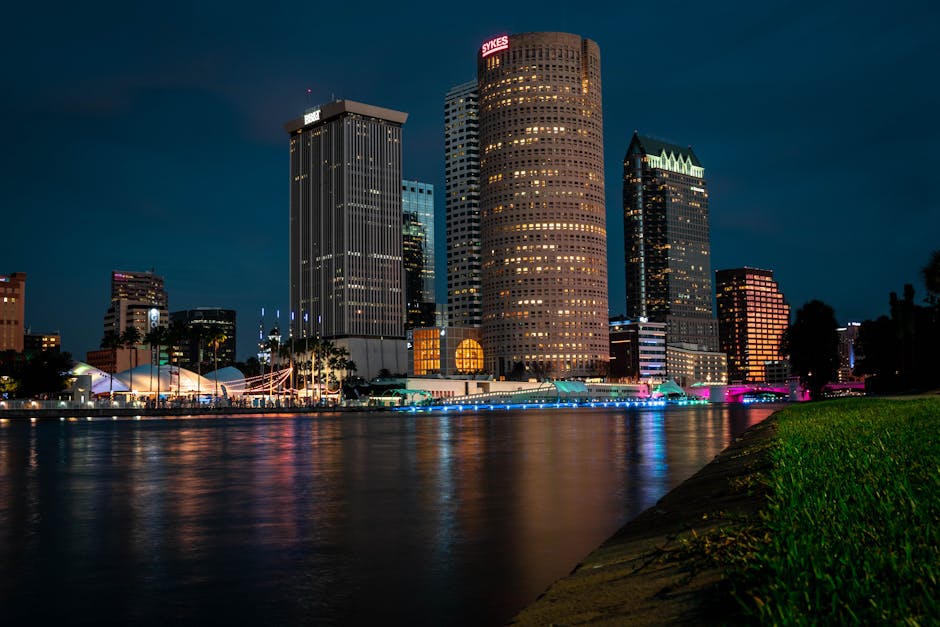
The transition of Tampa from a secondary seasonal market to a primary luxury destination is most visible along its coastal and riverfront boundaries. Historically, waterfront properties in areas like Davis Islands and Harbour Island were viewed as recreational assets. Today, these locations are functioning as primary residential hubs for high-net-worth individuals who prioritize proximity to the central business district alongside private maritime access. This shift is substantiated by recent analysis identifying Tampa Bay’s waterfront as an emerging primary luxury market, driven by sustained capital inflow and a scarcity of developable land.
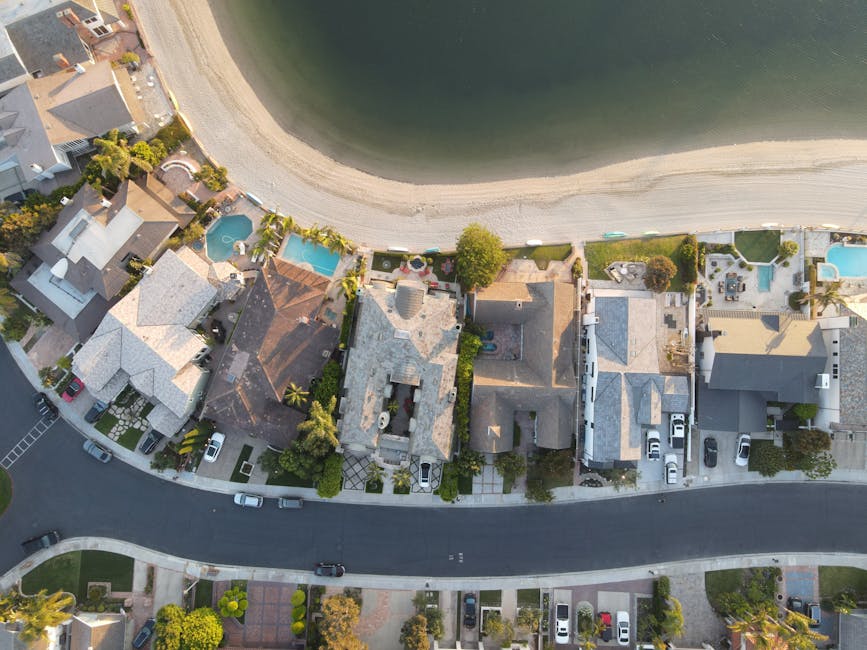
Sophisticated buyers are no longer merely looking for a view; they are evaluating the long-term structural integrity and elevation of these assets. The geographical constraints of South Tampa’s peninsula create a natural supply ceiling that insulates value during broader economic fluctuations. Current inventory levels remain tight, with approximately 120 active luxury listings available across the city, forcing a competitive environment for premier parcels. As the median list price for luxury assets hovers near $2,498,800, the entry point for true waterfront frontage has effectively shifted, requiring a more nuanced approach to valuation that accounts for seawall condition and deep-water access.
Neighborhoods like Hyde Park and Bayshore Boulevard continue to command a premium due to their historic significance and walkability. However, the movement of capital is expanding into once-overlooked pockets where modern architecture is replacing mid-century structures. This gentrification of the luxury tier is particularly evident in South Tampa, where the architectural language is shifting from Mediterranean Revival to clean, glass-heavy contemporary designs. Buyers must distinguish between homes that offer aesthetic appeal and those built to the rigorous standards of modern coastal engineering, which significantly impacts future insurance and maintenance liabilities.
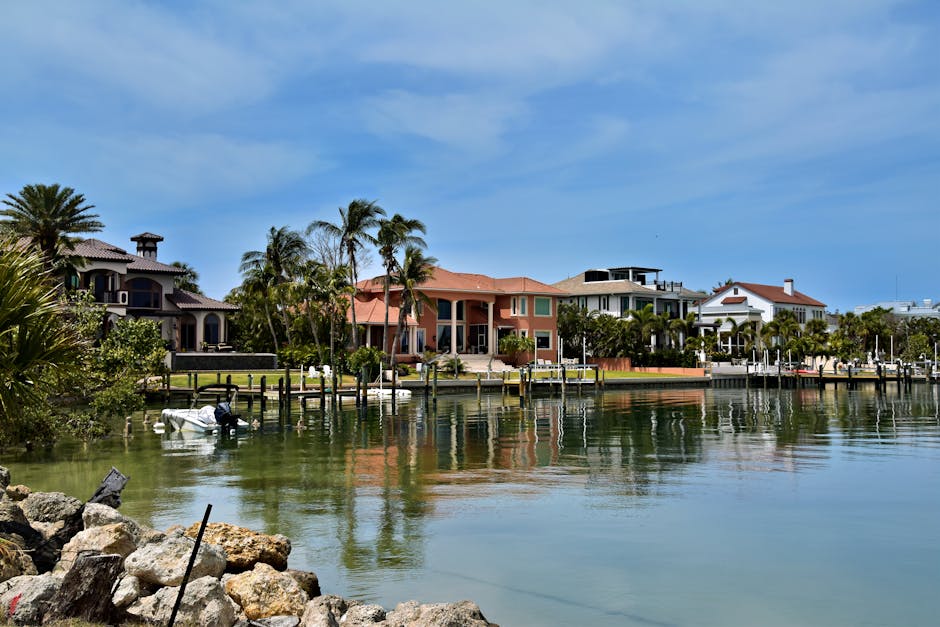
Institutional investment in local infrastructure has further solidified the value of these corridors. The integration of public spaces with private developments has created a seamless experience for residents who value a live-work-play dynamic. This is not a trend but a fundamental realignment of how luxury real estate is consumed in the region. As supply remains constrained, the emphasis for buyers has moved from timing the market to securing specific, high-quality assets that offer unique site-specific advantages that cannot be replicated in suburban developments.
Analyzing the Vertical Shift in Condominium Development
For decades, Tampa’s high-end residential market was dominated by single-family estates. The recent surge in luxury condominium development represents a significant pivot in buyer behavior, particularly among those seeking a turnkey lifestyle with high-touch amenities. This segment is still considered to be in its early stages compared to more mature markets like Miami or New York, which provides a unique window for valuation growth. According to industry reports, Tampa remains an early-stage luxury condo market, offering a value proposition that is increasingly attractive to domestic migrants from higher-tax states.
These vertical communities are no longer just about height; they are about curated services. Residents now expect 24-hour concierge service, private wellness centers, and climate-controlled storage for wine and automotive collections. The demand for large-format units—often exceeding 3,000 square feet—has forced developers to reconsider floor plans, moving away from high-density layouts toward ‘estates in the sky.’ This evolution satisfies the requirements of buyers who are downsizing from large suburban properties but are unwilling to compromise on interior volume or finishes.
Pricing for these premier units has seen steady appreciation, with average list prices across the luxury tier reaching approximately $3,229,170. This data points to a market that is consolidating around quality. Buyers are increasingly discerning, prioritizing projects with reputable developers and established track records of delivery. The risk profile for pre-construction has changed, with a greater emphasis on the financial solvency of the project and the long-term viability of the homeowners association. Verifying the reserve studies and insurance coverage of these high-rises is as critical as inspecting the unit itself.
The geographic focus of this vertical growth is centered around Water Street and the Westshore district, where mixed-use integration provides immediate access to high-end dining and retail. This urban densification is attracting a younger demographic of wealth, as well as established professionals who prefer the security and convenience of a managed building. For the buyer advisor, the task is to compare the price per square foot not just within Tampa, but against comparable primary markets, where Tampa still offers a significant relative discount despite recent price escalations.
Pricing Disparities and the New $115 Million Performance Benchmark
The Tampa market is currently experiencing an unprecedented divergence in pricing. While the majority of the luxury inventory sits between $2 million and $5 million, a new ‘ultra-luxury’ tier is emerging that challenges historical ceilings. A notable example is a massive estate recently listed for $115 million, a figure that dwarfs the previous city record of $22.5 million. This record-breaking $115 million asking price signals a transition toward trophy-asset status for Tampa’s most exceptional properties.
Such outliers can distort market perception, but they also serve as a ‘halo’ for the broader luxury segment. When a property is positioned at nine figures, it validates the region’s appeal to global capital. For the local buyer, however, the focus remains on more accessible but equally high-quality listings. Properties like 2 Troutwater Ln, listed at $2,650,000, represent the current ‘sweet spot’ of the market—offering significant square footage and modern amenities without the speculative pricing of a trophy estate. Comparative market analysis must be conducted with extreme precision to avoid overpaying for perceived brand value versus actual utility.
Inventory movement at the $2 million to $3 million level, such as the recent listing at 6304 N Florida Avenue for $2,200,000, demonstrates the depth of the market. Buyers in this range are often local professionals or business owners who are sensitive to interest rate environments but are ultimately driven by lifestyle needs. We are seeing a move toward ‘right-sizing’ where buyers prioritize the quality of materials and the efficiency of the floor plan over raw square footage. This analytical approach to buying ensures that the asset remains liquid in various market cycles.
Deciding between a $2.5 million home and a $5 million home in Tampa often comes down to specific neighborhood micro-trends. For instance, a home on a quiet cul-de-sac in a gated community may hold its value differently than a similarly priced home in a high-traffic historic district. Buyers should analyze recent sales of Tampa Bay’s most expensive luxury home sales to understand the premium paid for privacy and architectural pedigree. Success in this market requires ignoring the hype and focusing on the underlying data of settled transactions.
Critical Considerations for Tampa Luxury Acquisitions
Acquiring a high-value residence in the current environment necessitates a rigorous due diligence process that extends beyond a standard home inspection. The complexities of coastal Florida real estate mean that legal, environmental, and financial factors must be weighted equally with the physical condition of the property. For those navigating the upper tiers of the market, the following checklist serves as a baseline for evaluating a potential acquisition.
- Verify the status and remaining lifespan of all seawalls and riparian rights for waterfront parcels.
- Audit the historical flood insurance premiums and investigate the property’s elevation certificate relative to new FEMA maps.
- Examine the homeowners association (HOA) financials, specifically looking for deferred maintenance and pending special assessments in condo developments.
- Evaluate the architectural plans for any vacant adjacent lots to ensure protected views and privacy will not be compromised.
- Assess the local infrastructure plans, including upcoming roadwork or commercial zoning changes in the immediate neighborhood.
- Confirm the existence of high-grade impact-resistant windows and roofing materials that meet or exceed current building codes.
The importance of seawall integrity cannot be overstated. A failure in this area can lead to six-figure repair costs and significant damage to the landscaped grounds. Similarly, in the condominium sector, the ‘structural integrity reserve study’ is now a mandatory consideration for any buyer. These documents provide a roadmap of the building’s financial health and help predict future costs that may not be immediately apparent during a walkthrough. Buying in Tampa is as much about risk mitigation as it is about lifestyle selection.
Furthermore, the ‘social equity’ of a neighborhood—its reputation, the quality of local private schools, and the stability of its resident base—plays a critical role in long-term appreciation. High-end buyers are increasingly looking for ‘legacy’ properties that can be held for decades. This requires a focus on timeless design over fleeting trends. Modern farmhouse styles may be popular today, but a well-executed transitional or coastal contemporary home often proves more resilient in the resale market over a ten-year horizon.
Social Infrastructure and the New Resident Profile
The profile of the Tampa luxury buyer has evolved from the retiree to the active professional. This shift is mirrored in the city’s social infrastructure, which has seen a dramatic upgrade in cultural and recreational offerings. Events like the annual Riverfest draw significant attention to the downtown core, illustrating the city’s ability to host large-scale cultural gatherings. Staying informed on Tampa weekend events such as Riverfest provides insight into the lifestyle integration that modern residents expect.
This cultural vibrancy is a key driver for younger wealth moving into the area. They are looking for a community that offers more than just a gated entrance; they want access to a thriving culinary scene, professional sports, and high-level networking opportunities. The proliferation of private social clubs and exclusive dining venues in South Tampa and the Westshore area has created a new ‘center of gravity’ for the city’s affluent residents. This makes proximity to these hubs a major factor in real estate valuation.
Weather and outdoor lifestyle remain foundational to the Tampa value proposition. With late April and early May temperatures typically ranging from the low 70s to high 80s, the outdoor-indoor living transition is a year-round reality. This climate supports a robust calendar of outdoor events and festivals that define the local social season. Buyers should consider how a property facilitates this lifestyle, from outdoor kitchens and saltwater pools to integrated terrace spaces that take advantage of the prevailing bay breezes.
The move toward a more sophisticated social scene has also impacted the rental market for luxury homes. We are seeing an increase in high-end executives who choose to rent for a year while they evaluate the different neighborhoods. This ‘try before you buy’ approach is common in mature markets and reflects the diversity of options now available in Tampa. Whether it is the quiet oak-lined streets of Palma Ceia or the high-energy environment of Water Street, the city offers distinct ‘micro-climates’ of lifestyle that cater to different personal and professional needs.
Market Resilience Against National Headwinds
While some regions of the United States have seen a cooling in luxury real estate activity, Tampa Bay has remained remarkably resilient. Data indicates that the Tampa luxury market continues to grow stronger despite national declines, a trend driven by the continuous migration of wealth from the Northeast and Midwest. This localized strength is not accidental; it is the result of a pro-business environment and the lack of state income tax, which provide a compelling financial rationale for residency.
Resilience in this context means that while the pace of price increases may normalize, the floor for valuations remains firm. The lack of inventory is the primary safeguard against a significant correction. With only 120 properties currently available in the luxury segment, there is simply not enough supply to satisfy the ongoing demand from cash-heavy buyers. This imbalance ensures that well-maintained and properly priced assets continue to move quickly, often with multiple offers at the $2 million to $4 million price points.
Looking forward, the focus for investors and primary residents alike will be on ‘durability.’ A durable asset is one that possesses inherent value that cannot be easily disrupted—such as a large lot in an A-rated school district or a home with rare waterfront frontage. The market has moved past the era of speculative gains; the current phase is characterized by a flight to quality. Buyers are willing to pay a premium for properties that require no immediate capital expenditure and offer the highest level of finish and security.
The strategic move for today’s buyer is to identify properties that offer a hedge against future volatility. This involves a deep dive into the specifics of each sub-market and a clear-eyed assessment of the total cost of ownership. By focusing on data-backed decisions and neighborhood-level implications, buyers can navigate the complexities of the current landscape with confidence. Tampa’s trajectory as a premier luxury destination is firmly established, and the opportunities for those with a long-term perspective remain significant.
Navigating the Tampa luxury landscape requires a partner who understands the nuance of the market and the technicalities of high-value transactions. Whether you are evaluating a waterfront estate on Davis Islands or a modern residence in Hyde Park, our advisors provide the analytical depth needed to make an informed decision. We invite you to browse our current luxury listings to understand the available inventory or contact a private advisor to discuss your specific acquisition criteria and receive a tailored market brief.
Your next move in Tampa luxury
Get current inventory, pricing guidance, and private-tour support from our brokerage team.
Source highlights
- Tampa Bay’s most expensive luxury home sales of 2025 – Tampa Bay Times
- Tampa’s Price Record Is $22.5 Million. This Huge Estate Is Asking $115 Million. – WSJ
- Tampa Bay luxury market grows stronger despite national declines – The Business Journals
- Jennifer Zales Unveils Venetian Isles Waterfront Luxury Now Offered At A New Price – Haute Living
- Why Tampa remains an early-stage luxury condo market – Tampa Bay Business & Wealth
- Tampa Bay’s Waterfront Emerges as a Primary Luxury Real Estate Market – The National Law Review
- Things To Do In Tampa This Weekend: Best Festivals & Events Going On – That's So Tampa
- Tampa weekend events: Riverfest, Plant Bingo and more – Axios



