


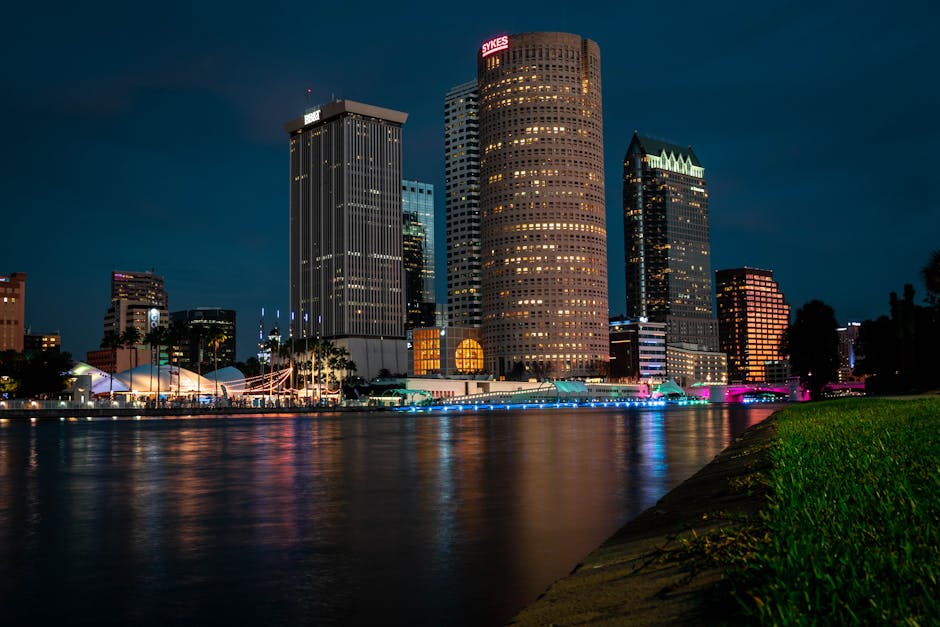
The Resilience of South Tampa Waterfront Assets
Tampa’s luxury sector has transitioned from a seasonal secondary market into a primary destination for permanent capital. As of April 2026, the local inventory maintains a median list price of $2,500,000, reflecting a disciplined floor for high-end assets. Unlike speculative bubbles seen in previous cycles, current demand is driven by domestic migration from high-tax states and a corporate influx into the Water Street and Westshore districts. Buyers are increasingly prioritizing South Tampa neighborhoods like Davis Islands and Harbor Island, where deep-water access remains the primary differentiator for long-term appreciation.
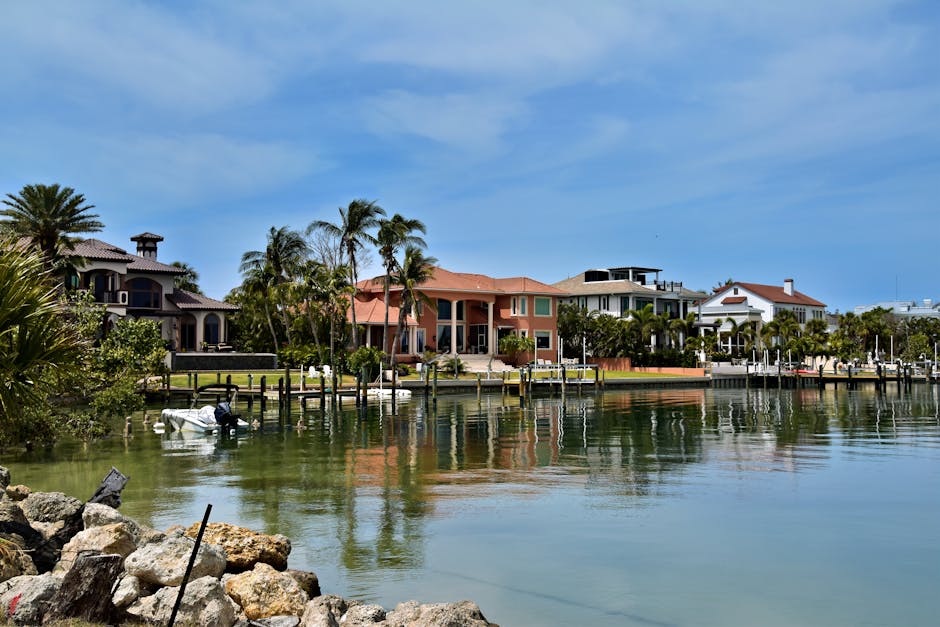
The current inventory of approximately 120 active luxury listings suggests a balanced environment for sophisticated buyers. While national headlines often suggest a cooling, Tampa’s luxury market grows stronger despite national declines, largely due to the scarcity of prime coastal acreage. Investors and primary residents alike are looking past superficial aesthetics, focusing instead on the underlying value of the land and the technical specifications of shoreline protection. This analytical approach to acquisition is essential in a market where the average list price now exceeds $3.3 million.
For those evaluating the current landscape, the focus has shifted toward newly constructed estates that meet or exceed updated Florida Building Code requirements. The premium placed on ‘move-in ready’ coastal modern architecture reflects a buyer preference for immediate utility over multi-year renovation projects. This trend is particularly evident in the South Tampa corridor, where the limited supply of vacant land has made existing high-elevation homes the most sought-after commodities in the region.

Emerging Corridors and Record-Breaking Valuations
While South Tampa remains the traditional anchor, the luxury footprint is expanding north and east into previously overlooked pockets. Seminole Heights and Riverside Heights are seeing a surge in high-value redevelopment, with modern custom builds appearing alongside historic bungalows. These areas offer a different value proposition, focusing on riverfront access and proximity to the urban core. For instance, recent activity on Florida Avenue and nearby riverfront lots indicates a growing appetite for luxury product outside the traditional coastal enclaves.
The ceiling for Tampa real estate reached a new milestone with recent listings testing unprecedented price points. According to reports from the Wall Street Journal, while the previous record stood at $22.5 million, new estates are now entering the market with asks exceeding $100 million. This escalation signals a shift in how global wealth perceives Tampa’s potential as a peer to established markets like Palm Beach or Miami. This pricing power is not limited to single-family homes; it extends to the commercial and land sectors, where strategic parcels on MLK Boulevard are commanding significant premiums.
Sophisticated buyers are closely monitoring these record-breaking sales to calibrate their own offers. The high-end market is no longer a monolith; it is a collection of micro-markets, each with its own velocity and pricing logic. Understanding the nuances between a Davis Islands waterfront lot and a North Tampa acreage estate is critical for capital preservation. As we observe the most expensive luxury home sales of 2025, it is clear that the $5M to $10M segment has become the new standard for premium waterfront living in the bay area.
Structural Integrity and Elevation: The New Buyer Mandate
In the current climate, a home’s aesthetic appeal is secondary to its structural resilience. High-net-worth buyers are now entering the market with a checklist of technical requirements that would have been secondary a decade ago. Elevation certificates, seawall age, and the presence of impact-rated glazing are now the first points of discussion in any serious negotiation. This shift in focus is a direct response to the increasing cost of carry for coastal properties and the desire for long-term stability in a changing environment.
The technical aspects of waterfront living in Tampa require a specialized understanding of local topography and municipal regulations. Buyers must evaluate the type of seawall—whether concrete, vinyl, or composite—and the depth of the water at mean low tide to ensure vessel compatibility. These factors are not just about utility; they are fundamental to the property’s future resale value. A home with an outdated seawall or insufficient elevation can represent a significant deferred liability that must be accounted for in the initial purchase price.
- Verification of FEMA base flood elevation and current finished floor height.
- Inspection of seawall integrity and remaining service life by a qualified marine engineer.
- Assessment of riparian rights and existing dock permits for deep-water vessels.
- Review of recent insurance premium history and availability of excess flood coverage.
- Evaluation of smart-home integration for remote climate and security management.
- Confirmation of local HOA or deed restrictions regarding architectural modifications.
Furthermore, the integration of sustainable technologies has moved from an option to a requirement. Backup power systems, such as whole-home generators or advanced battery storage, are now standard features in the $3M+ price bracket. Buyers are also looking for high-efficiency HVAC systems designed for the Florida climate, ensuring that the cost of ownership remains manageable over time. This data-backed approach to buying ensures that the property remains an asset rather than a burden.
Comparative Analysis: Condominium vs. Fee-Simple Estates
The Tampa skyline has been transformed by a new generation of luxury high-rises, offering a compelling alternative to traditional landed estates. For many affluent buyers, the lock-and-leave convenience of a condominium in Water Street or the Westshore Marina District outweighs the maintenance requirements of a single-family home. However, it is important to note that Tampa remains an early-stage luxury condo market compared to established hubs like Miami. This presents an opportunity for early entry into prestigious buildings that are likely to see sustained demand as the urban core matures.
Fee-simple estates continue to hold the edge for buyers seeking privacy and autonomy. The ability to control the entire parcel, from the landscaping to the dock configuration, remains a powerful motivator for the top tier of the market. In neighborhoods like Culbreath Isles or Beach Park, the land itself often accounts for more than 60% of the total property value. This land-heavy investment profile provides a hedge against inflation and ensures that the asset retains value even as architectural trends evolve.
When comparing these two asset classes, buyers must consider their lifestyle trajectory and the specific costs associated with each. Condominium fees in luxury buildings can be substantial, often covering 24-hour security, concierge services, and extensive amenities. Conversely, a single-family home requires a dedicated team of service providers to maintain the pool, grounds, and marine structures. An analytical brief of these ongoing costs is essential before committing to a specific property type.
Liquidity and Market Velocity in the $5M+ Segment
Market velocity at the highest levels of the Tampa real estate market has remained surprisingly robust. While the days-on-market for entry-level homes may fluctuate with interest rate movements, the ultra-luxury segment operates on a different set of drivers. Cash transactions dominate this space, insulating it from the immediate effects of mortgage market volatility. This liquidity is a hallmark of a mature luxury market, where buyers view real estate as a stable component of a diversified portfolio.
The emergence of Tampa Bay’s waterfront as a primary luxury real estate market has attracted national institutional interest. We are seeing more off-market transactions and private placements where properties change hands without ever reaching the public MLS. This ‘shadow inventory’ is a critical component for buyers to understand; working with an advisor who has access to these private networks is often the only way to secure the most prestigious assets.
Strategic timing also plays a role in market navigation. While the spring months are traditionally the most active, the 2026 data shows a smoothing of seasonality as more buyers relocate permanently. However, local events and logistics can still impact the ability to tour properties and conduct inspections. For instance, being aware of a traffic advisory for local activities or major festivals is a practical necessity for any active buyer trying to navigate the South Tampa or Downtown corridors during the peak season.
Strategic Timing and Capital Preservation
Successful acquisition in the current market requires a blend of patience and decisiveness. The best assets—those with optimal orientation, elevation, and location—rarely stay available for more than 30 to 45 days. Buyers who have pre-vetted their legal and inspection teams are in the best position to move when the right opportunity arises. This readiness is particularly important for properties like those on Troutwater Lane, where unique topographical features create a high level of competitive interest.
Capital preservation in Tampa real estate is increasingly tied to the ‘neighborhood-within-a-neighborhood’ concept. Buyers are looking for specific streets or enclaves that have a proven track record of stability. This micro-level analysis is more valuable than broad city-wide statistics. For example, the pricing dynamics in a gated section of a neighborhood can differ significantly from the surrounding blocks. Understanding these nuances is what separates a successful long-term investment from a high-maintenance liability.
As we look toward the remainder of 2026, the outlook for Tampa’s luxury sector remains positive. The combination of limited supply, strong demographic tailwinds, and a maturing urban infrastructure provides a solid foundation for continued value growth. Whether you are looking for a primary residence or a strategic addition to a real estate portfolio, the key is to approach the market with the same rigor you would apply to any other significant capital deployment. This means prioritizing data, verifying technical specifications, and working with local experts who understand the subtle shifts in the market’s internal logic.
Navigating the complexities of the Tampa luxury market requires a partner with deep local roots and a technical understanding of the region’s unique real estate landscape. Whether you are evaluating a waterfront estate on Davis Islands or a modern high-rise in the urban core, having the right data is paramount. We invite you to browse our current luxury listings to understand the breadth of available inventory or contact a senior advisor today for a confidential strategy session tailored to your specific acquisition goals.
Your next move in Tampa luxury
Get current inventory, pricing guidance, and private-tour support from our brokerage team.
Source highlights
- Tampa’s Price Record Is $22.5 Million. This Huge Estate Is Asking $115 Million. – WSJ
- Tampa Bay’s most expensive luxury home sales of 2025 – Tampa Bay Times
- Tampa Bay luxury market grows stronger despite national declines – The Business Journals
- Why Tampa remains an early-stage luxury condo market – Tampa Bay Business & Wealth
- Florida Trend Real Estate – Florida Trend
- Tampa Bay’s Waterfront Emerges as a Primary Luxury Real Estate Market – The National Law Review
- Tampa weekend events: Concerts, festivals and downtown family fun — What to know before you go – FOX 13 Tampa Bay
- From Blues to BBQ: Tampa’s can’t-miss events this weekend – WMNF 88.5 FM



