



The Structural Shift Toward Primary Market Status
Tampa’s luxury real estate sector is currently undergoing a fundamental maturation, transitioning from a secondary value-play to a primary destination for global capital. While many domestic markets have experienced significant cooling in the face of macroeconomic shifts, the high-end segment in Tampa remains remarkably resilient. This decoupling is driven by a persistent influx of high-net-worth individuals who are prioritizing the tax-efficient environment of Florida without sacrificing the urban sophistication found in older metropolitan hubs. The data suggests a market that is not merely surviving but evolving, with the median list price for luxury assets now stabilizing around $2,500,000.
The strength of this local trajectory is particularly evident when contrasted with broader national declines. According to reports from The Business Journals, Tampa Bay’s luxury market continues to grow stronger despite the headwinds affecting other regions. This is not a product of speculative fervor but rather a grounded reallocation of wealth into tangible, high-utility assets. Buyers are no longer looking for seasonal retreats; they are seeking primary residences that offer long-term stability and high-quality lifestyle infrastructure. This shift in buyer intent has created a floor for pricing that resists the traditional volatility associated with luxury real estate cycles.
Current inventory remains lean, with approximately 120 active luxury listings across the region. This scarcity is a critical factor for any serious advisor to consider when counseling clients on acquisition timing. The limited supply of trophy properties, such as those found on Troutwater Lane or near the established corridors of South Tampa, ensures that competition remains high for assets that meet specific architectural and locational criteria. For the sophisticated buyer, the focus is increasingly on the rarity of the site and the quality of the build rather than simple square footage metrics.

Waterfront Dominance and the Elevation of the Market Ceiling
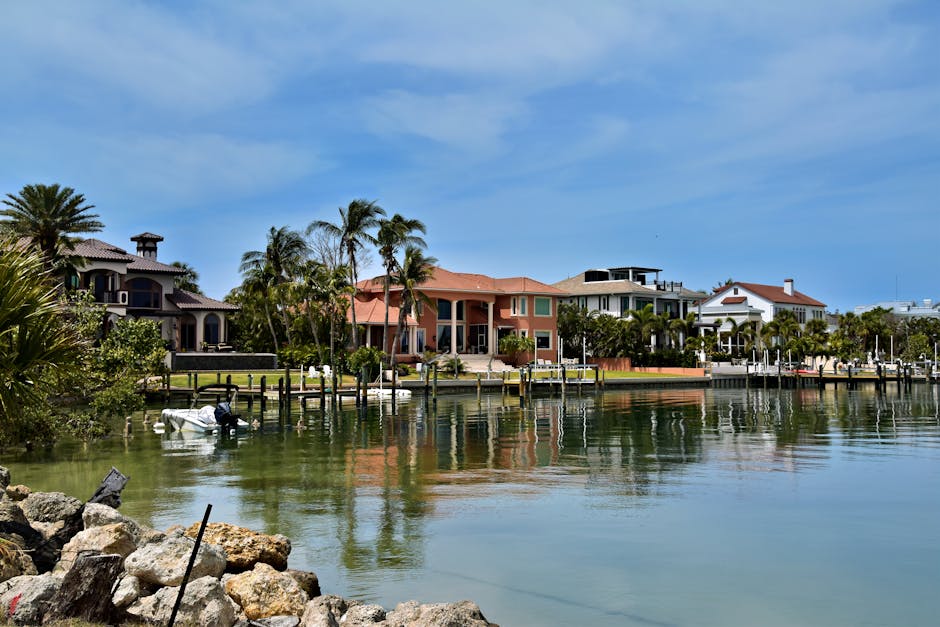
The waterfront remains the gravitational center of Tampa’s luxury landscape. Areas like Davis Islands and Bayshore Boulevard continue to command the highest premiums, driven by a combination of limited shoreline and a historical preference for deep-water access. The emergence of Tampa as a primary luxury waterfront market is a recent but definitive development. As noted by The National Law Review, the region’s shoreline assets are now being viewed through a lens of permanence and institutional-grade value. This has led to a significant increase in the price ceiling for the most prestigious estates.
Recent market movements have pushed the boundaries of what was previously thought possible in the Tampa Bay area. For context, the city’s price record stands at $22.5 million, yet we are seeing new listings, such as a massive estate recently featured in the Wall Street Journal, asking significantly higher figures. While these outlier transactions often grab headlines, they serve a more practical purpose for the broader market by recalibrating valuations across the board. When the ceiling moves, it creates room for price appreciation in the $5 million to $10 million range, which is the current sweet spot for many affluent families relocating to the area.
Beyond the price tag, waterfront acquisitions require a higher level of technical due diligence than inland properties. Factors such as riparian rights, sea wall integrity, and FEMA elevation requirements are paramount. The sophisticated buyer prioritizes structural resilience and long-term environmental planning. We are seeing a move away from Mediterranean-style mansions of the early 2000s toward modern, glass-forward designs that maximize views while utilizing advanced materials to withstand the coastal environment. These properties are not just homes; they are engineered assets designed for longevity.
Strategic Verification for High-Net-Worth Acquisitions
Success in the current Tampa market requires more than a simple search; it demands a systematic approach to verification and selection. Because the market is currently in a state of rapid evolution, historical data often fails to capture the immediate nuances of neighborhood-level movements. Buyers must look past the aesthetic appeal of a property and evaluate the underlying fundamentals that will drive future value. This is especially true in areas like Hyde Park and Harbor Island, where historical preservation and modern development often intersect, creating a complex regulatory landscape.
To navigate this environment, we recommend a focused checklist for all luxury acquisitions. This process ensures that no critical detail is overlooked during the consideration phase:
- Verify recent neighborhood sales transparency to ensure appraisals reflect current primary market valuations.
- Evaluate the property’s elevation and drainage infrastructure against updated coastal resilience standards.
- Review the status of any active or pending property tax reassessments following a change in ownership.
- Confirm the age and condition of all major mechanical systems, specifically high-tonnage HVAC units common in luxury estates.
- Assess the feasibility of future modifications or expansions within the local historical or architectural guidelines.
- Investigate any active or planned infrastructure projects in the immediate vicinity that may impact privacy or noise levels.
Each of these points represents a potential risk or opportunity for the discerning investor. In a market where the median price is $2.5 million, even a small oversight can have significant financial implications. The goal is to move from a position of interest to a position of certainty before the contract phase begins. This analytical approach is what separates the casual buyer from the sophisticated principal investor.
The Vertical Shift: Evaluating the Early-Stage Condo Market
While single-family estates remain the primary choice for many, Tampa is experiencing an unprecedented surge in high-end vertical living. Traditionally, the city’s luxury market was dominated by horizontal sprawl, but the development of Water Street and the revitalization of the downtown core have introduced a new tier of luxury condominiums. According to Tampa Bay Business & Wealth, the city remains an early-stage luxury condo market compared to mature markets like Miami or New York. This represents a strategic window for buyers who value the lock-and-leave convenience of a high-rise with the amenities of a five-star resort.
The appeal of these developments lies in their integration with the surrounding urban fabric. Modern buyers are looking for walkability, and developments in the downtown corridor are providing a level of convenience previously unavailable in the region. These buildings offer more than just square footage; they provide private concierge services, rooftop wellness centers, and exclusive social clubs. For the advisor, the challenge is evaluating which buildings will maintain their prestige as more supply enters the market. Building reputation and the track record of the developer are key metrics to monitor.
The transition to vertical living also reflects a broader shift in buyer behavior. Many residents are choosing to downsize from larger estates in the suburbs to more manageable, high-service units in the city center. This move is often driven by a desire for proximity to the city’s cultural and culinary hubs, such as the various events and family-friendly activities frequently highlighted in That’s So Tampa. As the downtown area continues to densify, the value of these early-stage condo investments is likely to be supported by the growing demand for urban luxury.
Navigating Inventory Scarcity and Pricing Trajectories
The current lack of inventory is perhaps the most significant hurdle for buyers in the $2 million to $5 million range. With only 120 units available, the market is effectively in a state of perpetual low supply. This is caused by a “lock-in” effect where current owners are hesitant to trade up or down due to the high cost of replacement properties and the favorable tax positions they currently hold. Consequently, when a well-maintained home in a prime location like Beach Park or Culbreath Isles becomes available, it often sells before reaching the public market. Access to off-market inventory and early-stage alerts is no longer a luxury; it is a necessity for the active buyer.
Pricing trajectories in Tampa are also being influenced by the rise in construction costs. Many buyers who were originally considering custom builds are now pivoting back to the resale market because of the time and complexity involved in new construction. A turnkey property that has been recently renovated can often command a higher price per square foot than a new build when the factor of “time-to-occupancy” is considered. This has led to a premium on properties that are “designer-ready” or fully furnished, catering to the executive who needs to relocate quickly without the hassle of a multi-year construction project.
For those monitoring the broader trends in Florida real estate, the insights provided by Florida Trend confirm that the migration patterns remain favorable for the Tampa Bay area. The combination of corporate relocations and a high quality of life continues to sustain demand even in a higher-interest-rate environment. The key for the sophisticated buyer is to identify properties that offer a balance of aesthetic appeal and structural integrity, ensuring that the asset remains liquid and desirable across different market cycles. As we move through the second quarter of 2026, the focus remains on quality over quantity.
Strategic Entry and Advisory Guidance
Entering the Tampa luxury market today requires a clear understanding of the micro-market dynamics that drive value. Whether you are focused on the historic charm of Hyde Park or the modern verticality of Water Street, the decision to acquire must be backed by data and a long-term perspective. The current environment favors the decisive buyer who has conducted their due diligence and is ready to act when the right asset appears. As the market continues to mature, those who understand the shift from a secondary to a primary luxury destination will be best positioned to capitalize on future growth.
To successfully navigate these inventory constraints and identify properties that align with your specific requirements, it is essential to work with an advisor who understands the nuances of the Tampa landscape. We invite you to explore our current selection of Tampa luxury listings to understand the breadth of the current market. When you are ready to refine your search or require a confidential consultation regarding a specific neighborhood or property type, we encourage you to contact an advisor to discuss your strategy in detail. Our goal is to provide the analytical clarity and local expertise necessary to ensure your next acquisition is a sound and sophisticated investment.
Your next move in Tampa luxury
Get current inventory, pricing guidance, and private-tour support from our brokerage team.
Source highlights
- Tampa’s Price Record Is $22.5 Million. This Huge Estate Is Asking $115 Million. – WSJ
- Tampa Bay’s most expensive luxury home sales of 2025 – Tampa Bay Times
- Tampa Bay luxury market grows stronger despite national declines – The Business Journals
- Why Tampa remains an early-stage luxury condo market – Tampa Bay Business & Wealth
- Tampa Bay’s Waterfront Emerges as a Primary Luxury Real Estate Market – The National Law Review
- Florida Trend Real Estate – Florida Trend
- Things to do with kids this weekend in Tampa, FL – That's So Tampa
- Tampa weekend events: Concerts, festivals and downtown family fun — What to know before you go – FOX 13 Tampa Bay



